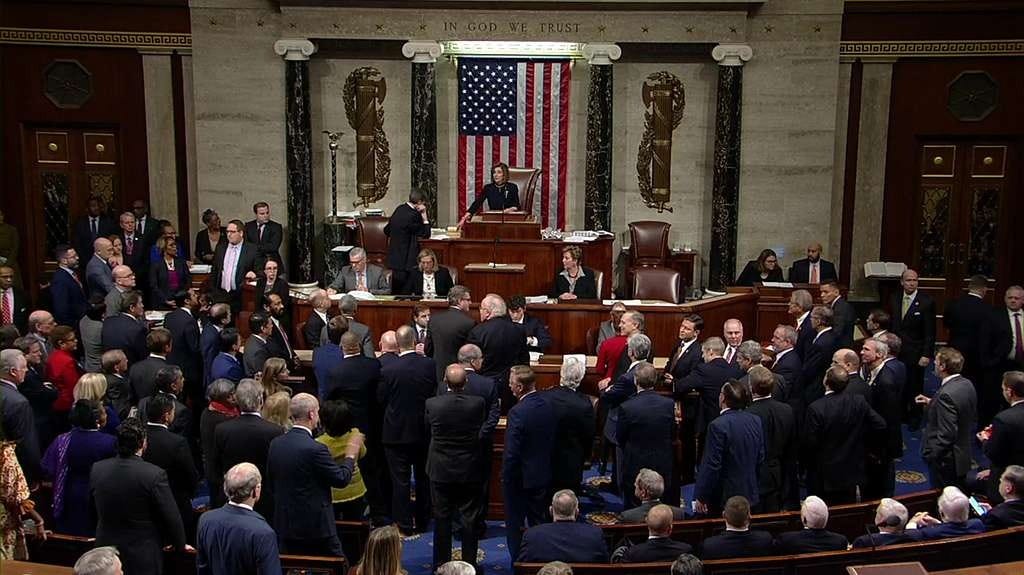
Al Green’s Challenge to Democrats: Do Your Job and Impeach Trump
Representative Al Green (D-TX) introduced articles of impeachment against President Trump twice in 2025.

Episode 88 · October 15, 2026
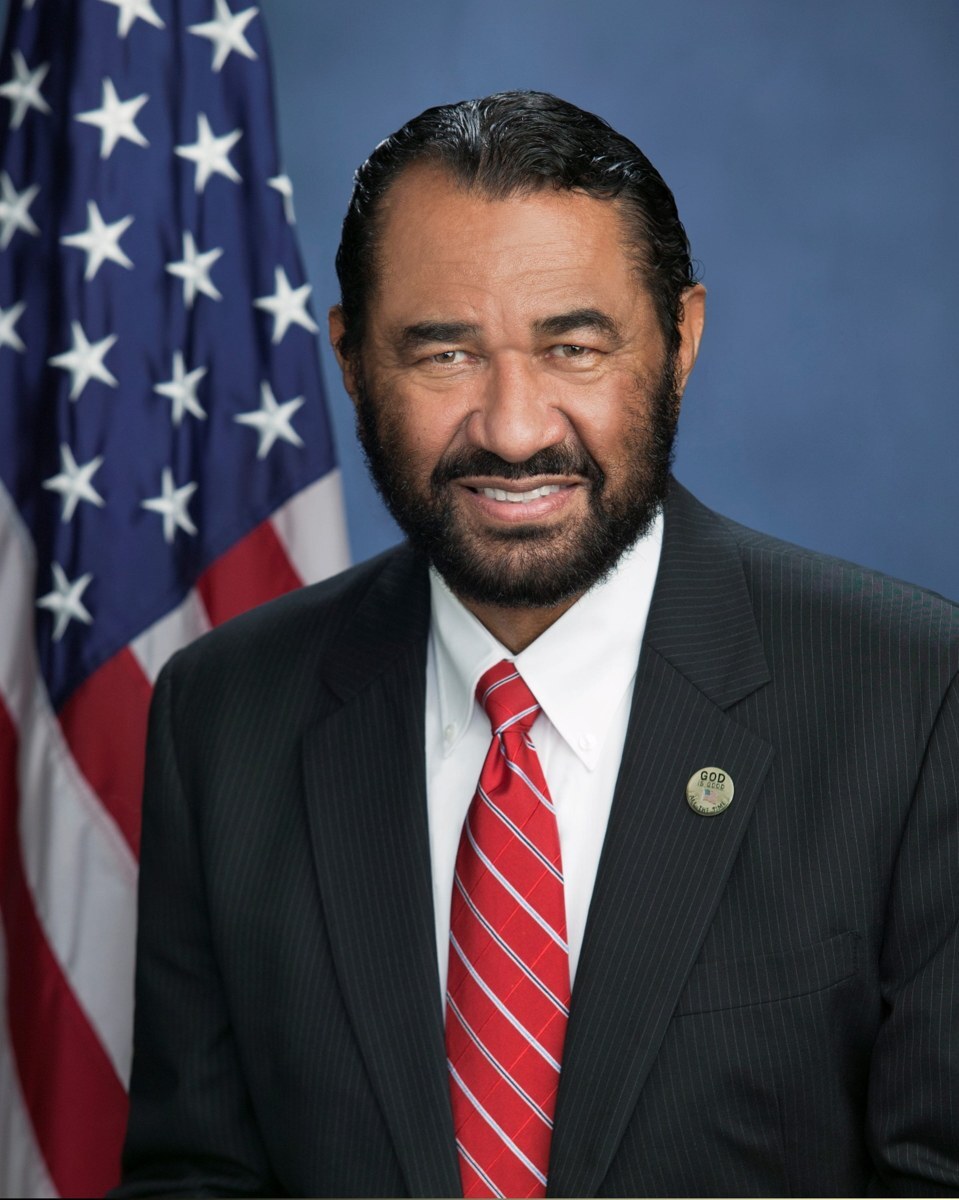
Al Green has represented Texas's 9th Congressional District since 2005. Before that he served as a Harris County justice of the peace from 1977 to 2004 and led the Houston NAACP. He has been the House's most persistent voice for impeaching President Trump. He has filed articles repeatedly since 2017 and forced floor votes on them, most recently in December 2025.
Here’s why you impeach, because it’s our duty in the House to impeach. … Do your job and then put the burden on the Senate to do its job.
Rep. Al Green
This episode is brought to you by the Freedom From Religion Foundation.
Quick civics question.
When public officials.
Swear an oath to the Constitution, does that mean protecting everybody's rights or promoting their own religion? Because as students head back to school, that question matters. Public schools serve families of every faith and no faith at all. They should not be used to pressure students, promote religious messages, or make any child feel like an outsider. FFRF says the oath is to the Constitution, not a creed. The Freedom From Religion Foundation works to keep state and church separate and speaks up for free thinkers, atheists, agnostics, and non-religious Americans.
Learn more at.
Ffrf.us slash office. That's ffrf.us slash o-f-f-i-c-e.
Welcome to another episode of the Oath in the Office podcast. I'm John Fiegel saying it's so good to have you with us. And we have a very packed episode today. Please allow me to welcome the star of our show, the Mac himself, the author of the Oath in the Office, Professor Corey Brettschneider. Corey, good to see you, sir.
Thanks so much, John.
We have an amazing guest today, of course, Congressman Green from Texas. who's really been at the forefront of the movement to impeach Donald Trump. We'll talk today about how the leadership has been reluctant to run on impeachment or to try to do it when they obviously don't have the votes to do it in this Congress. But Congressman Green has seen it as a principle to fight for impeachment. And so that's why he's going to be a really important guest for us to have on part of our look at the midterms and what's at stake, what to do if the Democratic Party wins the midterms.
What legislation do we need? What oversight? What actions? And he really is an ideal.
Guest to follow up on the amazing episode with Ted Lieu, Congressman Ted Lieu, last week.
I'll go beyond that. Al Green is a fearless hero, and he's the guy who's been showing the rest of the Democratic caucus, go ahead and introduce articles of impeachment all you want and put these people on the defense. So I'm very honored he's joining us today. We have a lot to cover as well. The watch for Hegseth to get fired or impeached, as well as now the lawfare against Ilhan Omar. But I want to begin By just saying you saw the Elon Musk documentary by Alex Gibney, which is all about the incredible influence this guy has exercised over our government. Can I ask you about it a bit? I mean, is this a story? I haven't seen the movie yet, but is it a story about conflicts of interest? An unelected billionaire exercising unauthorized government power or a president claiming authority that Constitution just doesn't give him? I mean, what was your takeaway from the film?
It really is all of the above.
And it fits our theme in that Elon Musk really, at the behest of Donald Trump, led the assault on Congress, that all of these agencies, which were created by legislation, which had laws requiring their allocation of money and their spending, were instead destroyed by Elon Musk and his doge boys. And the film, four hours, I should say, and not a moment, that's boring, looks in depth at how all of this happened and how So much of it, too, was done by people like Big Balls, who we've talked about, and others aged 19 to 25 who had no idea how the government worked or was supposed to work and just really took a random knife to programs fighting disease, fighting poverty abroad, resulting in the deaths of many, many people. And at one point in the documentary, they have an interview with someone who essentially says, one of the Doge crew, who says, wow, randomly, the way government works is that agencies just ask the Treasury for money and the Treasury just gives it to them. I mean, that is nothing to do with the way that government works. And anybody who knows anything about government knows that in our system, Congress makes laws that the president is supposed to carry out.
And so what Musk really.
Did was reverse that relationship and attack, do nothing less than attack Congress. I'll say, too, I saw Gibney, the director at Angelica Movie Theater in Soho, along with Ashley St. Clair, who's now turned on mosque. And for those who don't know, Ashley St. Clair was a MAGA advocate activist who had a child with mosque and saw firsthand just how destructive he was, not just of the law, but of our elections. And she surmised that there was a lot of suspicion, for instance, about the fact that He seemed to know the outcome of the election when Donald Trump won the presidency long before the polls had indicated that.
Yeah, I mean, we've had a lot of evil robber barons in this country's history, but we haven't had them who are given control of the federal government to cut aid to desperate, hungry and sick foreign people in the third world. I mean, the U.S.
A.I.D.
Story is why I want to see this film the most. Congress establishes the agency in law. not unlike the Kennedy Center. But Congress has always exercised their statutory authority over U.S. aid's mission and funding. And of course, this Trump administration with Musk talking about the wood chipper moved to dismantle major parts of the operations. And we already know that hundreds of thousands of humans are projected to die directly as a consequence. But what's the constitutional significance of that? How much discretion does a president have to reorganize an agency created by Congress. And again, I feel like we're talking about the Kennedy Center.
Well, I mean, I'll start from the beginning, which is when the framers talked about Article Two, which creates the presidency and the executive branch. They use the idea that the execution of the law was the job of the president. In other words, Congress makes the law and the president was supposed to carry that out. And if you think about what's supposed to happen with USAID, there was a decision made after lots of reasoning and thinking about it to create an agency that would represent American interests abroad by being decent and by fighting starvation and by fighting the worst effects of poverty, especially in moments of crisis, and that that would in turn aid America's presence in the world and standing. And so the idea that one person basically assigned by Donald Trump just came along and slashed that. And I should say, too, just to make the effects dramatic, because this is an abstract. I mean, people die. We're still getting the full count. But, you know, it's potentially in the millions of people who have died. Things were done like just a refusal to deliver food aid because there was this belief that this was somehow frivolous. And the food was actually allowed to rot. And in the must documentary, they show the actual food rotting. They have Samantha Power, who was in charge of this agency, talking about, you know, in tears, really. the frustration of trying to get food to people who were literally dying while the must team just, you know, for their random reasons took the scalpel to all of this.
I mean, they, they did things.
Like they confused computer programming that put certain dates of birth that weren't known at a default that was, you know, some random number in the 19th century and use that to claim that there was fraud. I mean, they just were acting in such a reckless fashion refusal to, to understand how things work, the lack of curiosity about how government worked, exactly the opposite of the way Elon Musk portrays himself. It was very similar to what he did to Twitter, but unlike it just being one company, this was really the laws of the United States. So part of the story of the attack on our institutions, on the law, and on Congress in particular, which we'll continue with, is really documented perfectly in this film.
And having Ashley St.
Clair talk about him personally in the film and then listening to her afterwards, it's quite a testimonial as to why the richest man in the world, arguably one of the most powerful, is so dangerous at this moment.
Yeah, you know, I'm not going to pretend to have my bias. I think the three worst presidents of America in my lifetime have been Dick Cheney, Vladimir Putin, and Elon Musk. But I mean, let me be fair, because I don't hate Musk. I'm fighting for a better world for his thousands of children, some of whom he's met. But let's suppose I know the president can't abolish an agency through executive action if Congress hasn't authorized the abolition. Not that they care. But what if a president says, in effect, this agency is wasteful, the work is unnecessary, and I have a mandate to eliminate it? Does any of that give a president legal authority to disregard the statutes?
Not when something is statutorily created. And that is certainly what Trump thinks, that he's the president. As he says, I have an Article 2. It gives me the power to do anything I want. That's not how our system is supposed to work. And I should say this USAID case, there are cases brought by former employees who were fired who claim they're still legally employees. And there's a second case as well that ultimately I do believe very well could vindicate exactly what I'm saying. But the reality of what the law is and the blunt instrument with which they destroy that agency, you know, it takes a long time for the law to repair things.
So the short answer is absolutely not.
Not only can the president, just to illustrate the idea, not only can the president not just destroy an agency whole cloth that was created by Congress, But he also can't refuse to spend the funds that are allocated by Congress. And in fact, one of the main possibilities, I should say, for Nixon's impeachment, I'll remind listeners and people watching this that Nixon was never actually impeached by the full House or removed by the Senate. He resigned under the threat of impeachment. But certainly one of the articles of impeachment that was considered had to do with his what's known as impoundment. his refusal to spend money that was allocated by Congress.
Think about that. If that was.
Possibly a reason for impeaching Richard Nixon, that he refused to spend money, what Donald Trump did goes so far beyond that, not just a refusal to spend money, but destruction of the agency to whom the money was supposedly allocated.
Oh, I mean, Warren G. Harding looks like Gandhi next to this guy. But let's bring it closer to home, because three weeks before the midterms, Just this week, the Trump administration has sent federal agents to raid the home of Congresswoman Ilhan Omar, who is black, who is Muslim, who is a naturalized American citizen, who has spent years criticizing Trump and his immigration policies and his foreign wars. Now, the DOJ confirmed they did have a judicially authorized warrant. OK, fine. The scandal allegedly involves immigration paperwork her father handled when she was a child and brought her over here. 40 years ago, and the White House has not publicly explained the basis for the search. So welcome to Law & Order. Daddy filled out the forms 40 years ago. Corey, I mean, beyond the politics and how sloppy and desperate this looks, what should Americans make of this from a constitutional perspective?
Well, in any of these stories, it's so important that we zoom out and connect them, understand the details of what's happening, but also understand the how it relates to other things that this administration is doing. In Latin America, sometimes presidents have tried through a variety of maneuvers to dissolve Congress. The president isn't trying to do that because he knows he couldn't get away with it.
So what is he doing instead?
He's trying to destroy its power in a variety of ways. One way is the story we just talked about, the basically dismantling of agencies even though they were created by Congress.
That is nothing less than an attack on Congress.
And now here's another thing, attacking his political enemies within Congress as he sees them to be vulnerable. And I think what he's doing here in particular isn't just any– shutdown of an opponent. It's a shutdown of another branch of government. And so when we talk about impeachment, as we get to that topic and develop it, it is centrally about Congress using its power of impeachment to protect itself. And we can get into the details, but I think what he's trying to do here is to use Homeland Security, to use the FBI, to do nothing less than not only kick her out of the country, but to strip Representative Omar of her very citizenship by claiming that it was fraudulent.
Oh yeah 40 years ago yeah and so i mean obviously you're kinder than me professor because i take this as a sign that they are terrified with the midterms to go they're not allowing this president to campaign in swing states they are sending him to deep red states because they don't want him in swing states and they are running scared of him i mean the fact that the president and the vice president had to go to nebraska like i I mean, that tells us how scared they are. And this seems to me certainly not an attempt to cast a wider net and get independents to come over into the MAGA fold. This seems like a desperate audition to get the racists that are part of the base to still get excited about the midterm. See, gas is $ 7 a gallon diesel, but I still hate who you hate. I view this thing as really a very messy and panic-driven operation. And I want to ask you about the Fourth Amendment. What are the constitutional requirements for the federal search of somebody's home? I mean, obviously, if they steal boxes and boxes of classified documents from the White House, you can get that warrant. But what what considerations arise when the home belongs to a sitting member of Congress?
Well, there are a lot of questions about this search of her home. One is and, you know, for good reason.
The FBI has.
Long had a policy of within 60 days of an election trying to not interfere. Now, it is true, and the administration is going to bring this up, that in the Jack Smith case, although Donald Trump protested, we're too close to an election, they moved in anyway. The argument there, this is in the Mar-a-Lago case in particular, was that they were trying to preserve the evidence that Donald Trump had shown an indication that he would destroy of files that he had stole. Is there any similar evidence instance here where there's a danger of something being lost, you know, that somehow she has her dad's files that she's threatening to destroy. There's no indication of that. So, you know, they're breaking this norm that's supposed to govern the FBI. Well, the problem with norms, as we've seen, is they're very hard to enforce. And so I'm not sure that there's a Fourth Amendment violation, that this was an unreasonable search and seizure. It could very well be that they went through all the necessary procedures, because after all, what they're doing is looking for loopholes in the law. where they can use what otherwise would be a normal legal process, for instance, looking for fraud in a naturalization application.
A 40-year-old naturalization application.
Yeah, in order to do something that is obviously politically motivated and trying to shut down an opponent in Congress and a very effective one. And I just have to say, too, to build on what you were saying before of what's going on here, you know, a lot of his rallies are not attracting.
People the way they were before.
And that's a direct indication to him, maybe as much or more so than the polls, that he's got to do something. So is he going to apologize for attacking democracy and start, you know, saying, well, I really made a mistake with this whole Doge thing and with my attack on Comey for 86-47, something that obviously was not a threat, although he's got the Department of Justice trying to to prosecute him for what is obviously a political statement about removing the president. No, he's going to double down and increase rather than decrease the attack on democracy. So on the one hand, we should take solace in the fact that people are getting sick of him and that he's losing in some ways. On the other hand, you know, wannabe dictators get more dangerous when they see their power slipping.
And that's part of what's going on here.
I want to remind everyone that Donald Trump in the first term told Ilhan Omar and three other congresswomen of color to go back to where you came from. In this country, if you were an unpaid intern at a corporation and told four women employees of color to go back where you came from, you'd be fired. Because here in the U.S., we hold unpaid interns to a higher standard than the president of the United States. Professor, I need to ask you a few questions as well about Pete Hegseth and whether he's going to be impeached. And I'd like to ask a bit about how we're making America like ISIS again with televised executions. Please stay with us back in a moment on The Oath in the Office.
This episode is brought to you by the Freedom From Religion Foundation. We talk every week about the oath, the promise to preserve, protect and defend the Constitution. So here's the church state version of that question. When public officials take that oath, are they promising to protect everyone's freedom of conscience or to use government power to promote their own religion? Because as students head back to school, that question is not abstract. Public schools serve children from Christian, Jewish, Muslim, Hindu, Buddhist, atheist, agnostic, and many other families. No student should be made to feel like they belong less because they don't share the government's preferred religious message. The First Amendment is not a bridge to government-backed religion. It is a limit on government power. The Freedom from Religion Foundation works to keep church and state separate because freedom of conscience means the right to believe, question, doubt, or not believe at all. FFRF also speaks directly for freethinkers, atheists, agnostics, humanists, and non-religious Americans who are too often erased from the story. Learn more at That's ffrf.us slash office. That's ffrf.us slash o-f-f-i-c-e.
Welcome back to The Oath in the Office. I'm John Fuglesang, along with the great Professor Corey Brettschneider. Corey, let's talk about the case against Pete Hexeth. Democrats are really talking about impeaching this guy as soon as the midterms are over. I kind of feel like he's probably going to get fired if Trump needs to distraction before then. But let me ask, from a constitutional perspective, we haven't really seen this. What would make a cabinet secretary's conduct an impeachable offense?
Well, I think that, you know, let's start with what the standard is. And I talked a lot about Impeachment, I was on CNN and MSNOW all the time on your show talking about impeachment as impeachment expert, Corey Bretschneider. Well, it's time to come back to that because we are going to need impeachment experts, both in regard to Hegseth, who the Democratic Party, the leadership in particular, is suggesting maybe should be the first target. And they are not talking about targeting Donald Trump right now. Talk to Representative Green about that. They've decided strategically this makes sense.
Although I'm pretty sure Al Green is targeting Donald Trump 24-7.
He certainly is.
And that's one of the reasons why I'm so eager to talk to him. You know, let's just lay out, I think, what they're thinking, which is that impeachment of the president might play in a bad way.
It's purely strategic.
But Hegseth, in his high crimes and misdemeanors, the standard for impeachment of a president and for a cabinet secretary is the same. It's an obvious place to look. First of all, what does high crimes and misdemeanors mean? That idea sometimes is confused with a crime crime. It's like assaulting somebody. But what it actually means is actions that undermine the basic ideas of the rule of law, the basic ideas of democracy. And so let's take his attack on these socialists. drug brotes, which very well could be either fishermen or migrants. And there was no due process in this. And he is not only blowing them up, but in one case, and we've talked about this on the show before, engaged in a kind of in what's known as a double tap where the boat was disabled.
And yet he then sank it anyway with.
A second attack. Men were clinging to wreckage for life.
Not knowing who was on it.
I'd also point out, Professor, it was last year, October 16th, when they destroyed another fishing boat and there were two survivors. And those two survivors were taken aboard a U.S. Navy vessel and eventually returned to their home countries. Which means either we know we're killing innocent people or they are all narco-terrorists and we're letting them go. But this is exactly where Pete Hexeth is at. And is the standard fundamentally different for a cabinet secretary than for a president when it comes to impeachment for high crimes?
It isn't. And that really brings me to my main point.
I think also the high crime and misdemeanor is the sole act of war against Iran without congressional authorization. And as I've said a couple of times, and we'll keep talking about this, part of the point of impeachment is it's a power given to Congress partly to protect itself against a president.
Who would illegally destroy its power.
And so the Iran war itself strikes me as another instance of a high crime and misdemeanor.
Now, here's where I get a little skeptical.
I see the strategy, but there's a long tradition in impeachment that goes back before the founding of the United States.
It goes back to England, where the idea was the king could do no wrong.
You couldn't impeach a king. That would be treason. But how could you get control in Parliament? How could Parliament get control in the name of the people against a king who was going off the rails? Well, you could impeach the king's officers. And the idea was the king could do no wrong, but the officers could do wrong. And I worry this is sort of a rehash of that, pretending that really it's Hegseth that's doing the damage here when we know it's the president. So I'm a little sympathetic, more than a little sympathetic, to Representative Green's way of doing it, which is Let's go to the person actually responsible. I don't object to doing impeachment simultaneously with Hegseth. I think we would learn a lot, but I don't want that in any way to be a replacement for impeaching Donald Trump himself.
I get that. And I have other people I'd rather see impeached because I think Hegseth's going to get fired. But I mean, to that point, just couldn't a focused case against Hegseth be a way to just reestablish the principle that executive officials are accountable to Congress, regardless of party?
I think that's right.
Like, you know, once we and, you know, I would add Todd Blanche after that last discussion when it comes to the prosecution of Comey and others and the potential Tom Homan and the attack on Representative Omar.
You know, all of these.
People are certainly candidates for an impeachment that focused on their high crimes and misdemeanors. And if the idea, as often happens in criminal law, and this is in a criminal case, after all, is to build a case against the mafia boss, as we talked to Barbara McQuaid about the mafia boss in this case being Donald Trump, then that might be a sensible way to do it.
OK, so let me then ask you about the million dollar question this week, which is that Pete Hexeth, this Fox News weekend guy, has decided Christian America needs to rediscover the spiritual joys of the firing squad. Apparently, according to Hegseth, the first official killing of a prisoner by the U.S. military in 65 years.
That's not enough.
It's got to be a show. It's got to be streamed to a live audience because Pete Hegseth says people need to understand there's serious consequences for these types of things. I think most of us realize it's not legal to kill 13 soldiers. And there is no one saying that Major Hassan is not a monster. But I remember Cory Donald Trump in his State of the Union address just back last January saying, attacking Iran for having public executions and bragging that he helped prevent Iranian public executions. As of now, I think the only countries on Earth that will have public executions that we know of are Iran, Taliban-led Afghanistan, and the U.S.
That's it.
We probably North Korea, but we don't know. And Saudi Arabia stopped having public executions in 2019. So we're like to the right of Prince Bonesaw. Corey, I don't think this is ever going to really happen, but what are the legal issues at play here?
Well, I think the theme here is that Pete Hegseth seems drawn to the destruction of international law. He's determined to violate it. That's true in the drug boats, so-called drug boats cases that we were talking about in the initiation of war illegally. And it's true here, too, that there is a standard, I think, increasingly in international law that says it's essentially a human rights violation to advertise your cruelty by publicizing executions. Now, in the United States, in some cases, the death penalty is legal. But the idea of televising it, I think, too, you know, often we use the language of rights, but here I switch the way that we talk about it just to... language of humanity and cruelty and dignity. And a dignified society doesn't celebrate, even if you're going to have the death penalty, which I, of course, oppose, which I think itself is a human rights violation. The idea that you're going to televise it, to spread the violence throughout the culture, to spread the intimidation, that puts us in some very bad company, as you suggested. And once again, puts us at odds with the world. And one of the themes here, too, and this goes back to everything that Donald Trump is doing, including Elon Musk and his destruction of USAID, is hurting our standing in the world. How can America claim in any way to lead the way on human rights, to oppose human rights abuses abroad, supposedly the basis of our international actions, when we are so badly violating them at home? And that, I think I worry, isn't just going to be a matter of Donald Trump, that it's something that even if Trump eventually is gone, which I think he will be, of course, in a couple of years. And even if the Republicans lose the election, it's not going to be easy to build our standing in the world because the thought is this could happen again.
Yeah.
I mean, and let's remember, these are the pro-life people, Corey. All life is sacred, but some life is more sacred than another. I mean, what is our government trying to accomplish, you think, by turning the killing of this man into public entertainment? Is it justice or revenge or deterrence or just a TikTok video about our awesome power, bro? I mean, you know, these are the guys who keep boasting about how Christian they are. And this is really against everything the character of Christ in the book ever talked about. But I've heard military law experts are already saying that Major Hassan could file a habeas petition in civilian court, which could then delay his death until well after Trump leaves office or a few months until Hegseth is fired. Any insight on that, Corey?
I'm not sure what his resources are. That's what worries me.
I mean, one of the first things that people are talking about, military lawyers are internal codes to the military that prohibit public executions. But as the president is commander in chief, and this was true in the case of the Department of Justice, and we just see this again and again, these regulations can be rewritten from within the executive branch. Is there a constitutional argument, rid of habeas corpus as one way of trying to claim, for instance, actual innocence as a basis for habeas petitions?
Yes.
I'm not sure that they're going to work here and that he'll get relief in that way from a civilian court. There is a prohibition still on cruel and unusual punishment. And I guess one question that I haven't seen the court address that maybe we could discuss see pushed to the Supreme Court is the question of not whether the death penalty is unconstitutional. It was struck down at one point, and then in the 1970s in Furman v.
Georgia, and then in Gregg v. Georgia put back.
But what I haven't seen the court address, as far as I know, is the question of whether a public execution is a kind of cruelty that violates the Eighth Amendment.
So that's something to look for.
I'm sure Clarence Thomas and Sam Alito would be outraged. Congressman Al Green. I'm very excited for this on The Oath and the Office. Welcome back to The Oath and the Office podcast. I'm John Fugelsang. Professor Brett Schneider, I got to say, we have some wonderful guests, some tremendous statesmen and stateswomen on this show. But this next gentleman is a real rock star, and he's someone who really understands the power of of resistance and reform and that impeachment can be a way to put the other guy on defense.
Absolutely, John.
And so I'll just introduce it really is an honor to introduce Congressman Al Green, who has represented the ninth congressional district in Texas since 2005. He's a lawyer, a longtime civil rights advocate. He earned his law degree from Texas Southern University's Thurgood Marshall School of Law. And I should mention, too, that he led the Houston branch of the NAACP for nearly a decade. In Congress, of course, he's worked on fair housing, economic opportunity. And one of the reasons why we've been so eager to talk to him, and we've set some of this up earlier in the show, is that he has absolutely been at the forefront of the effort to impeach Donald Trump and really of insisting that Congress use and protect its constitutional authority in to hold the president accountable. Congressman Green, welcome to The Oath in the Office.
Well, thank you. It's my honor to be with you and I look forward to the interview. Thank you. Thank you, sir.
Great.
I mean, if you don't mind, we'll just jump right into it. We've been talking about certainly the attack on Congresswoman Omar by this president and by his cronies in Homeland.
Security and elsewhere.
His attempt to shut down political opponents. But we've also talked about how the House leadership has seemed to focus on going after Pete Hegseth initially rather than the president directly. And I take it that that's not an approach that you necessarily share, that at least my understanding is that you've shown a willingness to go directly after Donald Trump.
So talk to me about that.
Why is it so important that we get an impeachment of the president, not just cabinet secretaries on the agenda?
Well, thank you very much. I have indicated my support for the Hexeth impeachment as well. I believe that that merits the attention of the Congress. And I do regret that the Speaker adjourned without allowing those articles of impeachment to be brought to the attention of the Congress, because I think that they would have received quite a bit of support. My belief is that they would have exceeded the support that we received on our last articles of impeachment. Now, why have I chosen to move against the president? Because the president has committed impeachable offenses. And we understand that an impeachable offense doesn't have to be something that's codified. It doesn't have to be a breach of a law that is in codification. No, it can be a breach of public trust. And if you would kindly, those of you who may not be aware, read Article 65 of the Federalist Papers, Federalist 65. These are essays, 85 essays. And 65 is written by Alexander Hamilton, the first treasurer of the United States. Then you had John Jay, who was the first Chief Justice. He contributed the fewest number of essays, I believe. And of course, you had James Madison. He contributed as well. Hamilton did about 51 of these, if I'm correct. Now, without getting into all of that, the point is the Federalist Papers gave us in Federalist 65... pretty much the definition of what we need to do to impeach a president and why. It has to do with public trust and it has to do with public men, but people who are in public spaces at the federal level for us with the Constitution, the US Constitution. And if you breach this public trust, you're subject to impeachment, which is not a punishment, but simply a removal from office. That's what it's all about, removing from office for the deed that has been defined as a breach of public trust. It's also important to know this, if I may, just so that people will understand. It is not appealable. You cannot appeal. There is no standard charge given to the members of Congress by way of some definition of a burden of proof. Does not exist. And too often, constitutional scholars will attribute more to what is required to impeach than what is actually required. Because if you read Article 10 of the Articles of Impeachment against Andrew Johnson in 1868, in Article 10, he was impeached for criticizing Congress. Literally, for bad-mouthing, as we would say it in my hood. He was saying ugly things about Congress, and they impeached him. And by the way, all articles of impeachment don't have to be voted on. In those articles against Andrew Johnson, only three were voted on. I believe it was article maybe 11, 1, and 2. I think those were the three voted on and the others were not voted on because once they saw that they could not get justice with the first three that they voted on, the adjourned signee died. So with that understanding and the understanding that Gerald Ford probably got it right when he said impeachment is whatever Congress says it is. These were his exact words, but this is what his words portend. whatever Congress says it is on a given day at a given time. That's what it is. Nobody can dispute that once it's done. And there is no clear and convincing evidence standard, no guilt beyond a reasonable doubt, no preponderance of the evidence. Congress people never have to say why they voted to impeach.
That's right.
That's right. Now, having said all of that, why have I gone forward? Because the president is destroying destroying the Constitution itself. Thank you. If we allow this man to continue, the Constitution will be meaningless. If we allow a president to defy court orders regularly with impunity because he assumes he has some sort of absolute immunity, the Constitution will become meaningless. If we allow the president to condone and support the killing of people, four of them, We saw what happened to Alex Pretty. There has been no transparency provided the local constabulary so that if they choose to investigate, they can do so. The president is preventing them from looking into this by and through his agents. over at ICE and CBP. So he prevents them from looking into it. And he does this because he knows that if there is an indictment and a conviction at the federal level, he can do for them, whoever's indicted for these killings, he can do for them what he did for the people who assaulted the Citadel of Democracy, the capital of the United States of America. He gave them all relief and he'll do the same thing for these ICE and CBP officers. So we have to understand that there is a cover-up And I don't know how to say it other than a cover-up simply means that you're hiding something and you're hiding it because it may be something harmful. That's the simplest definition of a cover-up. You don't have to have some scheme that runs deeply into some sort of hidden place and never to be found. No, the fact that we know about it doesn't mean that it doesn't negate the fact that it's a cover-up. There is a cover-up. He's preventing information from coming forward by and through his agents. And his agents are guilty of these killings that have not been justified, unjustified killings of people. I know that was a long answer, but I know that was.
One we needed to hear. And it also.
It also fits extremely well with the way we've been talking about impeachment, certainly as a kind of defense of democracy, defense of Congress's power, which he's attacked. And exactly as you say, there is no requirement in the idea of a high crime and misdemeanor of a criminal charge beyond a reasonable doubt.
It is up to Congress as.
An obligation to defend democracy, exactly as you've said. And I love, too, I should say, too, the Andrew Johnson parallel, because Often, you know, history, especially those who have sought to really scrub the racism of the 19th century, have not seen how the Andrew Johnson impeachment was really about defending civil rights and defending against a president who, as you say, not just in speeches attack Congress, but just to elaborate, really threatened violence against members of Congress.
And that is not.
So far from the attempted legal violence that this president has showed just this week against Representative Omar, possibly even threatening her citizenship. So help us to, I mean, just as a follow-up and with this heated agreement that we're in, talk to me about how we would write the articles of impeachment. One thing that interests me about the Andrew Johnson impeachment is Although that was there, that article about Congress attacking, really about the president, Johnson, Andrew Johnson, threatening members of Congress, it got lost in a lot of legalese about firing the Secretary of War. And so this time, it strikes me as extremely important that we bring to the forefront issues that are both about defending democracy and that the American people can see so clearly are.
Threats to democracy.
So I take it one issue is certainly ICE and the killings that we've seen from them and the violence done by ICE against our citizens, the attack on a car even in New York City with a child in it.
The way they've run rampant. I mean, what else would you like to see?
And do you want to see a broad slate of articles of impeachment or a narrow one? Talk to us about what the other high crimes and misdemeanors, as the Constitution says, are.
Well, first, let me applaud you for being eminently correct about the Secretary of War. There was an effort in those articles related to him. And you're right about the others. But I would just add this. Those people at that time were closer to the persons who were the authors of the Federalist Papers than we are. So you have to assume that they had a pretty good understanding of what it was all about, just because of proximity. But given that, and moving on to articles, I think that what is being done with reference to the Secretary of defense now. I say defense, but Secretary of War now. And I don't agree with that terminology, by the way. Not at all. I think that that was a terrible thing for the Secretary to do, along with the President. Nothing is done without his permission. But I do think that those articles are worthy of review and vote, because the President did take us to war without conferring with Congress. Correct. And One would assume that in this country, we don't want any one person to take the entire country to war without at least conferring with the Congress, which has the power to declare war. And not only did he take us to war, but he's kept us there. We are still at war, notwithstanding anything that is said. We have our military there with a blockade. We have continued to have our missiles shot into another country's space. This is war. And what we're doing now is minimizing what is actually a war situation. And preventing people from understanding that the Congress does have the power to declare war and that the Congress should protect the authority that it has so that we maintain a balance of power. If we don't do this, the president not only is going to become an authoritarian president, he is authoritarian. and authority of the president. Sometimes you slip into these places and you don't know that you're there, but we are already there when the president can do this, take the country to war. Now, when he can also defy federal judges, most recent cases I can recall is with the trees that he has decided they're going to just cut trees and the judges said, no, listen, now you're going to have to bring me some more information if you're going to go beyond a certain number. Well, they've done it. And they do this regularly. And then they appeal to the next judge. And the next, until they get to the Supreme Court, and there is a desire to have the Supreme Court bail them out. If the Supreme Court doesn't bail out, someone has lost an inordinate amount of money defending to take the case to the Supreme Court. So the victory for the president many times is just the suffering that he'll put you through to prove that you are right. So- I do believe that what he's done with the judiciary and disrespecting the separation of powers, I think that is worthy of more articles of impeachment. And I will give you one additional. I think that what the president has done with his call for some sort of extrajudicial remedy against persons who were advising people in the military that they don't have to do things that are unlawful. The president decided that these people should suffer some extrajudicial remedy associated with their lives. We can't let a president do that to members of Congress. I would look into closely before I leave what is happening with Representative Ilhan Omar, for the president now to have his Justice Department, and it is his Justice Department de facto. Now, in the jury, in theory, it's the country's Justice Department. But de facto, because the head of the Justice Department is the president's personal lawyer was, and he seems to think that he is, at least with a faux pas at some hearing, he said that he was the president's lawyer. And he has seemed to have lived that out since he's been in the position. So with all of this, the president's Justice Department is Now, deciding that they would take on a member of Congress, search the member's home, and after having said the member shouldn't be in the country, the president has talked about her as though she is a person who is undocumented and in the country. That's right. She is a citizen. She is an American citizen. And as an American citizen, she has certain rights privileges under the Constitution that are being ignored. For example, I don't think that as an American citizen and a member of Congress, the president can simply tell the Justice Department, we're going to search this home. I would hope that that search warrant would be reviewed very closely and carefully by lawyers to see if we have a person who really found the cause to do this, the probable cause to do this, to search this home, because this is a member of Congress. Why is it so important as it relates to a member of Congress? because members of Congress cannot become supervised by the president. The president doesn't supervise us, and we don't supervise him. But when he breaks laws, we should, of course, do what we can to make sure that adjustments are made, and if there's a law broken by a member of Congress. But this president has made it very clear, perspicuously so, that this is a vindictive act. this is an act of vindictiveness associated with the fact that she's from a certain country and that has people in this country who have been accused of transgressions that quite frankly don't even make sense, some of what he has said about the people. So I'm very much concerned about what happened to her and would hope that someone would look carefully into it.
Congressman, it's an honor to have you here and I want to thank you for your service and you've reminded me of all the reasons for optimism we've seen against the weaponized DOJ, the grand jury rejecting the indictments against the six Democratic lawmakers for saying you don't have to follow illegal orders, the grand jury collapsing on the case against James Comey, the dismissal of the indictment of the tourist who was scapegoated for Donald Trump's reflecting pool debacle. You have been so brave among Democrats for pointing out that our whole constitutional system rejects the notion that a king cannot be held responsible. for his government's conduct. And I just want to thank you for trying to ensure that the president is accountable to the people. I'm one of those who's still crestfallen that Robert Mueller delivered 10 gift-wrapped counts of obstruction of justice and the Democrats didn't do anything with it. I think impeachment is a tool. The founders didn't want us to assassinate each other. That's why they gave us impeachment. Of course, you know, some members of Congress will argue in both parties that it would be futile. Why impeach him again? Because there'll never be 60 votes in the Senate. Congressman, before we get to that, which will be all over the airwaves in the new year, what is your response?
Well, here's why you impeach, because it's our duty in the House to impeach. That's not what's notwithstanding what you believe the Senate may do. Do your job and then put the burden on the Senate to do its job. And if the Senate doesn't do its job, then the people can make a decision as to whether or not they have the right Senate. I think that that's the way the system is designed. All of this takes us back to the people. The people have the last word. We are the we and we the people. And they will have the last word. So the Congress has to do its job. But my dear brother, if I may just say, brother, my dear brother, permit me to say this. I really am saddened. now knowing that if the president does as he says he can do, go out on Fifth Avenue and shoot someone, if the president does it, God forbid, don't believe that he will, to be quite honest. I believe there would be Democrats, I'm a Democrat, liberated, unbought, unbossed, and I say unafraid. I believe there would be Democrats who would vote against impeaching the president. If it was video, on video, and you could see it, you would have some Democrats. And this is the party of liberty and justice for all. If we see it, and then we conclude we've got to have some long investigation, There was no prolonged investigation with Andrew Johnson in 1868 as it relates to Article 10. It just, it didn't happen. So we cannot allow the notion that there must be this prolonged investigation before you can impeach. Because here's a rationale. The president's not going to allow the information to come forward as it relates to Alex Pretty and Rene Good. That information, they're not going to give it up. So you spend all of your time trying to get information that we're not going to get, and then you paint yourself into this corner. Then what do you do? What do you do at this point? Do you then go ahead and move forward without having the information that you thought you might acquire? We cannot become the party. that allows the president to do things that we know we can challenge without having to have these investigations. We must move forward. And I'm just gonna beg, I hope that Democrats will see Let me put a stop right there. We'll see, and I'm going to come back to it. I'm going to bring additional articles of impeachment.
Yes, you are.
I hope that they will see that what was not done with the last articles has allowed two additional people to now become subjects of shootings, and that it's only going to get worse. The blood is going to be on the hands of of people who don't vote to do what we must do when we have a reckless, ruthless, lawless president who has given his support to the unjustified killings of American citizens. There should be some kind of indictment. There should be some kind of information as it relates to Alex Priddy sprawled out on the ground, all out on the ground. This unarmed American citizen unarmed. Yes, he had a weapon before he was disarmed, but at the time he was shot, he didn't have it. And he had the weapon lawfully. He was lawfully in possession.
Everything they would demand of you. Yes.
Yes.
So, and to shoot him nine or more times with him there defenseless? Surely, if you can indict people who are said to have tried to assault officers with a vehicle immediately, What is taking so long to indict someone in the Alex Pettit case?
Why?
It is a cover up. It's a cover up. And that cover up is going to continue until either he leaves office and then he will issue his pardons. And that then absolves the officers because you can issue a pardon for acts that haven't been done, it seems. That's right.
But not on the state level.
No, not at the state level. But that's why he keeps the information from the state. You see, they can't get the information. So he puts this in a silo. Only those who are at the federal level can act. And we have to act as members of Congress within justice.
It's also, as you say, a failure to recognize that impeachment is supposed to be an obligation about protecting the republic itself. And that's why it's been so important that you've continued to bring these articles of impeachment, even if the other party controls the Congress. And what it's meant to say is this isn't just ordinary legislation. This isn't just a budget issue. It really is about defense of democracy and the failure to impeach, not just on the 10 counts of obstruction of justice that Mueller outlined, but in the quid pro quo in regard to the deal that the president tried to force on the president of the Ukraine. And most importantly, to my mind, almost the paradigm of going back to the founders, what they would have thought of as an impeachable offense. January 6th, the attempt at a coup on our democracy, even having that information, we were short of the votes, not just to impeach and remove, but to disqualify this president from running again. So, you know, with all that said, I've got to ask, First of all, would we consider bringing back January 6th? There's no, as an impeachable offense, there is no double, just as there's no requirement of reasonable doubt. I'll add to that, there is no right of double jeopardy of a president against hearing an impeachment charge twice. And we do know a lot more about January 6th than we even did during.
The last impeachment as a result.
Of the efforts of the January 6th Committee and others to bring to light just how dangerous a moment this was and how close to a coup. So one follow-up is whether or not you'd consider that, revisiting January 6th, or you think that's just not strategic enough and we have enough newness. I mean, my thought anyway is to understand the massive amount of attacks on democracy that we've seen, you have to understand the green light that he was given by the failure to remove him and by the immunity attacks. And then a second related idea that I'd love to hear you talk about is if the Democratic Party does take Congress, what else would you want to see? You mentioned pardon abuses. I'm wondering about pardon reform. I'm wondering about oversight.
Well, thank you. You've really given me a lot to think about and to talk about in a short period of time. But I want to go just one step before I go to the two things that I will address. And that is the president's oath of office. And this is about the oath. You know, the president, he takes this oath to defend the Constitution. And then members of Congress take an oath as it relates to the Constitution. And the members of Congress have an oath that I think we are obligated to abide with. And unfortunately, I don't think that we are putting up the best defense for the Constitution. So I'm very much concerned about protecting the Constitution. Now, with reference to January 6th, I think you're eminently correct. There is nothing that prevents us from bringing that up as it was presented word for word again. But you're also correct in that there's so much more that we know about that incident and the behavior of the president after that incident that is relevant in my opinion. I think it's relevant that the president on his first day in the second term of office, the first thing that he does is he pardons these people who were engaged in the insurrection. And that in and of itself sent a message to other people who were doing dastardly deeds that I've got your back. So I think that we can factor all of these things together. And yes, we could bring it up again. And the, well, I won't say unfortunate thing, but I won't be there to do it. So the question is, will there be someone else who will give consideration to it? But I think that we should give consideration to what happened. That was a moment in history that will live in infamy far beyond We can imagine it really will because people around the world saw it happen in real time. It didn't happen. And then two or three months later, you discovered it. I lived it in real time. I was right there in the Capitol when they were storming the Capitol and we locked down in our offices and we turn our cell phones on silent. and we were in corners and making sure that nobody could hear us move about because people moving through the hallways, we were concerned. So with that said, I do agree that yes. Now, in terms of some additional things that we may look at, I've called to your attention several things already, but I do believe that as we go forward, we cannot overlook the fact that this president has, by some authority, he has vested in himself, not given to him, but has vested in himself, completely decided that the Constitution is more advisory than a legality requirement, an absolute requirement, the way he treats it. And I think that just the way he has disrespected the Constitution itself is enough for us to look to some articles of impeachment that are couched in just disrespect for the Constitution. For example, the whole notion of free speech as it relates to people who have said things that he didn't agree with. The whole notion that you can go into a person's home without a proper warrant. The notion that you're going to somehow now send people out of the country, deport them, take them away from loved ones. Nobody knows where they are. I mean, the Constitution... talks about something called due process. Due process. That simply put is the right to raise your hand and say, hey, no, you got the wrong guy. I'm not that person. No, this is wrong. The due process is something we cannot allow to somehow just evaporate. And he seems to think that those things in the Constitution are not worthy of respecting. And as a result, he does these things. And then he goes to court to try to justify it. And eventually he's slapped on the head. And then he goes back and starts anew with something that is even more egregious. But I'll say to you, we should look at just how he has abused just the Constitution in general. You know, the Fifth Amendment, the 14th Amendment of the Constitution. These are some amendments that have made the difference in our lives. And I would hope that someone would give some thought to that.
See, Professor, this is why I'm on Team Al Green, because the president will only acquire more power in practice if Congress is too reluctant to challenge him. You're giving us the answer, sir.
Well, I don't know that I've given you the answer, but I can tell you this. The answer that I gave you, John Lewis would have given you.
Yeah.
And I know he would have because he and I were friends. He and I were incarcerated together for protesting. And we talked about these things. And John Lewis was a staunch believer that if there is an injustice, you have to attack it. You've got to confront it. You've got to confront it because if you don't confront it, it will be perceived to be something other than the injustice that it is. This is why, and pardon me for running astray now, but this is why I had to stand up with the sign that says, black people aren't apes. Because if you don't challenge that, then it becomes a part of the norm to talk about black people as apes, as was done in the distant past. So you have to challenge it. And you have to challenge a president when you know that he's about to destroy healthcare with just trillions of dollars, but billions of dollars amounting to a trillion from healthcare. So if you don't do these things, if you don't challenge these things, then you become complicit And it becomes a part of the norm. So that was John Lewis's message to me, and I took it to heart. And I would ask other people to take his message to heart, not mine, but his message to heart, that we have to stand, even if you have to stand alone. It is better to stand alone on some issues than not stand at all.
And Congressman, I'd be remiss in not asking you, given that you brought up John Lewis, the attacks by this president and to think about with us how to repair after the attacks that this president has made, not just on the Constitution, not just on our civil liberties and our civil rights, but on history and the way that he's attacked the Smithsonian, that he tried to, or at least his government tried to remove in Philadelphia and the president's house, the images of, to be honest, about the fact that there was slavery at the founding. What is it, you know, as you leave Congress and leave us to think about how to deal with this president that we can do to reclaim the truth about our history, about black history? I also want to bring up again, Andrew Johnson. I'm so glad we got to talk about him that, you know, so much of the 20th century was to try to turn that impeachment, which was, as we agreed, about removing a president that was due nothing less than trying to bring back slavery under a different name to make black Americans second class citizens.
There was an attempt to say and John F.
Kennedy actually was part of this, that he was unfairly targeted for partisan reasons, a rewriting of that history.
So so much of what we're seeing again is.
Is an attempt to rewrite history and to write Black Americans out of history.
What can we do?
I know you're involved in several efforts in this regard, but what can we do to fight back and to reclaim, well, the truth of what the history of this country is?
Well, thank you. I would start with the Aboriginal Americans, the Indigenous Americans. and the atrocities that they suffered, land taken from them, the Trail of Tears, just how they were given blankets that were infected with diseases so that they would suffer. There was, by most standards, there was an effort to eradicate the Aboriginal Americans, the people that we call Indians. That was this effort to eradicate them. That was a crime against humanity. We didn't say it as such then and see it as such then, but this is why looking through the vista of time, you get a clearer vision of what actually happened. So I would start with them, but there are many others. Now I'll move a quantum leap forward and talk about the Africans who were in America and who were enslaved for some 240 plus years. The persons who planted the seeds, harvested the crops, had a hand in building the White House, had a hand in building the Capitol. They were truly the economic foundational mothers and fathers of the country, not because they had money to dole out, but because they gave 240 plus years of free labor. That sacrifice has never been properly acknowledged. Now there's an effort being made to somehow cause it to appear as though they were just people who Suffered a little bit, wasn't a big deal. They learned skills and as a result of the skills that they learned, they benefited from those skills. Don't tell me that they benefited from enslavement, which was kidnapping, which was murder, which was rape. That's not something that we would say people benefited from. So we have to recognize them, which is why we now have August the 20th, a Slavery Remembrance Day, because it was on August the 20th of 1619 that the White Lion docked at a place called Point Comfort with the first 20 persons of African ancestry on it, may have been a little more than 20 or a little less. We don't know the exact number, but we say 20. And they were persons who were introduced into the colonies that would become the United States of America as enslaved persons. So that day is a day that we set aside for slavery remembrance. And the House has approved it. President Biden recognized it. Elizabeth Warren has legislation to get it approved by the Senate. But the truth is African-Americans should not have to have the Senate's approval to recognize slavery remembrance, and the country doesn't have to have it. We don't have to have anybody's approval to recognize what happened in the Holocaust. The Holocaust was a crime against humanity. one of the greatest crimes ever against humanity. So was the enslavement of people for some 240 years, and it ought to be equally recognized. Now I'm going to do something that will help us all understand why you don't have slavery remembrance and the things that the enslaved persons did to make America great, recognized to the same extent. as some other such circumstances. And I'll use the Holocaust, which is a dangerous thing to do in this country. But I live on the edge. Here's why. Because when we talk about the Holocaust, we can talk about it truthfully. The millions sent to ovens, killed in ways that are so horrific that if you go to Yad Vashem in Israel, what's called a Holocaust museum, you'll leave with tears in your eyes. I mean, it'll break your heart to go through Yad Vashem. But we can do that because we're looking through the window of life. We're looking into the lives of other people in another place. But when it comes to the enslavement of people, we're looking into the mirror of life. And that mirror reflects us. And we don't want to see ourselves as what we were at that time. But that time has passed. Let us be truthful about that history and let us reflect on how that history impacts people to this day. It hasn't been that long ago that people were still suffering from slavery because after slavery, there was something called convict leasing. And after convict leasing, there was something called lawful segregation. And that was a part of the convict leasing too, but lawful segregation, which was racism, another form of invidious discrimination. And that lasted until, in theory, until Brown case in 1954. But these things don't just go away because... We don't do them openly, notoriously, and overtly, these dastardly deeds. So if we would tell the truth, it would help us to heal the nation. And it would help us to better understand why some people have a poverty rate that's always twice that of the poverty rate of others. While some people have an unemployment rate that's always twice that of others. Doesn't matter whether it's good times or bad times. It varies slightly from time to time. But for African Americans, the poverty rate is twice that of Anglos almost all the time. And the unemployment rate is the same almost all the time. Now, there's got to be an explanation for that other than Black people don't want to work and they just, you know, that's why they're unemployed. Or that Black people are in poverty because they choose to be panhandlers. They're just lazy. And if they would do better, they could have the same riches that other people enjoy. There is still invidious discrimination taking place. And we have to recognize it and deal with that. So I'm sorry if I went so far afield. Not at all.
That's what we need.
You gave me the opportunity to address this. And by the way, I say this with love for everybody in the country. I don't say these things because I hate somebody else. I say it because I love the country. And I want us to have a much better understanding of what liberty and justice for all is really all about.
Amen.
That includes Latinos, by the way, who currently, if you're a Latino in this country now, and you're riding around a white van in Houston, Texas, you can probably be stopped because somebody suspects that you may be here undocumented. And as a result, only God knows what will happen when that attempt to stop you takes place. So I stand with them. We're going to fight this injustice that's being perpetrated upon them, this ability to simply engage in some sort of ideology that allows you to determine a person's worth, who they are, by simply looking at them. You know, identity and incarceration. I think we need to look closely at how we're treating our brothers who are Latinos and cis men.
Amen.
Congressman, thank you so much for this conversation. You know, so much of what the news is about is strategy and.
That matters, or horse races. And of course, all of that's important. But what's more important is the truth.
And you've really been reminding us that serving in Congress is a matter of obligation to defend our democracy, to tell the truth about our history. So I really want to thank you for joining us on The Oath in the Office.
Well, thank you. It's been my honor to be with you. Thank you very much. Thank you, sir.
Corey, Congressman Al Green did not disappoint. So really, really thanks for booking him. I'm really thrilled to meet him.
Well, it was really a pleasure to have him. And, you know, I think so much of the way we talk about politics, as I said at the end, is strategy and thinking about, you know, horse races and what's going to play well. And, you know, at some point we've got to say what the truth is. And so having somebody who really is willing to talk about the truth, not to be overly strategic, you know, is considering strategy too, but to really talk about the truth of this assault on our democracy and to do it with such an informed mind.
Account of history.
And that conversation is not something you hear, I think, on mainstream media about Andrew Johnson and in depth on the Johnson impeachment. But it's so important to see that in order to see what we need to do in the future.
So we will always talk about the Andrew Johnson impeachment on this show because we are always going to be chasing the Gen Z and millennial audience.
Absolutely.
I'm here for it. No, just great. And at a week like this, you know, I'm so sorry that he will be leaving the Congress. I'd love to see him get a great new job. I hear Ambassador Degrees is open, but I don't think he's going to get offered it. Corey, what is the best way for our listeners to follow you and keep up with your brilliance the rest of the week?
Well, let me just say first, thank you to our amazing listeners. We were number one again in Apple Trending Podcast episodes. last week, and that's because people are not just listening to the show. Maybe this is a little too nitty-gritty for everyone, but we have a high completion rate, which means people aren't just listening for a few minutes. They're listening to the whole show, and that's because I think the listeners want to be informed and are getting informed, and an interview like that does it. So if you haven't, push that subscribe button. Recommend us to others. Write a recommendation. You can also watch us on YouTube, and of course, we have a newsletter where we're going in depth about these stories on Substack. So check out the Oath in the Office Substack as well.
Right on. I want to thank everybody.
Thanks, Wendy.
Thanks, Beowulf. And most of all, thank you, Professor. And I'm on Sirius XM five days a week, 12 noon Eastern, 9 a.m. Pacific time on Channel 127. Corey's with me in the studio every Monday. And my book is called Separation of Church and Hate. The next book I'm allowed to announce is called Fake Christians, a biblically correct guide to breaking the grip of holy hypocrites, gospel grifters and theocratic thugs. And that'll be blaspheming at a bookstore near you this Easter. Now on sale. I'm done with plugs, Corey.
Thank you.
What a pleasure, John.
Thanks to everyone for listening, and we'll see you next week.
On the Oath in the Office.
Representative Al Green (D-TX) introduced articles of impeachment against President Trump twice in 2025.
Follow the show
A new episode every week with Corey Brettschneider and John Fugelsang, free in your podcast app.
Now playing
Episode