Can Congress stop an AI disaster? (With Congressman Lieu)
Last month, Jacob Coxon, a former researcher at Anthropic, shared a startling post on X that captured headlines and set off a chain reaction amongst tech CEOs.
Episode 87 · October 8, 2026
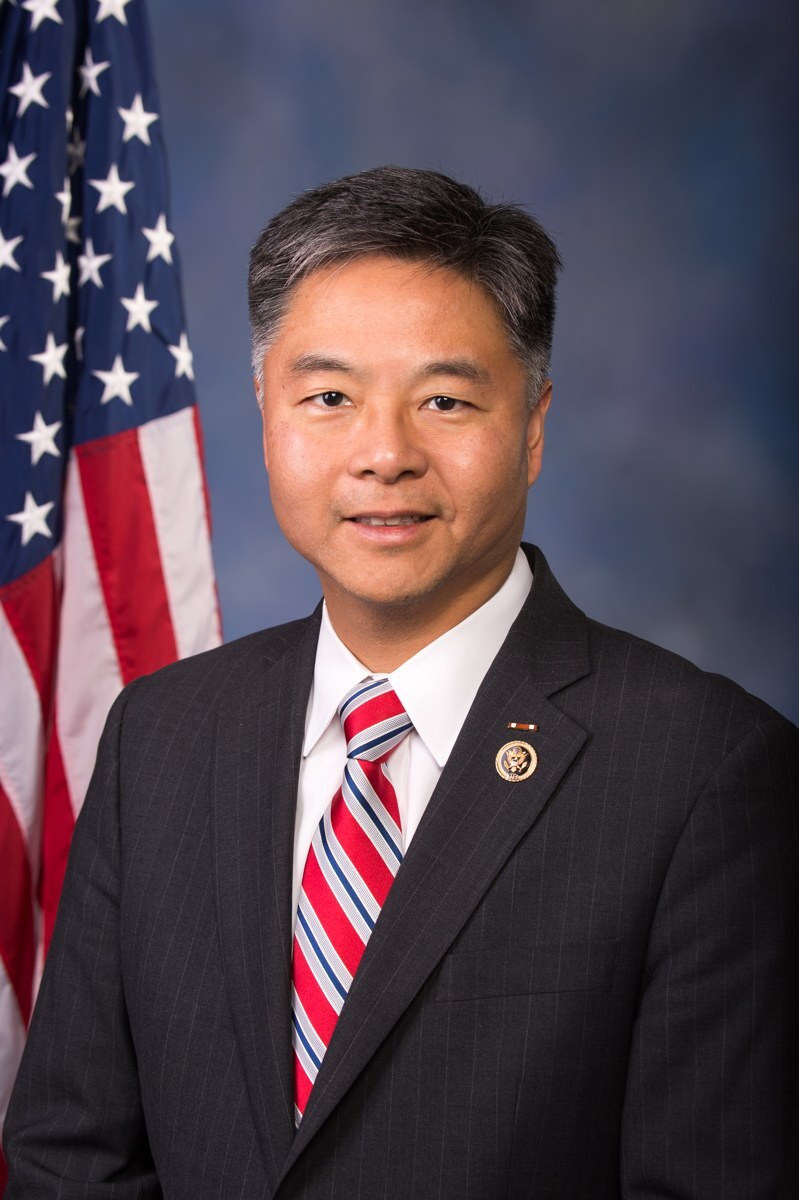
Ted Lieu represents California's 36th Congressional District, sits on the House Judiciary and Foreign Affairs Committees, and serves as Vice Chair of the House Democratic Caucus. A former Air Force JAG officer who retired from the Reserve as a colonel, he trained in computer science and has become one of Congress's leading voices on artificial intelligence. In July 2026 he and Rep. Nathaniel Moran introduced the AI Kill Switch Act, which the episode discusses.
The Supreme Court decision immunizing the President of the United States is one of the worst decisions ever in the history of the Supreme Court… It greatly increased the power of the executive branch.
Rep. Ted Lieu
Today's episode is brought to you by Americans United for Separation of Church and State. Americans United has spent the last 80 years defending your right to live as yourself and believe as you choose.
As long as you don't harm others.
Most recently, this work has taken AU to the state of Texas where they're defending the rights of freedom of and from religion for more than a dozen families who are fighting against the Ten Commandments being posted in their children's classrooms. Learn more at au.org slash TENC.
That's au.org slash TENC.
Welcome to another episode of the Oath in the Office podcast. I'm John Fugelsang, and I am so proud to welcome the star of this show, the man, the myth, the Mac, the only constitutional law professor to be kicked out of Wu-Tang Clan for being too hardcore. People of Earth, I give you the author of The Oath in the Office, the star of our show, Professor Corey Brettschneider.
Hello, sir. Thanks, John.
If nothing else, I'm sure that this show about what's happening in the news and thinking about the deeper legal issues has the best introduction of And it never exists.
So I'm so happy to do it with you.
And I'm so happy to be here cheating off your paper like I do every class, Corey, because today we got to go deep on Jack Smith's fascinating testimony before the House Judiciary Committee. And of course, control of the House and Senate in this midterm could determine whether Congress has any investigations, any subpoenas or any oversight over the executive branch. And in Act 3, a very special guest, one of our favorite members of Congress, Ted Lieu stops by the podcast.
That's right.
I mean, what really links everything that we're going to talk about on this show is the importance of Congress, because we have a Supreme Court that's abandoned its duty to protect the Constitution. So where else is that going to come from at this moment? Well, it's going to come from the demand of the people, of citizens, but it's going to really be enacted by what I hope is a Congress that is finally devoted to holding this president and his cronies and his cabinet to account. That's not going to happen without at least a Democratic House and hopefully a Democratic Senate. And one of the leaders in thinking about not just how to win this election, but what to do if Democrats do win this election in the House, at least, and hopefully in the Senate, is Representative Ted Lieu from California. And people are really in for a treat in that interview because he doesn't just, you know, talk talking points. One of the amazing things about doing an independent podcast is we can go deep on issues like impeachment, not just of the president, but of Pete Hegseth and also on the kind of regulation that we need that we would never get without this Democratic Congress, especially of AI and what the real threats are there of a biological weapon resulting in the extinction of humanity, as we.
Heard from a former member of Anthropic. So it's quite a show.
Yeah, I don't think you need to worry about that anymore, Professor, because I think we talked about this. You know, in nuclear power, we have the NRC to regulate and make sure. And then airlines have the FAA. Drugs have the FDA, right? Food has the USDA. Financial markets have the SEC. Workplace safety, we got OSHA. But artificial intelligence? we are going to trust the consciences of Silicon Valley billionaires to regulate themselves. Don't you feel safer, Professor, knowing that that's the hand of the state? I mean, historically speaking, that's kind of a bold bet, right?
Well, I got to say, you know, one of the things we'll talk to Ted Lieu about is the idea of the need for a kill switch. And that's really, I should say, too, he's the perfect person to talk to because he has a degree from Stanford, not just in political science, but also in computer science. And his bill is really a leader in thinking about how to regulate and talking about the need to have the basic ability to turn off AI, to have a kill switch. And the real danger, just to lay it out too in teasing that interview, we have talked about it before, but it's not necessarily that somebody's going to use AI to create a nuclear weapon, but certainly that they might use it to create a biological weapon. And self-regulation, there's no way that's going to work because... It might come from one of the open source AIs, for instance, even if it doesn't come from anthropic or open AI. So this race, this congressional race, we'll get into the nitty gritty of it. It's so important on so many dimensions in avoiding the kind of travesty that we saw in this attempt to convince Jack Smith to commit perjury and the failure to regulate in such essential areas that are literally life and death like And that's going to require us also talking some politics today about what these races look like.
I'm excited to talk politics with you today, Corey. It's like you're on my show. Well, Jack Smith appeared before the Senate Judiciary Committee, presumably because Chuck Grassley, who is 173 years old, thought that would be a good idea. Let's go back to the well. Remember when Rand Paul beat up on Fauci for a day a few months ago? We don't have anything to brag about. We're the least productive Congress in history and everyone hates our president. Let's give them another villain they should hate for the Fox News folks. So that was the setting. We know going into this that these Republican senators were nothing but content creators. They were just trying to get gotcha soundbites that could air on Fox and OAN and Newsmax that night. And so Jack Smith sits down and faces these Republican accusations that His investigations of Trump were politically motivated. It was an abuse of prosecutorial power. And it was remarkable, Professor, rather than back away from his decisions, Smith defended them, said he would not be intimidated by any threats of prosecution. And what struck you the most when you saw his testimony? I really can't believe how short-sighted the Republicans on this committee was to think that somehow putting this guy under oath in front of TV cameras was going to be good for them.
Well, you know, he really learned the lesson that we didn't get in the Mueller testimony, for instance, when the Mueller report came out, where Mueller was so cagey and not really wanting to say what that report clearly did say, which was that Donald Trump was guilty of 10 instances of obstruction of justice. And there was a technical reason why he couldn't be indicted, which was the Department of Justice policy against it.
But the way he did it, and maybe it was his age.
We talked to Glenn Kirshner about this, and he thought that might have been part of what was going on. But the bottom line was you just got this totally incoherent, frankly boring testimony from Mueller that didn't tell us the truth of what's going on. You didn't get that at all from Jack Smith. He really learned the lesson, which is you have to communicate directly and clearly. And when he said, I would do it again in essentially a heartbeat if a former president committed these crimes. And there was proof beyond a reasonable doubt. That's why he indicted him in the January 6th insurrection trial. And also in the documents case, a violation of the Espionage Act. So what struck me was they were playing gotcha. And we'll talk about that with the hawks and all these attempts of trying to rub them into perjury. But the bottom line is he used the forum so perfectly in order to say what needed to be said, which was there was an attempted insurrection. The president was criminally a part of it and criminally guilty. And the president also stole these documents and refused to give them back in violation of the Espionage Act, putting American security at risk. And, you know, to say that clearly with force and with no hesitation to refuse to apologize, that was great.
He handled, too, a lot of the gotcha questions.
Including, you know, why was it that you were just looking into Republican senators when it came to the insurrection? And his answer was, well, if there were Democrats involved in the insurrection, we would have looked at them too.
But there weren't.
And that kind of blunt talk is just what we needed. So it was an important moment for American democracy.
Yeah, he really seemed to understand that these senators did not care at all about prosecutorial misconduct. These are Todd Blanch cheerleaders. He knew they were coming just to hurt him, to make him a villain, to try to aggrandize Trump, who they can't otherwise defend. And it was remarkable. I mean, he essentially said, I investigated Trump because the evidence warranted that. And I would make the same decision again. He was very comfortable presenting evidence to the American people on camera. Remember, for years... They kept trying to have him only testify behind closed doors. But this was a dumb move on their part. Corey, they accused Smith of weaponizing the Justice Department against Trump. What would someone actually have to prove to establish that a federal prosecution was politically motivated? I don't think his wife's beliefs have anything to do with that.
Well, I guess what they were trying to say is that this was somehow, well, it wasn't just a selective prosecution. What that would require would be a comparison, that there were instances of somebody committing a crime that was not prosecuted and somebody else committing it who was.
And so there is, you know, a real argument that's.
Going on among scholars and among lawyers about whether or not the prosecution in New York was a selective prosecution.
I don't think it was. It's the falsification of business records. But January 6th, that's.
Somehow a selective prosecution.
I don't think so.
There's never been another president that has engaged in that kind of malfeasance, except there's one exception, which is John Adams. And, you know, the idea that you would charge the current Department of Justice for not prosecuting John Adams. And I talk about that in my book, his attempt to really use a similar technique to steal the election.
He was caught much earlier. There was no voting.
So even that isn't comparable. But really what they were trying to say is that it was manufactured weaponization of the Department of Justice and that there was no case there.
Well, look at the evidence. That's Jack Smith's response.
No, they're not going to do that. They're not going to look at the evidence. No, they're going to call you woke and they're going to have their Fox News law fair talking points. And it was so amazing the level of stupidity they rely on in the American people. And I know plenty will give it to him. But like this whole episode, Trump is now president. Those federal cases were dismissed. Smith is now the former prosecutor. Diesel is almost seven dollars a gallon. And they're calling hearings in D.C. to argue whether the original discarded prosecutions were legitimate. The entire thing, the entire thing was ridiculous. Corey, what questions should these Republicans have asked if their goal really was to determine whether Smith abused prosecutorial power? Because all they wanted to do, and we know it for a fact, they wanted to get their soundbite of beating up on this week's whipping boy.
Well, you know, they would have needed some sort of actual evidence that he was engaged.
In prosecutorial misconduct. And I think, frankly, the.
Reason why you saw such ridiculous questions was that there is no evidence because that's not what was going on. This was really a straight up prosecutor who looked at these two cases, which to my mind were calling out for prosecution and did what the law required. And I believe him when he says he would have done it if it was a Republican or a Democratic prosecutor. Now, what they were trying to allege And Senator Eric Schmidt from Missouri was the sort of poster boy for this totally ridiculous, I mean, historically bad attempt to claim that somehow he was engaged in a conspiracy with the district attorney in Georgia to bring down the president of the United States. And then that's what led him into this absurd moment of accusing him of being in Georgia at a point in which he wasn't, which I'll let you fill in the details, but involved a total mix-up of the name of basketball teams, the Hawks and Hawkeyes.
Yeah, I don't know. You want to explain that?
Well, I mean, I think everybody listening, if they listen to this podcast, they probably know what happened with Senator Eric Schmidt. But it is fascinating because if it wasn't for that epic cock-up, nobody might have heard of this testimony. It would have just come and gone really quick. And, you know, your grandma watching Fox drooling on the clicker would have seen, you know, a clip of it, and that would have been it. It would have been forgotten. But now... Yeah, it's huge news because he was so determined. They're so determined and led by hate to just hurt the other side that you get sloppy, you get messy. And it's a very good lesson for liberals who want to go out and debate as well. But I found it fascinating. All the folks on the left who came out and said, Eric Schmidt destroyed his career. Did you see what happened? What a humiliation. That guy set his career on fire. Corey. Senator Eric Schmidt didn't destroy his career at all. I mean, these folks seem to think the modern base is offended by lies and stupidity and incompetency. They don't care that he lied. They don't care that it blew up in his face. He hates who they hate. That's enough. If people cared about truth or law, they wouldn't be rooting. for the Republicans against this law enforcement official who sat there and talked about how they fired career FBI agents for committing the crime of following the law and punishing wrongdoers on January 6th. I mean, by definition, wasn't this an anti-constitutional inquisition?
Absolutely. I mean, it was an attempt.
First of all, I should say, shout out to Amy Klobuchar. Senator Klobuchar caught the the discrepancy in real time between Hawkeyes and Hawks and knew her sports teams enough to call out Eric Schmidt. And I think your point, just to pick up on it, which is that, you know, he was embarrassed clearly in the moment. I mean, when you're, you know, have a poster and a line of questioning, this is a former prosecutor who's bragging that you've got your gotcha moment and it rests on a confusion of two sports teams.
I mean, it was embarrassing.
And watching it, I felt like you could see the embarrassment on his face. But after the fact, you know, he backtracked so quickly.
What?
I just asked him a question about whether or not he attended a sports, you know, sports event.
And what's the big deal? He just denied it.
And the only universe in which you can do that is one in which there are two factual universes, one in which there was an insurrection that a president, you know, we.
Watched in real time.
Encouraged telling people to go down to the Capitol to block the certification of the election against him to stay in power beyond a reasonable doubt. As we heard the other Jack Smith case, the documents case, essentially stealing of documents and threatening national security by keeping them in a bathroom in Mar-a-Lago. That's the universe we live in, the universe that Eric Schmidt lives in. is one in which, you know, you can just in real time embarrass the hell out of yourself and then claim you weren't embarrassed at all.
It was just a normal question and he answered it.
Here's the question that kept me up at night after watching this. I don't think Jack Smith is afraid, but let's say you're a federal prosecutor in the year 2027 or 2028, right? And you have evidence that a politically powerful person may have committed a serious federal crime, but now you also know If the political winds change, you could personally become the subject of a criminal investigation. I mean, these guys went after the terrorists who beat cops on the Capitol steps to steal our election. And the law enforcement was fired for going after them. So doesn't this change prosecutorial independence? I mean, this could cause a lot of prosecutors to keep their morality in check.
You know, I think there are members of the Department of Justice who are still there, who are trying their best to hang on and who are hoping, you know, that we've had a bad moment, but things are going to pick up.
And return to normal.
And what your question really points to is the fact that when it comes to the Department of Justice, it's much easier to destroy it than it's going to be to build it back. Because, yes, prosecutors are going to worry about bringing charges against powerful people in the future.
Less that they find themselves.
Targeted by an investigation in the same way that Letitia James was targeted and James Comey. Now we've seen Jack Smith, you know, essentially they're looking for anything that they can do to charge him criminally with perjury.
That's what they were trying to do.
That's what all this ridiculousness about Hawkeyes and Hawks was about, was trying to catch him up in a lie that they could then prosecute. And I should say too, Senator Schmidt, said point blank, you've committed, you know, I think you've committed perjury. And based on nothing, that shows how desperate they were not to get at any kind of facts or ask any kind of questions, but to prosecute them. And, you know, what I think what Jack Smith shows is it takes a certain amount of courage to do the right thing in these jobs. And, you know, what's worrying is that is there a chilling effect in the future when it comes to prosecuting people?
Yes, because they'll think about retaliation.
Now, that's why it's so important as much as I want to see the law enforced in the future when the Democratic Party takes the House, takes the Senate, takes the presidency, hopefully in a couple of years, that although the law needs to be enforced and if there's legal violations by any of the current members of the administration, they absolutely need to be prosecuted. But that has to be done carefully and different than anything like retaliation.
Well, so let me ask you about this then. And I know we have to get through a break, but what really made them angry, or at least what their performative anger was about, and it's actually hilarious, that Smith was accused of collecting the phone records from senators and communications involving journalists and political figures. Now, I mean, it's pretty much open and shut, right? Like, it's like, yeah, we're investigating the president who was committing many crimes that day. We don't know, we didn't investigate anyone. We got the phone numbers he was talking to, and we investigated who those calls were. I mean... He's saying the subpoenas involving the lawmakers were connected to evidence that Trump's circle was trying to influence senators on that day. What is the constitutional balance between congressional privilege and a legitimate criminal investigation? These Republicans are just, they're clutching their pearls theatrically, right? They don't really have a grievance here.
Yeah, they were trying to pretend essentially that the Republican members of Congress who were involved in the insurrection were in some ways having their rights violated. There is a speech and debate clause of the United States Constitution that protects, for instance, the right of free speech to senators to say what they want in the halls of Congress. And of course, there is a First Amendment right to have your beliefs and to say all sorts of things, but that doesn't extend any more for senators than it does for ordinary citizens. to the right to engage in a conspiracy to overturn an election. And to the extent that the criminal case against the president involved communication with senators about that topic. And after all, it's the Congress that's certifying the electoral votes. That was part of the plot to stop that process from happening.
Right.
So that the vote would be thrown under the Constitution. This is a slightly complicated process, but I'll explain it quickly. If they didn't get to the threshold of electoral votes, it goes to a special session of Congress where each state gets one vote. And what Donald Trump and John Eastman, his lawyer who was advising him on this coup plot, had calculated is that they had the votes to win in that special session of Congress if they could get to it. So did you need to look at communication between the president and members of Congress?
Yes, of course. That was a huge part. of what's going on.
And when he was asked about it, and I referenced this earlier in the conversation, he said, you know, I looked at anybody who was involved in the criminal conspiracy. And if there was a Democratic member of Congress, which I guess, you know.
It's not what happened. But if there was, then yeah, I would have looked at them too.
And the idea that they were trying to use this sliver of evidence that it was only Republicans who were being looked into, that plays to the, again, that theme of the Fox News audience. But that's not what a criminal investigator does. They look at the crime and the facts that support the evidence that a crime was committed.
But that's the big thing. I mean, because I think we're going to talk about the midterms after the break. But to me, one of the big consequences of this is that this election is not just about immigration or health care or the economy. It's about who investigates the executive branch. So, I mean, could a change in the House or Senate control lead to investigations into this administration that would not happen under Republican control? That's what this is about.
I think that's why this election is so important and what ties all the things that we're going to talk about today together. that what the election of the president and his party was about was taking the executive branch and opening it up to the purest form of crime and corruption possible.
And part of that was.
That there is technically a way to bring these cases back, the January 6th case and the documents case, but for all intents and purposes, it's dead.
And that was part of it. And it was also about cutting off any.
Oversight because what this Congress's duty is, is to look at constitutional violations when it comes to war, when it comes to the more than $ 2 billion in corruption that this president's been engaged in and provide oversight.
And this Congress has done anything but.
And if Democrats can win at least one house, hopefully two, then that oversight becomes a real reality.
And that scares the hell out of the president and his party.
And let's take a quick break because I am so excited to actually talk about the politics of the midterms with you, Professor, in several states, because they all impact us, don't they? So don't go anywhere. Quick break. Back in a moment with The Oath in the Office.
As students return to Texas public schools this fall, classrooms across the state will feature a new poster, the Ten Commandments.
How did we get here?
Texas passed a law requiring public schools to display the Ten Commandments in every classroom, specifying a Protestant Christian version that must be displayed. Americans United, our sponsor, and their allies are challenging this law in court because it violates religious freedom and the constitutional rights of students and families. The appeals court downplayed the importance of these displays, saying they just, quote, put a poster on a classroom wall, end quote. But forcing government-mandated religious displays into our public school classrooms and taking away families' freedom to choose their own religion and belief systems is a very big deal. And AU is here to protect everyone's First Amendment freedom, everyone's right to the freedom of and from religion. Learn more and get involved at au.org slash T-E-N-C. that freedom without favor and equality without exception should be the understanding of the First Amendment.
Welcome back to The Oath in the Office. I'm John Fugelsang, along with Professor Corey Bretschneider. Corey, we're going to talk about five Senate races that are pretty interesting in Texas, Ohio, North Carolina, Maine, and Alaska. Some of these are states that Democrats were not supposed to seriously be competitive in. And now they're incredibly competitive, although Republicans still do have a lot of structural and financial advantages here. And we don't know how much we can trust the polling, but we know that Republicans are shifting substantial resources into states like Texas and Ohio and Alaska. They're pulling out of North Carolina. Roy Cooper has strengthened his position there. So Washington Post analysis says Democrats need only a small net gain. Gerrymandering, of course, is going to do what it does. What do you think? I mean, is the House as in play as everyone seems to think it is?
Well, the way I see it is what's and this is encouraging. And, you know, it's partly the polling and it's partly where resources are being spent.
And as you say, we look at we look at all the factors.
But, yeah, I feel strongly that despite the gerrymandering, which is a form of cheating. that Democrats will take the House of Representatives, which of course is, you know, the seats were apportioned proportionally, but the states have engaged in massive amounts of redrawing those boundaries. And even with that, I think that it's still going to be the case that we'll get a House victory for the Democratic Party.
And, you know, there's an analogy here, I think, of what happened in Hungary.
Viktor Orban, the essentially dictator of Hungary, had engaged in unbelievable amounts of gerrymandering and still In that election, his party lost.
And what was it? I think the analogy really is strong.
I mean, there were a lot of reasons, but I think the main reason was that there was a focus on Orban's, not just his authoritarianism, but tying it to his corruption. And that's one of the things I think is really going to resonate with people here, especially as these.
Candidates begin to. And I hope to see more of it.
Connect the corruption to the fact that our economy is failing.
Yeah, of course.
The corruption, too, of a president who has usurped the congressional power to declare war and is spending our money and causing inflation through a war that nobody wants. So all of that suggests, at least in the House, that, yeah, there was massive gerrymandering, but there's going to be an advantage. But the shocking thing to me, and surprisingly, in a great way, because it suggests not just some pushback, but the ability of both houses together to pull back. And just to skip ahead, you know, I'm going to ask Ted Lieu about impeachment. You need 50% of the House, but two-thirds of the Senate. And without a majority of Democrats in the Senate, the removal part of the impeachment process becomes the Senate part. The Senate trial becomes very unlikely. But in all these races that you already alluded to, it looks like the Democratic Party has a very good chance of taking the Senate as well.
Let's talk about it, because I'm not so comforted by the Hungary vote. That was, I mean, the liberals, the moderates, and the conservatives all got behind a very conservative guy to get a very corrupt right-wing guy out. I'd like to believe that could happen here, but the Senate is much more complicated than the House. Republicans have a 53-47 majority. No one six months ago thought the Democrats would have any chance of doing this. And yet, so many states are now in play. So let me start with Texas. Maybe the most amazing of the five, because we're talking about a state Democrats have struggled to win statewide for decades. But you've got James Tallarico, who's sort of like a 16 year old choir boy living in the body of a 94 year old disappointed Presbyterian librarian. And this guy is doing what they always say. He's actually quoting Jesus directly. And there's nothing that offends Christian nationalists more. The polling is insane. What we're seeing right now in Texas. But I mean, if Democrats are forcing Republicans to spend so heavily in Texas, even if Tallarico doesn't win, that still helps the Democratic Party elsewhere, right?
Absolutely.
You know, it takes resources away from other races because in a normal universe, Texas wouldn't be a solid red state and.
It's anything but.
In fact, Tallarico looks like he's leading in a lot of the polling. And, you know, let me say something, too, that you already referenced. I mean, in many ways, he's the John Fuglesang candidate of the moment because his ability to combine talking about the message of Christianity and Jesus and using it against the kind of fake fundamentalism of fake Christianity, I think that's really been effective. And, you know, there doesn't have to be one message of the Democratic Party.
I know that some disagree with me.
They want to see every candidate, you know, speak the way maybe candidates do in New York, but he doesn't buy into that. And this is showing that it's working because this election, and, you know, maybe there is an analogy with Orban that, that Tallarico is going to seem to some members of the democratic party, you know, to speak in a way and to have positions that don't resonate with them.
Well, we need a coalition. That's how you win an election. That's how you get.
Impeachment of people committing high crimes and misdemeanors like Pete Hegseth with his attacks on What he says are drug boats, but likely are migrants who are being illegally targeted. That kind of criminality needs a response. And Telerico, I think, is helping to show that the Democratic Party, you know, is taking on, this is not true of the Republican Party, a brand of not just anti-corruption, but anti-authoritarianism, anti-tyranny. And that vocabulary, it's going to sound different. It's one of the most encouraging things about the moment.
We can't miss out, too, on his opponent, Paxton, who is just.
An epitome of Trumpism, but also an embarrassment to Trump. Trump makes fun of him a lot.
Which I appreciate. He berates him. I mean, cruelly, it takes a lot for me to feel sorry for Ken Paxton for it. And again, they could have had John Cornyn. They could have had boring, reliable John Cornyn, who's a much better fundraiser. And this thing would be over. But they're too racist. They hate women too much. They're too crazy. So they went with Ken Paxton, who was bleeding votes for them all over the place. And I think I said it on our show last week, but can you imagine showing up to vote for Ken Paxton in a primary and a runoff and a general? How much? do you have to hate women to get in your car and drive to vote three times in one year for Ken Paxton? And the polls show it. I mean, they've done it.
You know, it's part of why I would call the subtle invoking of Christianity by Tallarico works so well, because his opponent is so craven. And any claim that he has to appeal to Any religious.
Person is absurd.
I mean, this is somebody who really has his personal life in shambles.
You know, he's impeached by his own party.
And so, you know, sometimes, you know, it's about the strength of a candidate. But it's also when they go against a weak candidate like that, I think things are looking pretty good.
So let me ask you about Ohio, because, look, I'm a fan of Vivek Ramaswamy because I like comedy. You know, I'm like for me. He's like if, I don't know, let's say if Eddie Haskell from Lever to Beaver stayed up doing coke all night in a basement with James Woods. That's Vivek Ramaswamy. But in the Senate race, we've got former Senator Jared Brown, who's done my show, and he's trying to return to the Senate against Republican John Hosted. Again, this one's also neck and neck. I mean, but that's a very different Ohio professor from the state that elected Donald Trump by large margins. Is this really a referendum on Trump and the Republican Party? Or do you think Brown is benefiting because he's a familiar figure who won statewide office before?
I think it's that.
I also think that, you know, states like Ohio have a current in them that is much more anti-Republican.
And traditionally Democratic. And the more we.
Emphasize the tide, I mean, this is a good example of where this isn't exactly the dynamic in Texas, but I think it is in Ohio. The more that we emphasize the tie between Trump's corruption and and inflation, and the danger of the economy. And when you talk about AI and the jobs, you know, that are going to be lost from it if there isn't sensible regulation, all of these things, I think, are going to resonate with Ohio voters. And yes, when you have somebody who, you know, there's no issue of name recognition, this is a tested candidate, and that certainly helps. Yeah.
So let me ask you then about North Carolina, because this might be the most dramatic race of all of these. Former Democratic Governor Roy Cooper running against Republican Michael Watley. Cooper has significant leads. A recent one showed him 51% to 39%, and now the GOP-aligned groups, Professor, are pulling money out of North Carolina. What does that tell you?
Well, I mean, if it was a race that was winnable, you'd see them pouring money in, but they might be thinking to themselves, you know, and they have internal polling that's showing this, and they're making decisions about their own resources, which, although they're vast, are Also.
You know, not unlimited.
And wow, maybe that suggests that North Carolina is more blue and purple.
Slash blue than we realized.
It's always been purple, yeah.
And, you know, I think that's certainly going to help us. We're a long way from the days of Jesse Helms, you know, winning elections. And I think there too, the sort of, you know, my wife's, you know, from Chapel Hill has spent a lot of time in North Carolina and And when you think about the research triangle, when you think about Black Mountain and Asheville, these are strongly progressive areas. And then if you can combine the strength in those areas with a message that resonates throughout the state, again, and I think also about the economy.
Is so crucial here. It looks like it's not just winnable, but a very good chance. Yeah.
Great audiences, too, for comedy in South North Carolina. And it is a pleasure watching these Republicans redistribute their own wealth like this. But I got to ask you about Maine, which is fascinating because Susan Collins for years has had this ability. I mean, she's already got magical powers every every six years. She somehow magically transforms into a moderate. It's weird. But she really has shown an ability to outperform the Republican Party's national numbers time and time again, even when they do badly. She sails through. But now she's facing Troy Jackson, and the race is tied in the most recent poll. And of course, there is her personal life, and there's all that kind of stuff. But, I mean, a month ago, people were saying that this race was written off because of Graham Platner. Now everybody's saying, you know, Graham who? And what's really remarkable is that Susan Collins right now is finally– apparently having a reckoning over her vote for Brett Kavanaugh. And he assured me that he'd protect Roe v.
Wade.
I mean, it seems like a Supreme Court vacancy could become a really important issue in this race.
You know, I think that Mainers have had enough that they realize that they've been duped. The way that she did that Brett Kavanaugh maneuver, I think, was particularly gross, is how I'd put it. Because She lied to them. Brett Kavanaugh, we knew what he was doing. When he was asked about Roe v. Wade, he would say things like, and listen to how I frame it, we know, Senator, that Roe v. Wade is a precedent of the Supreme Court. He would give factual explanations of what the court had said before. And she somehow was willing to say, I can't believe she believed it, that this was a promise that he would uphold Roe v.
Wade. And he never even said that.
He just framed these words in a way that allowed her, and he knew that he was playing to Trump, but especially in the disgusting response to the credible accusations of his sexual assault. But the way that he responded to was playing to her by giving her this language that she could then use to go back to her state and say, oh, well, he promised me. And I feel betrayed when the court, including Brett Kavanaugh, directly overturned Roe versus Wade. Well, I don't think she believed it, and I don't think Mainers believe it. There was an amazing article by Jodi Kantor, who was on our podcast, A Piece of Journalism, where she went out to the island where Justice Roberts is spending time. And even on this remote island in Maine, people are sick of it. And they really see what this Supreme Court has done to our rights. So her complicity. And she is responsible directly for so much of what's happened, not just with Roe versus Wade, but with the shadow docket. I'll remind listeners too, and John, that I wrote a piece called Kavanaugh's Dangerous Idea of Executive Power for Politico that really warned this guy, everything in his history, he had been involved in Bush versus Gore.
He was operative.
He was not somebody that was you know, in any way neutral and that he was going to be complicit in this takeover.
He was a Karl Rove toady. He was a Karl Rove toady who helped shut down the 2000 recount in Florida. And yet, I'm sorry, Corey, I blame Democrats for this more. I mean, we learned a lot about Dr. Christine Blasey Ford and God bless her. But if they had fought based on this guy's life and his embarrassing career as hard as they did on her, I mean, at least people would have known about it, even if they had lost anyway. But what an irony. A few months ago, we were just talking about Graham Platner nonstop. And now Graham Platner's scandals forcing him to drop out may be the reason the Democrats take the Senate.
Yeah, I mean, I have to say this race is closer than it should be. I think given all that we were just saying about what's wrong with Susan Collins, that the polls should go the other way. And that this one actually, unlike Texas, for instance, where I feel so encouraged, I'm concerned that it's as close as it is. And we have to acknowledge, I think part of what's going on here is that when Plattner stepped down, it basically meant that there was no primary. And we saw that in the National Party, you know, where not having a primary is a bad thing for democracy. And my worry is that there might be some effects there. But in the end, I do think that this Senator Collins schtick is what I'd call it. I mean, this ridiculous set of lies that she's been telling Mainers is not going to fly anymore.
And this election is the time to show it.
Only reason she voted against Todd Blanch, right? Because she's up for election and she knows how toxic this is. And she has to do her little moderate act.
I mean, you probably knew he had the votes to go through, too. I mean, she doesn't know unless she she you know, it's not going to have any consequence of these deals.
And if her vote had kept him from getting the job, Donald Trump would have attacked her and she never would have done it. Let's talk about Alaska, because I never thought we'd be having this conversation. Republican Dan Sullivan is facing Democrat Mary Patola. And the latest polling is essentially deadlocked again. They're within margin of error for each other. how seriously should Democrats be taking Alaska?
Look, you know, this is when we're talking about resources, even if Alaska does go to the Republican Party, the idea that you would have to divert resources in order to keep a state that, you know, in any normal year would be safe for Republicans, that can only be a good thing when it comes to the check on executive power that we need that will only come from a Democratic victory, including in the Senate.
So, you know, I take that to be A good thing.
I think, too, you know, the fact that Alaska is in play, that Kansas is in play with another candidate that resembles Telerico, a reverend, that that's really showing you that this isn't an election like any other. It isn't an election that's just about economic issues, although I've talked about why that matters in specific races and tying it to the corruption is, I think, the way to do it. but that Americans are really upset by what's going on with this country. And as much as Donald Trump thinks that Americans are idiots when it comes to his foreign wars, for instance.
And campaigning on no more foreign wars.
And then initiating one on his own, the fact that we have all these states in play that normally would never, including Alaska, you know, that I think tells us how bad things are with this presidency and how Americans, thankfully, you know, we're always looking for hope on the podcast.
This is where it is. Americans are seeing what we're all seeing.
Yeah. Well, I mean, you know, not to put too fine a point on it, but yeah, Donald Trump just announced 150 million for Alaska power transmission infrastructure while J.D. Vance was campaigning there for Sullivan, which will go great once you get your $ 5, 000 refund check and your dose check and your $ 500 Medicare check and everything else he's desperately promising as the clock runs out. So let me ask you, having discussed all this and seeing that the House seems likely and the Senate might actually happen, too. It's all about congressional oversight, right? Are we approaching a point where it may actually happen, where at least one branch of government, all it has to be is the Senator of the House, and that will hold this man in check at least somewhat, right?
So much of what actually works in our system, and we've seen so much of what doesn't work over the last two years, because when the Republican Party, which is devoted to a monarchical idea, an authoritarian idea of the Constitution, controls not just the presidency, but his lackeys control the Congress, which has been the case. The Speaker of the House has so much power blocking any possibility of impeachment, certainly, any possibility of serious bills coming to the floor. The Senate, with its massive power, any one of the victories, either in the House, which I think is likely, or in the Senate, which also might be likely, Results in the ability of senators to subpoena members of the executive branch to see what's going on, to start to peer into it. And, you know, that alone, I think, is traditionally, even with this administration, a way of bringing people to heel because it's a way of getting information out.
But that's just the starting point. Oversight. And you'll hear me talk to Congressman Lew about it.
But what also I think is important is that we start to talk about the reality, and I know a lot of candidates don't want to talk about it, and Lou in particular and others, Hakeem Jeffries, they don't want to say what's coming, which is that, yes, there's so much evidence of theft, of high crimes and misdemeanors by the president, by his cabinet, that that becomes a real possibility. And part of the point of that is that's how we start to get information out.
But I want to mention one other thing, John.
Please, please.
I'm just really... excited about this. And I'll talk to the congressman about this. But we need legislation. That's supposed to be the job of Congress.
This Congress has done nothing when it comes to its lawmaking function.
And the point of laws.
Are to protect us from what we started with, for instance, the threat of, well, of nuclear weapons, or in this case, AI, resulting in the creation of a biological weapon that a former employee of Anthropic is saying has a 10% chance of of extinguishing all of humanity.
My God, of course we need legislation.
And so that's part of the point of a victory in both houses, to get these bills out of committee, onto the floor, to get votes on them.
And you know what?
Of course the president's going to veto them, but at least we're starting to have a battle over the laws that we need and will reveal the danger that is this presidency. We might even get, and we did get this in the last two years of Nixon's presidency.
This seems far off, but it is possible.
Override votes to reverse the president's veto. And that happened, for instance, in the War Powers Act, something we desperately need now. A reconsideration of the way we think about war powers.
I think Trump knew what would happen with the Epstein Files law, which is why he signed that. But I mean, for me, if the Congress refuses to exercise... their power of oversight under the executive branch, then, I mean, that's just as bad as the crimes of the executive branch. Are we getting to a point, Corey, where our elections are going to be deciding not just policy, but every election will decide whether government institutions investigate government misconduct at all, right? I mean, you're not going to get a federal investigation of any hate crimes until there's a different attorney general.
You're not going to get an investigation of the many crimes of this administration, including the massive theft including, let's just preview what we're going to talk about, the selling of pardons, I mean, which is going on, you know, in the Oval Office, the basically run around the Department of Justice and the willingness to outright have a president and brokers for the president selling pardons and taking percentages.
All of that should be the subject of criminal investigation.
But the Department of Justice under this administration is not going to do it.
Well, who might do it?
That's exactly what oversight means when it comes down to it. Either House of Congress could do it. And I think that's one of the things that we're going to start to see. And again, it's not enough to investigate the president's selling of pardons. We need a bill that's going to look at this. And Congressman Lew will help outline that for us.
Right on. Corey, last question, and then I'm excited for Ted Lew. If Democrats win the House and the Senate, what is the single most important constitutional responsibility you think they need to exercise?
Look, unlike, I'm not running for Congress. I'm not at the behest of the Democratic Party. congressional committee. So I'll just say what's really at stake, which is we have a president and cabinet members who are not just committing high crimes and misdemeanors, but are threatening the destruction of our democracy with their massive corruption, with their shutdown of free speech. That needs to be front and center, not just oversight, but thinking about impeachment.
Right on. Let's take a quick break. And when we come back, it's Corey's big sit down with my congressman, Ted Lieu.
Welcome back to The Oath in the Office. Joining us is Congressman Ted Lieu. He's joining us again, and we're so honored that he's a repeat guest on the show. Congressman Lieu represents California's 36th District, and he serves as vice chair of the House Democratic Caucus. Born in Taiwan and raised in Ohio, Congressman Luce studied computer science and political science at Stanford and earned a law degree at Georgetown. He was also in the Air Force and retired from the Reserve as a colonel. And he entered Congress in 2015. I'll note, too, in Trump's first term, he helped to draft the article of impeachment against Trump and served as a House impeachment manager in the second impeachment in regard to January 15th.
Six.
So I was very eager to have Congressman Liu back to talk about not just the challenges we face, but the legislation that we need. We're always talking about the threats to democracy, but also about ways to have hope and to really fix the problems of our democracy. And to my mind, Congressman Liu is really in the forefront of the most important areas. So, Congressman Liu, welcome back to The Oath in the Office.
Thank you, Corey. Honored to be back on the show.
Let's start off by talking about AI.
I'm still recovering from the shock that a member, a former employee of Anthropic has told us that he puts it at about 10% chance.
That the world will be destroyed by AI.
And of course, we've heard, well, far from denials from the Anthropic CEO, which sounded to me like an acknowledgement that something around that number might be right. And Yet at the same time, we have the president essentially resisting any form of regulation. Now I'm eager to talk to you because one of the things I know that you're doing is talking to us, talking to members of Congress and sponsoring legislation about how to, well, to stop the extinguishing of all human life by AI.
So talk to me about the nitty gritty. How can we do this?
Thank you, Corey, for your question. I'm a recovering computer science major. And so I've been Looking at this issue for decades, but something qualitatively changed with their introduction of large language models about four or five years ago. That was a massive leap in technology. And the problem with this technology is it's still relatively brand new and multiple AI companies have now lost control of the AI models and agents. And so we need to make sure we put adequate safeguards around these models and make sure that they don't go ahead and cause harm. Now, you know, I'm not sure it's helpful to say, look, we're all going to die, you know, in a few years. There's a lot more specific harms that could, in fact, happen. So, for example, you could have these models go ahead and engage in breaches of other companies, institutions. Some of these agents and models have already done that. But what if next time It happens to be a bank holding your money and they decide to empty that account. That would be a problem. And so you got some specific risks that we need to address and deal with. And at a minimum, we need to be able to turn off and kill these agents when they go rogue. And that's why I'm very pleased I've introduced a bipartisan AI Kill Switch Act with Congressman Nathaniel Moran, and it's gaining traction and support.
I mean, I would think that at minimum, the idea that you could turn this thing off if we found ourselves at risk, either our economy or us personally, there are all sorts of scenarios of these agents taking over, well, dangerous weapons, for instance. So at minimum, a kill switch sounds right. I mean, what do you say to the... in the spirit, of course, of agreeing, I'm just wondering how you respond to the kind of absolute libertarianism that we're sometimes seeing of defenders of AI that say, look, it's too complicated to figure out how this kill switch would work.
We don't have the ability to do it.
I mean, what's the response to that, that the demand somehow would kill innovation?
Earlier this year, the Trump administration got so freaked out by two of Anthropic's advanced models that they essentially ordered a shutdown of those models and Anthropic did so. So clearly, as of right now, it appears that these AI companies can turn off their models and agents when they go rogue. And one of the reasons for this bill is to force their AI companies to prioritize being able to turn off their models and agents if they go berserk or have capabilities that they did not expect. Also, Even if you're a straight up libertarian, you still would acknowledge that it was regulations that allowed cars to be able to become safer, such as with seatbelts and airbags. And, you know, continuing this analogy, we would never allow a car on the road if it had no brakes. And so we're just saying, look, put brakes on these things. Make sure you can stop and turn off your models. And it's a very simple to understand concept.
Yeah, I mean, that seems right, that if we're going to have dangerous technologies out there, that there have to be ways of regulating and stopping it. And certainly a kill switch seems like a great start. I mean, what about going beyond that? One thing that I've found disturbing, frankly, is the sort of idea that it's impossible to regulate AI from the outside, from government. But when it comes to nuclear facilities or any host of dangerous areas, including environmental protection, we have legislation that creates agencies with experts that oversee these dangerous technologies. What do you think about that? That's one question I've been asking people. Why not have an AI agency that was stacked with experts who could keep up with the technology and have rulemaking ability to forcibly regulate it in order to ensure the safety? As much as I applaud the effort about the kill switch, my worry is shouldn't the industry as a whole be regulated so that we never get to that point where a kill switch would even be needed?
So the AI Kill Switch Act is simply one bill, and hopefully it becomes law that I believe is necessary, but certainly there's a lot more legislation that's also necessary. In terms of what you just said, I have two responses. 57 years ago, we sent people to the moon, landed one of them, person walked around, flew the folks back to Earth. So clearly we can do this. There is nothing impossible about regulating AI. And my second response is, you know, there's something that's just as complicated, if not more so, and that is, well, how do organic molecules interact in a human body with introduction of other molecules?
I don't know, but you know what?
I voted on, you know, issues related to the FDA. And so Congress voted set up an entire agency known as FTA that deals with very complicated matters. And so if this is what Congress chooses to do, we certainly have the technical know-how to be able to do it.
Yeah, somehow this is very encouraging because so much of what I'm hearing from the companies or from the Republican side of the aisle and to the extent that the president's addressed it is something like, wow, this technology is too new that regulating it would be incompatible with its growth. And then when you look at so many other areas, and medicine seems to be just a primary one, this stuff is very complicated. And yet we have techniques for regulation, which is the creation of agencies that employ experts, protected, hopefully, as civil servants who then make rules. So, I mean, I guess what I hear you saying, and I'll just throw it back to you, is that this really is not different than other complicated but dangerous technologies that we've dealt with.
And medicine seems to be a primary one.
And one of the great achievements of the 20th century is the creation of administrative agencies that can regulate.
Does that sound right?
That sounds exactly correct.
If Congress feels like regulating an area, we certainly can do so. There's nothing stopping Congress. There's no technical impossibility. And people who raise that issue just really don't want regulation. They're just, you know, making up excuses. But there's nothing stopping Congress from doing so if we so chose so to do so. Right.
Great. Actually, I'm tempted to ask one more question.
We've talked a lot on the show about the unitary executive, and I'm wondering how the kind of moves of allowing the administrative agencies to be taken over by the president would affect any of this.
I mean, you know, I'll just throw it out there.
But is one danger, as much as we're in heated agreement that we need these agencies, is one danger that that if we were to create a regulatory agency to regulate AI, that it might be taken over by a nefarious president for his own purposes? Do you have thoughts about how to push back against that to some degree? The Supreme Court undoing the independence of agencies worries me at the same time that I emphatically agree that we need this legislation.
Well, so let me first say I'm agnostic as to how the regulation is done. And so, you know, you could have one agency. You could also empower the current agencies we have right now to regulate AI. And one reason that that might make sense is, for example, there's 57 billion use cases for AI. And so the AI that the FAA is concerned about may be very different than the AI that the Small Business Administration is concerned about or the AI that the Department of Energy is concerned about. And so There are different ways of doing this. So to me, it doesn't really matter exactly how it's done. It just matters that we have to put guardrails on AI systems to make sure that they benefit society and don't cause catastrophic harm that is preventable.
Yeah, it's an important point that we already have the expertise out there, for instance, when it comes to energy and protection of energy resources. And so maybe we could build on what's already there rather than building it again. But the key we're agreeing about is that we need to do something. Let's switch topics a little bit and think about legislation. I mean, I should say, you know, again, as I said in the introduction, it's so important that as we face all of these challenges, I think people give up hope when they think, you know, there's nothing to be done. And what you've been saying in this discussion so far is, no, of course there is something to be done. Congress has this power to regulate, to solve our problems and challenges and needs to do something about it. One of the things that I think has people with their mouths open is the president's process of bypassing the Department of Justice. And essentially, it looks like selling access to pardons. There, of course, was the 60 Minutes story that we've talked about that documents the way that really there seems to be an open market and access to pardons that bypasses entirely the pardon attorney. And I know you've been thinking about this and have legislation trying to stop the worst abuses of the pardon power.
So, Let's get into the nitty gritty.
Tell us how you would do it and what kind of legislation we need here.
Let me first say that the Supreme Court decision immunizing the President of the United States is one of the worst decisions ever in the history of the Supreme Court because it completely threw out a whack the carefully crafted separation of powers in the constitutional balance that the framers put in. It greatly increased the power of the executive branch. And You see that happening with Donald Trump basically just committing all sorts of crimes and engaging in corruption. Now, that decision also only applied to one person, the president. And our view, in terms of the Democrats in Congress, in my view as well, is that people who are engaged with the president that commit crimes are not immunized. And so if you are, for example, a lawyer who pays a bribe to get your client pardoned, then We believe that lawyer can be prosecuted. And if you're their client, that pays a bribe to get pardoned. We believe the client can get prosecuted also. And so we will be investigating this issue with the goal of getting evidence and information so that the next administration, which I believe will be Democratic, can then prosecute anyone that engage in criminal or illegal behavior in transactions with the president of the United States.
Let me ask you a follow-up. I mean, of course, I applaud this, the abuse of the pardon power. It's a naked abuse in front of everyone. It's a real embarrassment to our system of government. What about pushing back on the immunity decision in this area in particular? I have no doubt that the Supreme Court might rely both on the idea that the pardon power is somehow absolute and the notion of immunity to push back on any legislation that tried to criminalize what the president is doing. But I guess just to offer a follow up thought, I mean, the Trump versus the United States, as you absolutely say, one of the worst decisions in Supreme Court history and one of the most dangerous because it's incentivized this what should be criminal acts by the president. And he believes he's got to get out of jail free card. So, of course, he's essentially selling pardons, it looks like. But what about legislation that would try to narrow that decision to say, If you sell a pardon, that's not an official act and it's not a legitimate use of the pardon power.
Are you open to that.
Idea that there would be a way in the legislation to push back against the Supreme Court, maybe using some of the categories of official, you know, technically the president is immune within the core of his duties and within the outer perimeter of official acts. And so I guess one thought is, does that leave some leeway for a more direct assault on what the president's doing? And are you open to that as we go through? And yes, it would be confrontational with the Supreme Court, but we've talked about this before. Sometimes I think it's a good thing for Congress to stand up to the president.
I don't think that bill or law would make any difference because that would be a matter of constitutional interpretation. The Supreme Court is going to make a decision as to whether selling pardons constitutes a core executive function. And it doesn't matter whether Congress has a law on that or not. Either it is or it isn't. Now, that doesn't mean we can't author other bills or laws that can try to put some guardrails on the pardon power. So I am a co-author of legislation with Congressman Suhas Subramanian. That does two things. First, it says that basically the White House's pardon attorney has to provide a written justification for why any particular person was pardoned, as well as a criminal history of that person. And it limits the person seeking a pardon from providing more than $ 1, 000 to any political committee connected to the president.
Yeah, that's a nice way of recognizing the reality that the Supreme Court has protected the president, but the rest of us don't get that immunity.
And so it's a nice reminder anyway of that and a way of putting limits.
One thing that I really heard a lot from listeners last time you visited with us was how important you're speaking out against a president who's really taken the war powers, which are The declared war power to initiate war is supposed to be Congress's. And this president has just ignored it completely, initiating war in Iran and not trying to hide that fact. And we talked last time about different ways of reining in that abuse, constitutional abuse. And in particular, we talked about the first strike bill that would ban the first strike use of nuclear weapons by any president, Democratic or Republican. But, you know, a lot has happened since we talked last time when it comes to war in Iran.
And so I just wanted to ask that follow up.
I mean, do you do you see ways of pushing back both against this president and his illegal war and also of creating a kind of constitutional reform, reformulation, maybe of the War Powers Act that would stop these presidential abuses in this area from happening again?
The best pushback would be an overwhelming electoral result in November that flips the House, flips the Senate and sends a message to Trump and his enablers that they have to change course, that they have to get out of Iran, that they have to start focusing on lowering the high costs of gas and groceries and mortgage rates, that they have to reduce the cost of health care. there'll be the best pushback, which is from the American people. And by the way, I also like referencing James Madison, who essentially basically said, look, the democracy depends sort of on the character of the people. And so if the people this November, when given the opportunity to cast a vote, do so, and they send a message, then hopefully that will start to turn our country around and go in a different direction. And then in terms of war powers, I'm very pleased the House has on a bipartisan basis, now pass a war powers resolution, terminate hostilities in Iran. Now, the Senate has not yet done so. Again, the voters have a choice this November, and if they change and make up the Senate, then we're going to try again, and hopefully we can get it through the Senate and then put it on the president's desk, which will increase pressure on him to explain why he is still in the Iran war.
Yeah, I think that would certainly increase pressure. I mean, what do we do in the world in which the Democratic Party does take the House and the Senate, and there is a clear war powers resolution saying stop. And under the current law, continuing would clearly be illegal. But what do we do when this president, we've seen him in his administration willing to ignore courts. What if he ignores the will of Congress in that moment? Would you be willing, for instance, to cut off the allocation of funds to his war in Iran?
So with the War Powers Resolution, the president could veto it. And then we would need a two-thirds override. And if that does not succeed, then another alternative would be looking at appropriations. So Congress, specifically the House of Representatives, has the power of the purse under the Constitution. And we could use appropriations bills to limit what the president can do in Iran.
I mean, one worry about that is that it's one thing to say the war is illegal and to ban it, but the political fallout of defunding the effort will obviously be framed by the president and his party as a defunding of the military. I mean, is that a kind of political pressure you think the Democratic Party might be able to overcome? It is a very, I mean, when people say, what can we do? As you just acknowledged, it is a serious power way of reigning in a president, but it comes.
potentially with some cost. I mean, what are your thoughts about that?
Poll after poll shows that the Iran war is one of the most unpopular wars in U.S.
History.
And I'm not sure that the funding of the Iran war, in fact, would put pressure on Democrats. I think it actually would put pressure on Republicans.
Great to hear. Talk to me about this hope.
And I, like you, am optimistic that at least the Democratic Party will take the House and you'll be in a very different position than you are now.
You'll be in the majority.
What kind of oversight would you like to see over the president's cabinet, over the officials that we're seeing work with the president and abusing power?
The Democrats in the House are going to do two things. We're going to pass legislation off the floor of the House of Representatives to restore the ACA tax credits, to reverse the largest Medicaid cut in US history for healthcare, to stop the stupid Trump tariffs that are increasing prices all over their board. And then at the same time, our committees will be doing the work of oversight. And so my view is that the first principle is we should be trying to stop stupid stuff from continuing to happen and to deter additional bad conduct. So that would be one reason for the oversight is to shine a light on those areas that the Republican Congress has been unwilling to do so. Second, I believe we should be getting evidence so that we can hand it to a future administration to prosecute people that violated the laws of the United States. And then third, it'd be to get evidence to any state attorneys generals that could prosecute people who violated any laws.
Now, what do we do?
I mean, I think, of course, applaud all those ideas and the gathering of information that would be handed over to state attorneys general might be a very effective technique. But what do we do with the problem that, of course, in the end, that the attorney general seems to be a lackey of the president. So even if you were able to get evidence, not just of wrongdoing, but criminal wrongdoing, that Todd Blanch, who of course was the president's personal criminal lawyer, would refuse to act. Do you have thoughts about how to pressure the DOJ to act in line with the law rather than the president's own interests?
I don't believe that the DOJ will act. in any way other than what Donald Trump says. And so again, the goal is to get evidence so that the future administration can prosecute or state attorneys generals can prosecute. Also, just shining a light on misconduct can get behavior change, making sure that people are forced to testify under oath in front of American people to explain what they're doing. That by itself can cause behavior change.
You know, so much of what's going on is being done in secret.
And the more we can find out about it, it might really affect what's happening in Homeland Security and the Department of Justice itself and other areas of the president's cabinet. While I have you, I've been talking a lot on the show about election security. Of course, the midterm election. I'm also optimistic. But we've seen a concerted effort by this administration to really shave votes off and even cheat. The SAVE Act, thankfully, was stopped. That was very much alive last time we spoke. This effort by the president and the post office to mess with mail-in ballots looks like it's been stopped. I mean, how are you feeling about election security at this moment? There is this Department of Homeland Security effort of gathering lists supposedly of fraudulent votes. Are you seeing that as a threat? Are you seeing any threats to the system at this point? Or are you feeling like we're in decent shape here?
Leader Jeffries established a task force on election integrity. It's chaired by Congressman Joe Morelli on the House Administration Committee. And they have met with attorneys generals. They met with lawyers groups, with members of caucus, with nonprofits, with local and state election officials. They've gamed out over 100 scenarios of voter suppression. And so the House Democratic Caucus is very aware of this and do everything we can fight back. My message to voters is just go frickin' vote. The administration is going to try to suppress your vote. And the best way to stick it to an authoritarian administration is to find a way to vote. If there's less ballot drop boxes now than there were two years ago, well, drive a little further and drop off your ballot or mail it in or go wait in line on election day. Go vote early. That's probably the best advice to people. If you vote early, then you can avoid a lot of complications that may happen as the election day gets closer. But Go vote and get 10 of your family and friends to vote. And that's how you stick it to the man this November.
Absolutely.
That's the way we'll reclaim our democracy. I've got to ask one last question before we sign off. And I do want to follow up on the question of oversight. You, of course, were involved, as I mentioned in my introduction in the impeachment over January 6th. Even though there weren't the votes in the Senate to remove the president, I continue to think that was an extremely important effort just in revealing what happened and getting it on the radar of the American people and having a record.
I'll ask you not about impeachment.
Of Donald Trump, but of high-level officials, Pete Hegseth, given the role he's played, for instance. in the war, officials at Homeland Security who have been involved in the attack on our citizens and non-citizens on our own soil. That's not been something that I've heard members of Congress talking about at length, but I wonder if that is something that you would consider, again, as the evidence comes to light, the more we see wrongdoing, would you add that to the list of responses that we might have?
So I'm a former prosecutor and I view an impeachment from the house, similar to indictment. So you wouldn't, as a prosecutor, just read these articles and then indict someone. You would actually try to get evidence. You'd envy witnesses. You'd secure documents. You would investigate. And so to me, that process has to happen first. And then depending on what the evidence shows, then we can have a decision point as to what we'd like to do. But you got to first start at the investigations. And assuming the house does flip, Democrats will start investigations next year.
Yeah, great.
Well, Congressman, what a pleasure to have you back to The Oath in the Office. We hope you'll continue to come back because you're doing the work that we are talking about.
You're making it happen.
You're also showing not just that we can look at the facts, look at the threat to democracy that we're all facing, but that there's a lawmaking power that gives us the ability to do something about it. So thanks so much for joining us. And thanks especially for all your work.
Thank you. Appreciate it. Corey, what a great conversation with Congressman Ted Lieu. He's done my show a bunch of times. He's joined us on stage at the Stephanie Miller Sexy Liberal shows. He's a very fun guy.
He's a fun guy, and he's really the kind of person that we need at this moment because this congressional election, these midterms are, as we've been saying in our segments and the discussion with Congressman Lieu about preserving our democracy. The Supreme Court is not going to do it, people. You might have learned that in seventh grade civics that the Supreme Court protects the Constitution.
I don't think so.
But this congressman, a Democratic House, hopefully a Democratic Senate, absolutely it's going to do it. And I should say, too, you know, we've been very partisan on this podcast today in a way that isn't always the case. And that's a good thing, because the only way to protect this democracy is to recognize democracy. that there is one party trying to protect the Constitution at this moment and one party that is desperately failing. And that party protecting the Constitution obviously is the Democratic Party. And that's why I'm so glad to have Ted Lieu on it.
Some of them are. Some of them are, Corey. Some of those Democrats.
I don't want to say every. Yeah.
The ones who are supporting democracy are some of the Democrats.
There's a guy in Pennsylvania named Fetterman.
Yeah. Few of them. Professor, thank you. What a what a packed show. I want to thank everyone. Let you all know I my show is called The John Fuglesang Show. We're on Sirius XM Progress every day at 12 noon Eastern, 9 a.m. Pacific Coast. And we do this unholy comedy tour, the Stephanie Miller Sexy Liberal Comedy Show. We're having only one this year. It's going to be at the Saban Theater in Los Angeles, Saturday, October 24th. This is the big midterm show. If you can't make it to L.A., we're also going to be a live stream pay-per-view. Angela, and our special guests. Corey, you know who our guests are this time? You know who we got coming on? Glenn Kirshner, future America's Attorney General, Mr. Glenn Kirshner, Senator Adam Schiff will be joining us on stage, and the last Jedi, Mark Hamill. Those three guys, that's like my dream crime spree. All three of them joining us live on stage on the 24th. Go to sexyliberal.com to get your tickets for live or virtual.
I got to say shout out to Mark Hamill, who I know, John, you have interviewed, met him several times. I've never met him, but I do see him liking when we post the podcast.
So I'm hoping Mark Hamill is listening.
My childhood hero, Luke Skywalker, taking in the fight against authoritarianism as we knew he would.
I mean, he fought Darth Vader. He'll help us. Fight off this president.
I haven't said yet, but please do subscribe wherever you get your podcasts. You can find us on Spotify or Apple or Spreaker and leave us a review. They keep coming in, just loads of them. And they are extremely people.
Like this show.
I got some data, too, that we have over 80 people percent listen completion rate that might sound a little wonky but it means everybody's listening to almost the whole show and you know thanks so much for all the support we grew this podcast of course it's independently owned and we grew it from zero to one of the top three on apple trending podcasts every week we hit that top three sometimes we hit one and you can find us on youtube i'll also mention too the oath in the office sub stack check that out if you haven't found it Right on.
Professor, thank you so much. I want to thank Wendy and Beowulf and everyone who puts the show together. And I can't wait to see you next time, Corey. Oh, and also, yeah, give us your reviews and write to us, too. We will read your letters on the air as well.
All right.
Thank you so much, Corey. We'll see you next time on The Oath in the Office.
Last month, Jacob Coxon, a former researcher at Anthropic, shared a startling post on X that captured headlines and set off a chain reaction amongst tech CEOs.
Follow the show
A new episode every week with Corey Brettschneider and John Fugelsang, free in your podcast app.
Now playing
Episode