Episode 89 · October 22, 2026
Report the News, Risk Deportation? Stanford Students Take On Trump
Show notes
Plus: Mahmoud Khalil’s deportation fight, harassment of Rep. Ilhan Omar, the revolving door in the Trump administration, the golf-course controversy involving Judge Reyes, and the battle over Russian sanctions.
Timestamps:
00:11 – Intro
01:43 – How Noncitizens’ First Amendment Rights are Under Attack
06:28 – The Push to Denaturalize Representative Omar
17:38 – Trump’s New Friend in Putin
21:48 – Musk’s Impact on the Midterms
23:30 – The DC Golf Course Controversy
30:35 – One Student Paper Fought Back Against Trump (with George Porteous)
Here is a link to The School Board Project: act.link/gi-schools
Read George Porteous' essay here: https://www.thenation.com/article/society/stanford-speech-student-press-ozturk-the-stanford-daily/
Guest
George Porteous
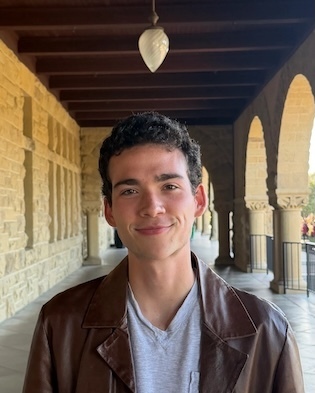
George Porteous is editor-in-chief of The Stanford Daily, which sued the Trump administration in 2025 over the deportation threat facing noncitizen student journalists and won in federal district court in August 2026. A Stanford history major from New York City (class of 2027), he previously served as the paper's news managing editor and covered the university's president and provost.
From the episode
"Just the sense that the existing public record, a record of dissent and speech and spirited opinions, that all of that could be shut down this quietly and that it could just be erased this quietly."
George Porteous
Transcript
Automatic transcript
Welcome to another episode of The Oath and the Office, where the Constitution is supposed to be the rulebook and the president is supposed to follow it. And apparently America's government has decided the rule of law is more of a decorative throw pillow. Folks, let me introduce the star of our show, the author of The Oath and the Office and the presidents of the people, the pride of the Poli Sci Department at Brown University, Professor Corey Brettschneider. Good to see you, sir.
Thanks so much, John. Yeah, decorative throat pillow. I love it.
Unfortunately, I don't love what's happening to the rule of law. That's a good description that it really is being torn up. And the cases that we're going to talk about today illustrate that fact. They really are about the question of whether or not if you're not a citizen, you can have your basic rights, especially your right to free speech.
Stripped away.
We're also at the same time that we're covering the horrors of the Trump administration, covering those who are fighting back. We'll have with us in the second half the student editor of the Stanford newspaper that has brought a lawsuit that is succeeding against the Trump administration.
Now, Trump is not giving up. They're going to appeal that.
It's part of a fight about whether or not non-citizens have a right to free speech. What the newspaper is arguing is The First Amendment is not just a right of citizens.
It's a right against the.
Government that all people enjoy. And that's also, of course, true of the issues in the first case that we'll talk about today. That's also in the news really timely, the Khalil case. It's really the same issue there as well.
Well, let's go there because these guys are treating constitutional limits like the terms and conditions. You know, Corey, they don't read them. They just said, I agree and do what they want. But the Trump administration is appealing a federal court ruling protecting the free speech rights of non-citizens who've been targeted because they said that Palestinian people are people. And nothing says confidence in your argument like taking another swing at the judge who told you no. This story is crazy. I know we're going to go deeper on this with our guest, but a federal judge ruled two months ago that statutes used to revoke visas and deport legal immigrants based on their free speech were totally unconstitutional. And this was the case brought by the Stanford Daily, which we'll be talking to later on. The administration appealed to the Ninth Circuit. Corey, let's talk about this. Does the First Amendment protect non-citizens who are lawfully present in the U.S. or anyone lawfully present in the U.S. when they express political views the government finds objectionable? I thought the First Amendment was there to put limitations on the government.
Well, I think you're right. And when you read the Constitution, that is what it says.
It talks about Congress shall make no law abridging the freedom of speech.
It doesn't say as concerns citizens.
And so it's a limit on government power. And the usual understanding of the First Amendment free speech clause has been that it's partly about the speaker, but it's also about the right of all of us to hear basic arguments. So let's take the Stanford case first. We're going to talk about it in more depth. And I'll also mention the Khalil case, which has been in the news. In the Stanford case, what this student newspaper is saying is our editors, our writers can't say what they think about issues if they're not citizens, and especially when it concerns the question of the conflict in.
Israel and Palestine.
And that alone is enough to get an injunction, a limit on what government can do.
They have the newspaper as a whole.
They also have an individual anonymous student reporter that is part of this suit. And what they're saying is, yeah, it's not a matter just of, and you really dramatize this too, because of course the First Amendment also has a right to free speech. And that's the same issue that's going on in this other case that's happening across the country, the Khalil case, where you also had a federal judge say, this is a right not just of citizens, but of non-citizens as well. And now Khalil having lost, actually having won at the lower level and then lost at the Court of Appeals is taking his case to the Supreme Court. So we have two cases, different sides of the country, same issue. Two litigants, one a former master's student at Columbia who was actually a negotiator in the Palestinian protests, Khalil. And then the other, our guest, a student editor making the same argument on the other side of the country.
So, I mean, this is where I find it confusing, Corey. Is this a case about immigration law? Or is this fundamentally a case about whether the government can make constitutional rights conditional? based on your immigration status?
Well, as usual, John, I mean, you're not confused. You're just laying it out in a way.
I don't even know what I'm talking about, Corey. And that's why I need you to explain this every week.
You're laying it out in a way that makes a mistake.
So I'll just give this example that many people know of the duck rabbit, right? That you look at it on the page. In one way, you can see it as a duck. On the other side of the same picture, it looks like a rabbit. And that's what's going on here, too, that the administration is saying that if you view these cases through the lens of immigration law, that there specifically is a law, a statute, that gives the government the ability to essentially deport people who are acting contrary to the interests of U.S.
Foreign policy.
And here's the other side of that. You know, regardless of what the statute says, it hadn't been used that way to say, basically, get kicked out of the country if we don't like what you're saying. And so the other lens, the one that I think that the courts are rightly adopting and that the district courts have adopted in both of these cases, the Stanford case and the Khalil case, in the well, not overturned, that's complicated, but stripped away from the judge that decided it. But what those judges, the ones in the right are saying is, it doesn't matter what the statute says. We have something that's bigger than any statute or law passed by Congress. And that's the United States Constitution. And what that says is what we started with. Congress shall make no law abridging the freedom of speech, full stop. It's not just a right of citizens. It's one of non-citizens as well. And if you're going to try to kick somebody out of the country for their speech, as they are trying to do in the Khalil case, and as they might do in the Stanford case, you know, that's a violation of the basic rights of the Constitution. It's not any right, by the way, free speech. It's the fundamental right in democracy.
Let's talk about trying to kick someone out of the country who's a naturalized citizen serving in Congress, because you don't like her speech, shall we? Ilhan Omar has been on my show before a I've enjoyed her. I'm a fan. She's been fearless against this administration, has called them out time and time again. She's very popular in her district in Minnesota. And we now know that federal agents have searched her home. The administration is trying to find out whether her U.S. citizenship can be challenged. And when they're not spreading birther-like racist lies that she married her brother, we can take that apart in a second. They're essentially saying that when her father came over here and brought her as a child 40 years ago, That there might have been something wrong in the paperwork. So that's where law and order, daddy's 40-year-old paperwork glitch is where we're at. Now, the journal says the Fed searched her house. They took her personal electronics and her documents to find out whether they can find a reason. to revoke her citizenship and deport a member of Congress. This is going to make life so much better for so many people, Corey. Gas prices are going down. Ukraine's free because of this. Again, a judge did grant a warrant in this case. And I do believe in investigating all members of Congress quite thoroughly. Barack Obama has condemned the administration's rhetoric. They're coming down a lot harder on this woman because of her immigration 40 years ago than, oh, I don't know, current congressmen who beat their wives. it's a crazy development. And it's like citizenship is not supposed to be something the government can put on a customer service hold while they check your paperwork, a sitting member of Congress. And they're trying to find out whether they can revoke her citizenship. Is there any precedent for this in government history? And what would the government have to do to denaturalize a citizen who serves in Congress?
It is incredible.
And let me just add to the injustice here and begin with that, which is that These aren't mistakes that they're claiming she made or that she had any kind of fraudulent dealings in her citizenship application. It was her parents, essentially, and they're blaming her, they're saying, for a mistake that allegedly was made by parents. Whether or not that's true or not, that's the deep injustice. The Constitution bans the so-called corruption of blood inheriting the crimes or mistakes of parents in the next generation, and that's what they're trying to do Here, of course, they're also targeting somebody who, you know, would be so far low on the list if you were to do this in any way that was fair, given that it wasn't her mistake or even her fraud. It was her parents. So that's outrageous from the beginning. Now, here's where it gets thorny. You know, in these cases, it's not clear how they're going to come out. I shouldn't say, too, in that first case, it's not that the government has no arguments on their side. In fact, There was, maybe it will come up in the interview, there was a case involving Stanford University and an invite to a Marxist professor. And in a case called Mandel, the Supreme Court said, yeah, you can exclude him. So as much as I want to say, in those cases, it's a First Amendment violation. The court, you know, there is precedent that this administration will draw in on the other side. And that's unfortunate.
I'm sorry, but precedent for denaturalizing a citizen and deporting him?
Yeah.
And so now let's get to the precedent here. That's in the Khalil case. I was giving the precedent of why the administration... Oh, they're going.
To go way back to the Khalil case to justify this. I see. They're students of history.
Go on. Let me say in this case that we're talking about now, to just go to the case of Representative Omar, there is a case that, to my mind, is one of the most important in American history, Trott v.
Dulles.
And what that case... says is that citizenship is.
Not a status that expires on misbehavior, written by the great Earl Warren, who, of course, also wrote Brown v.
Board of Education.
And that's what I would hope any court would say in this case, because they are trying to use retaliation, a kind of political punishment.
That's what's going on here.
But at the same time that the court said that, they also have an exception, which is when it comes to fraud and administrative mistakes and misrepresentation, yes, they have allowed citizenship to be revoked under the theory that it was never lawfully granted in the first place. So that's my worry, that as much as there's an argument here for her rights and for why her constitutional right of citizenship has been abused, what the court, by the way, in Trout v. Dulles calls the right to have rights, that's what's at issue here. No, they might say that, you know, this court in particular, which is not a just court, not a lawful court, they might seek this other way of doing it, of saying, just as this administration is, the granting of the citizenship was never legal in the first place.
And so it didn't pass on to her.
That would be a horrific, I mean, let me just be clear, horrific thing to do. This administration is horrific and their horrors have often been backed up by this court and they might do so in just that way.
Yeah, they protect rapists of children. I think they would do it. Again, there's a huge difference, Corey, between investigating a possible false statement in a 40-year-old naturalization proceeding and establishing grounds to revoke the citizenship of a sitting member of Congress. I don't think they can get away with this. Do you?
I would hope not.
It shocks the conscience, certainly, because it isn't just about an unjust and unfair way of trying to denaturalize somebody using a deep flaw, I think I would call it, in the law that allows for an exception of this right to citizenship. But, you know, it's another level of bad because what they're doing isn't just attacking any ordinary citizen, but a powerful opposition member, a critic of Donald Trump. And so as was the case in the Khalil case and as is the case in the Stanford.
Case, they're really saying.
Now here, you know, there they're saying no rights of non-citizens to free speech. Now it looks like they're saying, well, even if you're a citizen, especially if you're a naturalized citizen, you better watch out with what you say because we have ways of coming after you.
This story is fascinating, Corey, because I'm not used to watching this Republican Party trying to fire a woman in government who's not part of this administration. I don't know if you've noticed, but there's been a revolving door. A lot of corruption in this administration, a lot of unpopular people. But every time they fire someone, it's always a gender reveal party. And except for Greg Bovino, I mean, Kimberly Guilfoyle, Katie Zachariah this week, Kristi Noem, Pam Bondi, Lori Chavez de Riemer, even Elise Stefanik, which I'm still totally giggling about. But they've all been part of these turbulent personnel moves and being pressured to leave. And it seems, Corey, that accountability is applied rather selectively. across this administration?
Well, you know, we have a lot of incompetent people in this administration and a lot of people who have acted.
In a way that, you know, is more than incompetent.
It really is not just morally wrong, but in some cases, look at the actions of ICE.
Evil. And some men have been removed. That includes Bonvino. But many men have not.
And many men have not.
One of the chieftains, I would think, is Pete Hegseth, who has done nothing less than, you know, attack what might be fishermen or migrants on boats.
By attack, you mean murder. Murdering illegal, illegally murdering fishermen in foreign waters and lying about it.
Yeah.
Yeah.
So, I mean, it's a mix.
Look, let's not hide from the fact that the press secretary, was acting in a way that was embarrassing. It looked like she had trouble reading, and yet she's supposed to be the chief communication officer for the president. She didn't understand basic facts. She had no command of the material. She wasn't speaking in sentences. So it was pretty bad, but we've also seen pretty bad behavior also from the male members of this administration that still have their jobs.
I mean, who do you think's getting sent to Tulsi Gabbard Island next? I think it'll be Susie Wiles before it's Pete Hegseth. They'll all be fired for enacting Trump policy. And when the policy he'll punish them for his own policy failing. But I mean, it does seem like the chief of staff will be next. And it makes me wonder, Corey, does loyalty buy men more time than confidence buys women? in this administration?
It's hard to say that this press secretary wasn't loyal. I think if anything, you know, every other word out of her mouth, that was an attempt to convey loyalty to Donald Trump. But he certainly has less tolerance when things go wrong for women than he does for men. And, you know, that's seen by the fact that he just hangs on to so many of these, you know, the Pete Hegg said, it's not just that he did.
These immoral or evil things.
It's that he's totally incompetent and that the military has turned on him, that there is a sense of chaos in the Department of Defense. And yet, you know, that doesn't seem to strike him because he's not as embarrassed, I think, as he is of a woman who fails to meet, you know, his standards and is criticized in the press.
I mean, Kim Guilfoyle was fired from Fox News, then fired from being Don Jr. 's fiance for six years and now fired from being ambassador to Greece, which is unfortunate because I have it on good authority that Greece is is her favorite Broadway musical. But I guess we shouldn't be surprised by any of this. I don't know if this administration professor has got a personnel problem, a management problem, or if it's just a president who treats everyone as disposable. It does seem that when they say loyalty, what they mean is obedience.
Well, in the Guilfoyle case, you know, she's accused of basically trying to solicit a bribe to have her American Express bill paid off $ 100, 000 to, you know, curry favor with the Trump administration.
But no, that was to curry favor with her hearing. That was before her confirmation hearing. So she wouldn't have $ 100, 000 in credit card debt.
Good correction in the Senate. But anyway.
I want to defend her. I want to defend her on the issue, sir.
Yes. You know, all of this is to say corruption is the way that business is done in this administration.
Trump is, of course, selling pardons.
He's using cryptocurrency as a way of adding to his more than $ 2 billion that he's essentially stolen by selling the office. So it's not the corruption that's offensive to him, but yet it's a way of projecting everything that's said about him, the criticism onto somebody who he believes he can pass it off on. And that, you know, I don't think it's a mistake. That's a woman. And then he rewrites history, of course, when he was asked, wasn't this woman basically.
Engaged to marry your son? He's like, she's not in my family. I mean, he just sort of denied almost knowing her.
Not to mention not just the relationship with Don Jr., but that she gave two speeches for him in very public conventions.
Oh, yes. Fans of comedy remember.
You know, on the one hand, again, I'm happy to see both these people go. But there is an obvious double standard that's going on. Exactly. Misogyny is coming through as much as his ability to try to project all his own flaws and crimes onto other people.
It appears that loyalty won't save you in this administration and competency won't save you in this administration. The only thing that will maybe is if you're someone who knows where the bodies are buried. But we'll find out when they all turn on each other. Let's take a quick break. Back in just a moment on The Oath.
And the Office.
Welcome back to The Oath and the Office. I'm John Fugelsang along with Professor Cory Breschneider. And then there's Russia. Cory, Trump has issued an executive order waiving sanctions under the law that Congress passed to pressure Moscow over its illegal war against our ally Ukraine. In 1994, Ukraine agreed to give up all their nukes, and in exchange, America, Russia, and Britain signed a Budapest memorandum saying that we would always protect them if they were ever invaded. Russia has violated it, and now Donald Trump is trying very hard to drop this peace treaty like it's some wedding vows. So in this case, this was Lindsey Graham's baby. Congress writes the law. The president gets the pen. And suddenly we're left asking whether the separation of powers is just a separation of opinions. I mean, Section 115 authorizes the president to waive specified sanctions and restrictions subject to a written certification to Congress. I get all that. But this makes it really complicated because Congress has delegated the waiver authority to But let's talk about why they passed this law in the same place. These guys are murdering and raping our allies. The war can only end when Vladimir Putin leaves. Vladimir Putin doesn't think Ukraine should be a real country. Now, this president signed the sanctions law and then put out another executive order saying, I didn't mean it. Can he legally do that?
Well, unfortunately, I think if we're talking about the legal question rather than the question of how things should be and the question of what the court's going to say. As much as I would have thought, I mean, I'll say how I thought about it in the beginning, and then as I looked into it, I've changed my mind. My first thought when I started reading about this story was, no way. Congress passed a law imposing these sanctions. The president can't come along and just undo them. Now, here's why I've changed my mind, because as you look into it more clearly, Congress also mistakenly handed over a massive power to the president at the same time that it passed these sanctions, which was the power to create exceptions to the sanctions. Now, the exception is supposed to be in the national interest. So you see members of Congress like Senator Tom Tillis saying there is no national interest for making an exception for Russia. That was the whole point of the of the sanctions in the first place. But, you know, Trump is going to claim there is national interest in doing so, that it has to do with inflation.
Well, he's saying that he's negotiating the end of the war. That's his argument. So forget the law I signed. I'm trying to end this war. And that's why we have to reward the guy who started this war. That's the morality we're working with.
Yeah. And then I think he's also saying by opening up energy resources and buying from basically opening up Russia's resources to the market, that that will help with inflation. Now, neither of those strike me as remotely true. But yet the question for the court is going to be, did Congress hand over this power? And do we defer to the president's interpretation of what the national interest is here? And I think and this is a theme, John, that we've seen throughout all these cases. That if you see this through the lens of the massive foreign policy power of the president, then I think they're even more likely to say yes, that he can do it. Now, in those other cases, there really was a duck rabbit. There was, you know, on the one hand, the argument that this is a matter of immigration in the Khalil case, in the Stanford case, even in the Omar case. And on the other hand, there's the argument for constitutional rights, the free speech right in Khalil and Stanford. and the right to have rights in the Park case. This isn't really like that. It really looks like Congress handed him the tools to destroy the law that they passed.
And what a disaster.
Now, I'm sorry, Lindsey Graham can't be here to see Trump stabbing him in the back one last time. I want to briefly ask you about Ukraine's access to Starshield and other satellite services. We've heard that these restrictions were put on systems used by the Ukrainian forces and The administration and Elon Musk have all been pointing fingers saying they did it. They told me to do it. No one's saying the buck stops with me. What constitutional questions arise, Professor, when military relevant communications infrastructure is operated by and interfered with by a private company?
Well, I talked a little bit about this last time, and I spent my time watching that four-hour Musk documentary. I do recommend it to people, but if you don't have the four hours to spare, I'll tell you one of the main points in it was about the way that foreign policy and military policy has really been usurped by one person, and that's Elon Musk and his company, Starlink, which is now part of SpaceX, which is launching the satellites that Starlink relies on. was given by Musk to the Ukrainian military with the understanding.
That they could communicate.
And at various points throughout the conflict, he's decided essentially to turn it off. So at one point he had intel, he claims that the escalation of Ukrainians battling Russians in Russia-occupied Ukraine was going to potentially result in a nuclear conflict. So he unilaterally turned off the Starlink satellite service.
He just made that decision on his own.
And it looks like this isn't just a one-time thing, that he's really using his power to become a kind of super state. He's not bound to Donald Trump or the United States, although he's certainly an ally of him. But he really has his own independent power that's akin to a kind of military power. And that is frightening. When one person has the capacity of a government, we should worry. And it's an unaccountable one person, of course, and one with instincts against rather than for democracy.
This one person has spent $ 158 million to make Ken Paxton the next evil senator from Texas. Yeah, it's too bad Congress has no oversight over private businesses or the president. But I want to bring it back to DC because this is crazy. Trump is attacking federal judge Ana Reyes, who put limits on his plans to tear up and renovate a public golf course in Washington, D.C. We have reached the point, Corey, where a dispute over a golf course is a test of constitutional authority. And Trump has attacked Judge Reyes and said that she's got mental problems. Is this really about a golf course? I mean, this is hundreds of trees and a golf course in a dispute over redevelopment. Why should Americans who have absolutely no interest in golf care about this case? It's a bit bigger than the game, isn't it?
Well, when I first started following it, you know, we're tracking all these cases, all these stories. By the way, my understanding, too, is Democracy Forward has been involved in this. We've had, of course, their CEO, Sky Perryman, on the show now twice. But, you know, they saw it for what it was, which is a clear attempt of the president to try to to usurp the law. Now, here's why it's gotten beyond any normal story about a golf course or even beyond Donald Trump violating the Constitution.
It's because of his defiance.
Even though a federal judge has said, no, you cannot move forward with the renovation of this course, he doesn't seem to care. And he seems to be outright defying a judicial order. It's not that we never saw this before, but they did.
Back down before.
So in the case of Obrego Garcia, who was deported to a gulag in El Salvador and other deportations, a federal judge said, turn the planes back. No, you can't do that. The administration did it anyway. Now they subsequently backtrack. They claim, well, that judge didn't put it in writing, so we weren't really defying the order. Here, there's no such argument. They are just outright defying a judge. And so in what sense do we still live in a democracy?
We've used this language of a self-coup.
Where the president of the United States destroys the other branches, destroys the judiciary, destroys the Congress by.
Just ignoring them.
And that is absolutely what's happening here. It's really a moment that at the one hand, I worry Americans won't catch it. They'll think it's dull, but it is deeply consequential for the future of our democracy.
It's huge. This president is publicly announcing that a government project is going to go ahead after a federal judge has ordered him not to. Because this president knows that Todd Blanche and the DOJ will never go after him for breaking any laws whatsoever. So, Corey, at what point would proceeding with the work constitute contempt of court? Is that the next phase here?
Well, you know, who's going to be brought into contempt?
The president almost certainly has immunity from any contempt charges. So I don't think it'll be brought against him. I think there could be moves against the lawyers who are representing in court and have been representing. that this is not moving forward and are lying to the court. You're not, one thing about the rule of law, you're not supposed to lie to a judge. That's like lawyering 101. And yet that's what's going on. Now here's the first problem is the Department of Justice certainly isn't bringing, you know, any of these cases, but judges do have the ability to impose sanctions.
And so it's time. That is exactly, I think, what should happen here.
The administration is arguing the Interior Department has the authority to renovate the course and rip up all these permits and the project doesn't require the judicial approval that people seek. I mean, I don't know. It just seems like once again, we're dealing with executive discretion over federal property and obeying a damn judge, right? Like Trump has attacked this woman, questioned her mental state, suggested that recordings would demonstrate misconduct. Are there constitutional implications when a president uses the public platform to discredit a judge? presiding over a case involving his administration. We saw him do this when he wasn't president for his criminal trials two years ago, but I mean, I don't know of this ever happening.
Well, you know, at least when he was a private citizen, there was an argument to be made that he was, well, I don't think an argument, he was subject to possible sanctions. Now as president, he at least views himself under the immunity case, Trump versus the United States, as above the law, and that's incentivized this horrific behavior. So I think the best strategy going forward is not going to be to sanction him for his statements, or more importantly, actually, than the statements is the refusal to obey the law. That really is an undoing of the whole system of government. But is, you know, to sanction the lawyers. I think another realistic thing to happen here is that eventually the Supreme Court of the United States is going to have to step in here. And that, well, yeah, that seems to be what will appeal directly to them. Now, are they going to take the side of the lower court? or not if they take the side of Trump. And this isn't unheard of. This happened, for instance, in the most famous case in American history, Marbury versus Madison. They saw the confrontation with the president as something that they didn't want to have. So the court essentially backed down there. And you might see that here, too, that they don't want to test whether or not the president we know is willing to disobey a federal district court. Is he willing to disobey the Supreme Court of the United States? I'm not sure they're up to it. I'm not sure that they're up to challenging him. So you might just see them back down.
One last question before the break at our guest. If we had a Congress, would Congress have a role to play when the president disobeys the authority of the judiciary? I mean, Congress doesn't have an oversight responsibility to investigate whether executive officials disobey judicial orders, right? And they wouldn't enforce it if they did.
Well, you know, we've become used to this Congress, this Republican Congress, with its purely partisan way of seeing things.
And they're not going to do anything. But could they? Absolutely.
If Democrats win the House, we talked last week with Congressman Green about impeachment. And of course, he advocated for it. We talked to Ted Lieu about oversight. And is defiance of judicial order something that calls for massive oversight and even impeachment?
Absolutely. It is an.
Impeachable offense to add to the long list, but I might put it near the top.
Okay, we got to take a quick break. When we return, let's go even deeper with George Porteus, who is the editor of the Stanford Daily. Man, this is exciting. These guys are so heroic, and we'll be right back on The Oath in the Office.
On The Oath in the Office, we talk about defending democracy. That work begins in our own communities, including our public schools. School boards make decisions that shape what children learn and whether every student feels welcomed Those elections deserve our attention. The School Board Projects helps progressive school board candidates run and win, providing one-on-one coaching from experienced campaign professionals. Their mission is to elect leaders committed to equitable, inclusive public schools. If you're thinking about running, know someone who should, or want to learn how to get involved, visit act.link slash gi-schools. That's act.link slash gi-schools.
You'll also find the link in our show notes.
Welcome back to The Oath and the Office. I'm John Fugelsang. And Professor, we've got a very fascinating question to ponder. What happens to a free press when international student journalists fear that reporting the facts of a story and interviewing a source or even expressing a political opinion could jeopardize their ability to remain in the United States?
Absolutely, John.
And, you know, we've heard a lot of stories about universities caving to this administration, but there also are courageous stories of people standing up for the First Amendment, for free speech, for our rights. And one of those people, and I don't hesitate actually to call him.
A hero, is George Porteus.
He's the editor-in-chief and president of the Stanford Daily, the student newspaper at Stanford. He's an undergrad at Stanford studying history. And his newspaper, as you've heard us discuss in the introduction, is challenging the Trump administration's use of their supposed immigration power to punish speech.
And what The Daily has.
Done is brought a case against the administration, and they want a significant ruling in federal district court, which the administration is now appealing.
So we're very eager to talk to him. George, welcome to The Oath in the Office. Thank you both for having me and for the kind words. It's great to be here.
Thank you. Congratulations on infuriating Todd Blanch. Much respect. Good job.
Tell us, George.
I mean, this is, you know, a story when I first read about it, just grabbed my attention instantly because we're on the show. We're really always talking about, you know, the importance of telling the truth about how dangerous what's happening is, but also of fighting back. And you really took a stand on behalf of the newspaper, on behalf.
Of Stanford students.
Against this administration's stated policy, which is that non-citizens essentially can be deported based on what they say.
So how did this get going?
Well, this really began in the spring of 2025, not long after Donald Trump returned to office. And we saw immigration escalation ramp up very quickly. And we also saw specific incidents where non-citizens who had legally immigrated to the U.S. were being targeted for deportation because of protected political speech. So people are probably familiar with the Mahmoud Khalil case. and also Ramesa Ozturk's case, which pertains more directly to us. This was a Tufts graduate student, a Turkish student, here legally on a visa, who had written an op-ed in the Tufts daily newspaper, a pro-Palestinian op-ed.
And we now know.
From the documents, it was specifically because of that op-ed that the DHS seized her off of the sidewalk and sent her to a detention facility in Louisiana. So this is the context in which at The Daily on the other side of the country, on the West Coast, we had international students on our campus basically saying they couldn't participate in what we do here at The Daily in student journalism, saying that they didn't want to be sources. that they wanted their names taken down retroactively from articles from months or years ago, that the people on our staff, some of them didn't want to cover certain things, didn't want to edit certain stories. And we were kind of inundated with these requests. And it made it very difficult for us to really do our job of representing this campus and telling the full story about this community. Because international students are a large portion of the Stanford community.
They're here.
Some of them have been here for years. Some of them are my classmates. And if we can't include them, we can't really do our jobs.
I mean, it's part of why the story is so compelling is that by the fact that you're a student newspaper and you're illustrating the idea that if people are under threat of deportation for what they're saying, how can you actually do the work of a paper that's supposed to get ideas out to people to give opinions? John, I know you wanted to jump in, but I was going to ask George, can you just give us the next step of how this happened? Like, how do you bring a suit? I mean, you know, one thing that I guess I understand as a college professor, but the listeners might not realize is you're not owned by Stanford University. So you had the independent ability to do that, right? And tell us about how it unfolded, how this went from an idea that you had of fighting back on behalf of your reporters and editors to a major case that eventually was one, at least at the district court level.
Right.
Well, a lot of credit goes to my predecessor as editor-in-chief, Greta Reich, who's a fantastic journalist now reporting for USA Today. And she, at the time I was a news managing editor, she was editor-in-chief and she publicly spoke about this issue.
I think she had been quoted in.
A Wall Street Journal article talking about this flood of takedown requests, which other student newspapers were also dealing with. which I was dealing with day to day with my staff, with sources. And right, because we're an independent nonprofit, we had full autonomy to make this decision ourselves.
We didn't consult the university.
Instead, we made the independent decision to partner with FIRE, the Foundation for Individual Rights and Expression, who had taken an interest in this and been reading about this. And they were kind enough to do this pro bono, and they still are. So, I mean, it felt to us, jumping into a lawsuit was not necessarily something we wanted to do, actually.
Of course.
But we were in a very practical predicament, and this seemed to us the most practical solution to it. And also given the fact that they were willing to do this pro bono made a big difference, and also willing to pursue this in a way that would not be disruptive to our newsroom.
Yeah.
I mean, when I hear you talking about how student journalists were terrified to speak to sources or asking to have their previous articles removed, this is the new form of censorship, not government censorship, but stochastic self-censorship, trying to scare people out of telling the truth. When did you realize that this wasn't just immigration policy, but that this was actually affecting the entire way the newspaper operated?
Hmm.
I realized it when I received a request from a Palestinian undergraduate who I'd spoken to before as a reporter, who reached out to us at The Daily saying, please, I'm begging you. And he said it in these terms, very emotionally urgent terms. Please, I'm begging you, take down these old quotes in which I'm talking as a you know, to my home and to my hometown.
And I mean, it was just a shocking.
Thing to hear and deeply disappointing to hear as a journalist that somebody doesn't feel that the words you publish could make them unsafe. And knowing that is really jarring as a journalist. And suddenly that was a decision we had to make. The ball was in our court. You know, do we honor this request and try and protect this source when he's saying he has these fears? But also, this is a slippery slope, right? We don't want to have to start taking down quotes left and right whenever people request it, because part of our job is to create a record.
And that was, to me, extremely pernicious.
Just the sense that the existing public record, a record of dissent and speech and spirited opinions, that all of that could be shut down this quietly and that it could just be erased this quietly. And so, you know, as that went on and as we got more and more requests like that, you know, we could feel the wall sort of closing in on us. And again, this legal action was our way of pushing back and saying, actually, no. We can't be put in this position. It's not our job to be in this position. You're making you're forcing us to into ethical dilemmas that we shouldn't have to make.
Yeah. How are people feeling?
I mean, you know, it's one thing to fight back and to stand up for your rights. You hear that language all the time. But what's unique about your case is that, you know, this is an ongoing issue. The administration is not done fighting you. They're going to dig in and you have an appeal pending from the Justice Department, from Trump. But you did win at the district court. So how did that feel? What was the reaction on campus? Did people feel like, wow, you really can stick up for your rights? Did people feel safer, including some of the sources that you're talking about? Yeah.
Well, this happened before we got back to campus.
So in late August, I was in Mississippi at the time doing some fieldwork for my thesis. And this came really out of the blue. I got an email from our lawyers about it. And I mean, the mood really was celebratory and vindicating because it had been about a full year of waiting after we had filed the initial suit. And Judge Wise's ruling, which was 90 pages, was, you know, very strongly in our favor. And also the rhetoric she invoked. She quoted James Madison and she said the right to free speech belongs to the people. It's not the governments to take. And so she very clearly laid out what the stakes of this case were. And that was, of course, vindicating for us to get that legal recognition.
I will say that.
Since we've returned to campus in late September, we've onboarded a new class of incoming writers and reporters, and that includes international students. And I do think and hope that this precedent creates more of a feeling of protection for them. I mean, these are ongoing conversations, right? But because of the terms in which she made this ruling. And the fact that we're in Northern California, it does seem like a pretty strong protection. Now with this appeal, this is going to the Ninth Circuit. So the DOJ just last week appealed this, as you know. And I should say, I'm not a legal expert. I will leave that to you, Corey. But as we see it, this could be an opportunity to expand the jurisdiction of this ruling. And obviously, we're fighting for ourselves. But I will just say as a journalist, I want to see this protection apply to other campus newspapers, too, because I think we should not be the only ones who.
Get this protection. I think this should apply to the whole country.
I'd like to see it apply to all media because a newspaper can only publish what reporters are willing to report and they can only tell the part of the story if the sources are willing to speak. I found this inspiring to see a court recognize harm to journalism itself rather than just harm to an individual speaker. That's something that was new for me. I'm curious, what did the judge conclude about the government's use of immigration powers here against people whose political expression they happen to disprove of?
Right. Judge Wise ruled it unconstitutional the way that they had used this particular provision of immigration law. that the State Department basically was targeting people for deportation based strictly on their speech. She found that plainly unconstitutional, both under the First and the Fifth Amendment. The First, obviously, because we enjoy free speech protections under the Constitution. But the Fifth Amendment also because the enforcement of this policy was so arbitrary.
And impossible to follow from the outside.
Because if you're an international student and you're seeing what's happened to Ozturk and Khalil, it's actually not at all clear what the line is that you're not meant to cross. And so this is an arbitrary enforcement of a policy that people don't even know how to respond to. And that to me was the other pernicious part of this. The fear was rooted in so much ambiguity and uncertainty. People didn't even know what the limits were.
Yeah, and it is an arbitrary policy, to say the least, that the administration can pick and choose what speech they like. And if you're not a citizen, they're not yet claiming this is true for citizens. They can not put you in prison, but they can kick you out of the country. That's their claim and why you are feeling it so strongly. And just to make it crystal clear for the listeners, I mean, as your exchange with John reveals, this isn't just a fight for Stanford or even for student newspapers. You really have taken up a mantle that if you win... And I just have to believe that this court, even this Supreme Court, sees that the First Amendment of the Constitution says nothing about citizenship, but says something about a limit on government. And by the way, there also is a right to a free press in the First Amendment, that this is a right of all citizens. newspapers, and I would hope, you know, there are differences with the Khalil case, but that you also in many ways are fighting for any non-citizen to have a right to free speech. Because as I understand it, your claim isn't just about newspapers, it's about free speech, period. So, you know, I really want to emphasize that's why this is so important. You're not just sticking up for student rights, you're sticking up for the First Amendment right.
To free speech.
I've got to ask you, given going back to the context that you're in, How has it been with the administration at Stanford? You know, I'm also a professor who's speaking out all the time against the Trump administration, and I certainly haven't had any pushback from colleagues to the contrary, but I am interested how it is at Stanford. Are people worried about what you're doing? Has the administration put any pressure or sent any negative messages, or have they just been quiet about it?
The Stanford administration has remained entirely neutral. We've heard essentially nothing from them. And to my mind, I'm perfectly fine with that. Because again, we made this decision autonomously. And I think the university has its own dilemmas and choices it's making. I mean, we saw what happened with Harvard and this wider higher ed battle. This is different, the fight that we're waging. And it really is, as you said, about speech rights, not about some broader culture war or culture clash.
So we've heard basically nothing from them.
I will say on the campus, on the ground, what I hear from peers is a lot of encouragement. And that is really heartening to hear because I think this problem runs pretty deep. And again, international students are really embedded in this community. They're a part of every club, every class, every campus community. And so I think a lot of people recognize the potential importance of this for their own lives.
I just love the thought of a student newspaper suing the president. I'm sorry.
Absolutely.
I look at your academic career, George, you're a history major at Stanford and editor-in-chief of The Daily. I'm just curious, how has your study of history shaped the way you understand this particular legal fight? Hmm.
Well, at the moment, I'm writing a thesis that's history meets sociology about local journalism and civil rights in the Deep South. And I think studying something like the civil rights movement, for example, you could also point to McCarthyism, or you could point to the Civil War. I think studying that history does show you that in this country, there is a longer history of the government cracking down on dissent, of ordinary people, ordinary citizens, raising their voices to call for a more democratic country, a more democratic form of governance. And sometimes they're met with a great deal of resistance. And so I think I don't want to draw a straight line necessarily to the present, but I do think those stories can give you courage. And I also think they can give you a sense of what you're up against historically.
It really fits with the theme of the podcast, which is that if you look at past instances of courage, it's contagious and that citizens now can gain from it. So I'm so glad to hear that from you as a history major. I did want to ask you one last question, which is, you know, you've had success so far. It's going to be a tough road ahead because the administration is fighting back. You'll be at the Ninth Circuit. The Court of Appeal is next. And are you willing and is the newspaper willing, I should say, because you might not be there to is there a plan to fight this all the way to the Supreme Court?
Is there a commitment to keep this going? I certainly hope there is.
Well, I will graduate in the spring of this coming year and I'm going to turn over. leadership in early February to my successor. We're going to have an election to determine who that will be. So I don't want to speak too soon because I will be moving on. But I would say that from everything I've heard in this newsroom, we are pretty united on this front in wanting to see this through.
It's so great to hear. John, any last thoughts?
Yeah, I just want to ask, I deeply respect that you didn't want the university to come in on the lawsuit with you. I think that's very wise. But I'm curious, what responsibility do you think Stanford University itself has when students on campus fear that participating in journalism could jeopardize their ability to stay in the country? Should Stanford get involved?
You know, I think the truth is that the reason we're pursuing this through the courts is is that to put a restraint on the DHS, you really do need, I think, some intervention by the state or by the judiciary. That being said, I would just say in my capacity as a student that I want to look out for my peers. I think that they make important contributions and that they're here for a reason. And so just speaking as a student, yes, I want to see my university protect those people, do what it can, give them support, whether that's legal support, whether it's advice, guidance on how to navigate changing restrictions.
All of this, I think, is important to our peers.
And the last thing I should say is that while this lawsuit victory has been incredibly vindicating, as I said, it will take more work to undo some of the cultural damage that has been done and some of the fear that has been instilled. So I think that is a collective undertaking we all have to be a part of.
How might our listeners keep up with you, George, and your work and the Stanford Daily if they want to support or just dig some good journalism?
Sure.
Well, I hope they'll read our work at StanfordDaily.com and subscribe to our email digest.
We're in the strange position now of reporting on ourselves.
Which we rarely do. But we are covering our own case so people can just read the Stanford Daily and keep up with what's happening.
Brilliant.
So great.
I've got to say, George, I'm now a proud graduate of Stanford Law School.
I was happy to go there.
And now I'm especially happy that I went there where I studied the First Amendment, studied the Constitution. And what an amazing symbol to have the students. newspaper really taking a heroic stand without the support of the university, but in defense of Stanford, in defense of free.
Speech, really of everyone, of all journalists.
So congrats and kudos on that. And I don't want to lose track of your final thought, too, which is that you know, there's going to be a long period of recovery. This administration has really attacked non-citizens in a way that we haven't seen for decades. And it is an assault not just on these individual citizens, but on all of our rights. And so that'll be a period of recovery that we'll be talking about.
For a long time.
And I think as we write our own history of this period, and certainly we are living through a historic time, this fight will be part of it. So congrats again, on doing something that history will look back on with a lot of kindness in a way that it will not look on this.
Do you mean the lawsuit or appearing on this podcast, Professor? Yeah, that's what I was going to say. It's so brave of you to come here, George. Wow.
I made the right choice, I think.
Thank you so much.
Thank you both so much.
The newspaper and the notes as well. Thanks so much for joining us, George. I'm the oath in the office.
Thanks so much.
Our thanks to George Porteus for joining us on the show. What an inspiring interview, Professor. Thank you very much. And I mean, amidst all of this malfeasance and double talk and jive, it's great to see a young journalist who's so committed to telling the truth.
Yeah.
And so standing up for constitutional rights and for decency, as much as we're, you know, always talking about this assault on democracy, to see a kind of clear eyed purity when it comes to seeking justice and vindication, not just for fellow citizens, but for everyone. of the rights that we enjoy under this constitution. I found it totally inspiring. You could hear me getting a little emotional. You know, I have a daughter in college. I mean, I'm looking at these students and thinking this is really our hope for the future. The future is not Trump and Trumpism.
It's them. So what a great discussion. Thanks so much for doing it with me.
I agree. And what a great show. I want to thank you, Professor. I want to thank Wendy and Bea Wolf and all the brilliant people who put this monster together every week. And, you know, I just want to sign off by saying we talked last week about Pete Hegseth's plans to live stream the Pentagon killing a prisoner as a pay-per-view event. And of course, they backed down on that right away. But I want to let our listeners know, if you'd still like to see an actual snuff film, I recommend Susan Collins' debate performance last week in May. It's almost the same exact thing. But it's not going to slow down, Corey. I'm so grateful to you for keeping us abreast of all this. And it's going to be a crazy run up to the midterms.
It sure is, and we'll continue to cover it. We have some amazing guests coming up that we'll announce soon. We'll continue to talk to people who are fighting back against injustice, members of Congress, journalists, and it's really been a terrific experience, John, doing this show with you. I would be remiss if I didn't tell our listeners and ask them if they haven't already or you're joining us for the first time to subscribe.
Hit that button and find us every week.
You could also find us on YouTube and Substack.
This has been The Oath in the Office. Thanks for joining us.
Peace.
More episodes
Follow the show
Get every episode.
A new episode every week with Corey Brettschneider and John Fugelsang, free in your podcast app.