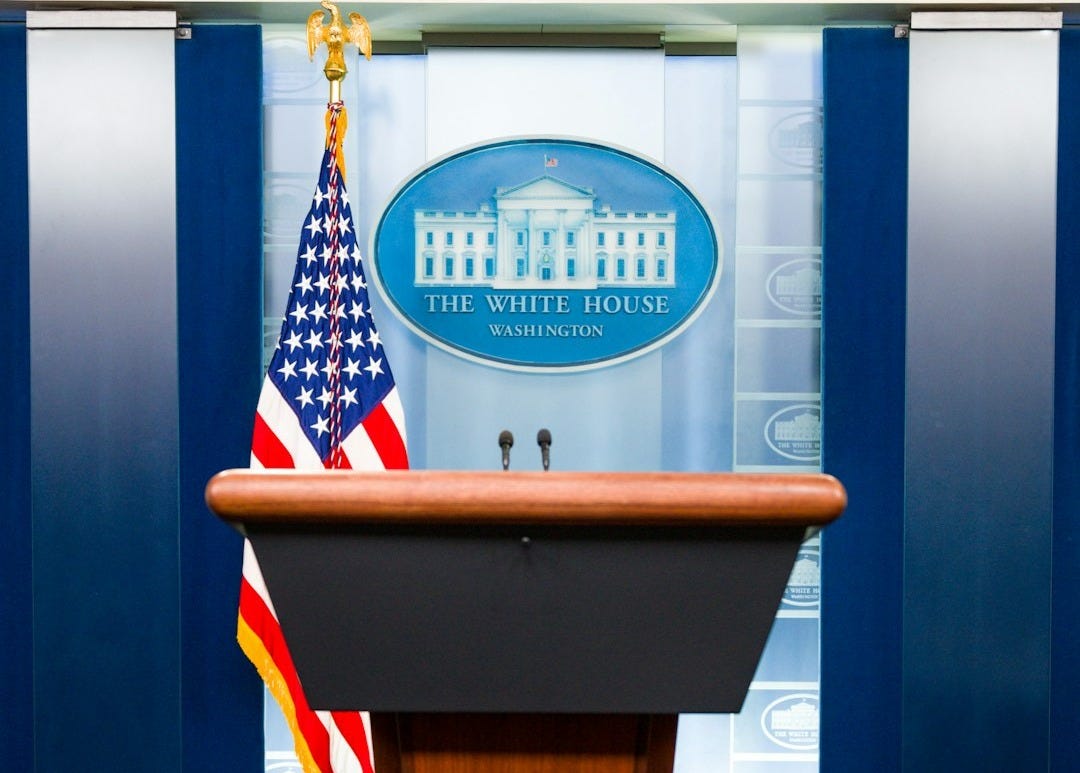
The principles at stake when reporters are locked out of the briefing room
On September 18, President Trump banned three news groups from the White House grounds: MSNow, CNN, and Politico.
Episode 85 · September 24, 2026
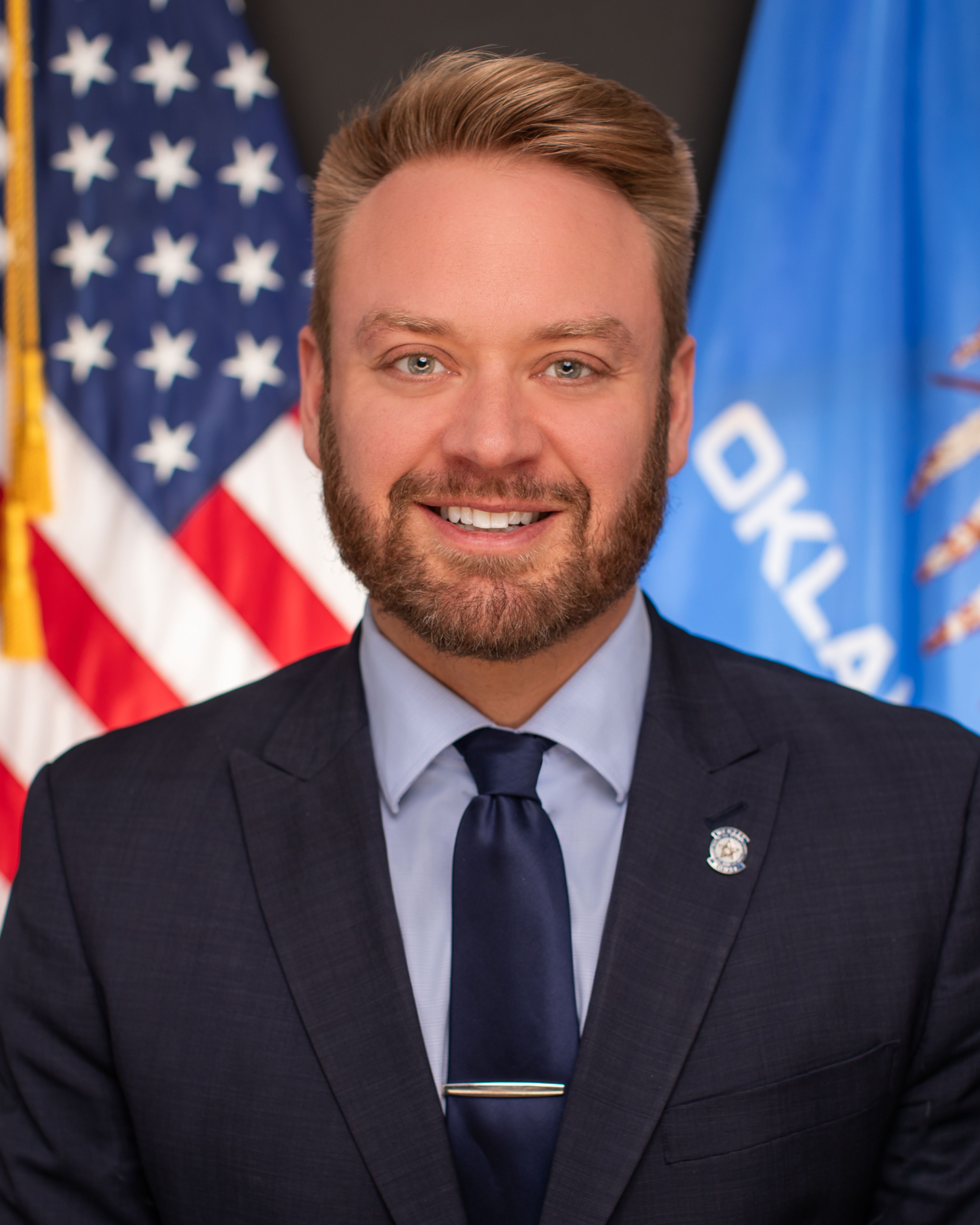
Mickey Dollens has represented Oklahoma City's House District 93 since 2016. He served as House Minority Whip from 2019 to January 2025. A former high school English teacher, he ran for office after being laid off in Oklahoma City Public Schools budget cuts. In 2025 he joined the Freedom From Religion Foundation as its first regional governmental affairs manager. In that role he works on church-state separation in state legislatures, the subject he brings to this episode.
The whole idea is that the person is not the office, and the office stands above the person.
Corey Brettschneider
This episode is brought to you by the Freedom From Religion Foundation.
Quick civics question. When public officials.
Swear an oath to the Constitution, does that mean protecting everybody's rights or promoting their own religion? Because as students head back to school, that question matters. Public schools serve families of every faith and no faith at all. They should not be used to pressure students, promote religious messages, or make any child feel like an outsider. FFRF says the oath is to the Constitution, not a creed. The Freedom From Religion Foundation works to keep state and church separate and speaks up for free thinkers, atheists, agnostics, and non-religious Americans.
Learn more at.
Ffrf.us slash office. That's ffrf.us slash o-f-f-i-c-e.
So what exactly does the Constitution allow a president to do if he doesn't like the coverage he's receiving? Is access to the White House a privilege a president can control? Or can government access to the press become a constitutional issue when it's conditioned on favorable coverage? I'm John Fugelsang. Welcome to the Oath in the Office podcast. As you know by now, Trump announced that CNN, MSNOW and Politico are That left-wing socialist rag Politico were banned from the White House, accusing them of publishing what he called fiction and lies. Reporters were denied access to the White House. They've now gone to federal court, arguing the administration violated their First Amendment rights. And then it got weird because suddenly all the other networks, including Fox News, along with CBS, ABC and NBC, joined forces to support the suspended TV pool. For more, let's go to the smartest player in the game, the author of The Oath in the Office, Professor Corey Bretschneider, the star of our podcast. Hello, Professor. Good to see you.
Thanks so much, John. What a great setup.
You know, this sounds like something that, you know, 10 years ago we would have thought of as a far-fetched law school hypothetical, but of course it's real. And what's going on is that the President of the United States has essentially said that he only wants his allies in the room in the press briefing, and he's tried to ban them. those that he considers fake news. But really, in saying that phrase, fake news, what he's really doing is saying, I want to ban my enemies. And of course, this fits a theme that we're going to look at, his total disregard for the law. I'll talk about why this is an unconstitutional barring of the press, violating the freedom of speech in the First Amendment, the freedom of press. But also, we'll look too at the Kennedy Center controversy, the controversy over this planned warped arch that he.
Wants to build.
And of course, we'll be joined, too, by a courageous representative from Oklahoma who's really fighting in the trenches to preserve religious freedom.
Fantastic. Listen, Corey, I just want to ask, Do you appreciate that we all lived long enough to see Fox News tell Donald Trump, you leave CNN alone? Because I wouldn't have predicted it. I mean, I want to ask the most immediate question about this press pool saga. What is the constitutional issue when a president says, essentially, I don't like what these news organizations are reporting. Therefore, they are banned from the White House. I should point out the White House said they were being banned for fiction and lies. Which specific lies? They never said. And apparently they still haven't been asked.
Well, the issue has been really teed up by the president. He's often his worst enemy when it comes to these legal cases.
And he's giving us.
The argument straight up for why this is about freedom of speech. If he was saying, oh, I don't trust these reporters or there's a security issue or the pool, you know, the number of people we can fit into the White House is limited. We would have had a real battle about whether or not this was even a free speech issue. But when he says, I'm banning those fake news organizations, what he's really telling us is that he's discriminating based on the opinions, or to use the language of the First Amendment, the viewpoint of the reporters that are in the room. And let's not forget, too, the audience of those reporters, all of us who are listening to CNN and watching CNN, watching MSNOW, And that's why I think in the end, just to sum up the conclusion that we're going to get, this really runs head on into not just the text of the First Amendment that guarantees the freedom of speech, but a case that's already been decided about this issue in the 1970s, which essentially said that presidents and the White House can't discriminate against reporters based on their opinions or viewpoints once they've invited in a array of different kinds of perspectives into the White House, into the briefing room.
And that case really decided this issue.
And so I do think that the president of the United States is going to be pushed back, certainly by the lower courts immediately. And even if it goes to the Supreme Court, I think it'll be more complicated. The Supreme Court can overturn lower courts. But I think this is a definite loss for the president of the.
United States and will already be a lesson and a victory for the First Amendment.
I think you're In other words, is there a constitutional difference between limiting access for a legitimate security reason and excluding a news organization because the president just doesn't like the facts they report?
Absolutely. You know, if this wasn't about speech at all, if it was about, as I said, number of people, say, in the briefing room, which is.
Not that large. then maybe there wouldn't be a free speech issue.
And after all, not everybody in the United States has a right to enter that room. You need credentials, and there are non-speech-based restrictions that are necessary in order to run who gets into the White House and who doesn't. But the president of the United States, even though in a normal, you know, a strategic president would rely on something aside from speech, when he says, I'm banning fake news, He's just telling us that he's banning those reporters that he doesn't want in the room. And you can't distinguish based on opinion. That's the whole idea of the First Amendment. And again, just to set it up, what the court is, the Court of Appeals, the Federal Court of Appeals has already decided for the D.C. Circuit in this case involving the Nation magazine, is that you cannot have a president say, I don't like the opinion and that's why I'm banning The reporter that case involving the nation was about whether.
Or not security, a security rationale could be used. And yes, you know, if it.
Really was a security rationale that would override even any kind of concern about the First Amendment. But when the president says I'm banning fake opinions, he's robbed his team of the ability to say this has anything to do with security.
Yeah, exactly. But I mean, national security is his line to get whatever he wants that the courts say no, right? That's how he's getting his ballroom. That's how he's trying to get his big Nazi arch, which we'll get to later in the show. But, you know, Corey, when I'm talking to callers on my SiriusXM program about this and the ones who are pro-Trump, I ask them, what is the specific fake news? What is the lie that CNN told where they did not issue a retraction? And they'll say, the Russia hoax.
No, no, no.
What's the specific lie that they're accused of? And I think we're so used to this blanket fake news talk that I don't hear anyone asking the president those specifics. There's a really important distinction here between government censorship and government access, right? Because some folks would just say, well, he's not stopping CNN from airing things and publishing. He's just saying CNN can't come into the White House. Can you explain that distinction for listeners?
I think that would have been a plausible argument if they were just saying, well, we've got to restrict the number of news organizations to 20, and we've just, based on criteria that have nothing to do with freedom of speech, picked MSNOW and CNN out as those people who don't fit our criteria that have nothing to do with speech.
If they would have tried something like that, okay, now the burden.
Is on CNN and MSNOW to make an argument that this is a lie and that what's really going on is a limitation on speech. But when he uses his insults to essentially say, I don't want these people in the room because I don't agree with them, and he uses his phrase that we all know is a way of disparaging his opponents, fake news, that just lets you know that, no, that's not going to work. He's undermined his defense. And so the motivation matters. And the statements of the president tell us that the motivation is to suppress speech. And, you know, you don't have a right to free speech everywhere. You can't come into my house and say whatever you want. If I want you to leave, you know, I can. People can throw somebody out of a guest out of a party who's being offensive or, you know, even partisan the way that they don't like.
But the difference.
Is when there's a government entity that invites in a range of viewpoints, creates a forum of free speech, which is essentially what's happening in the briefing room. The courts have been so clear. It's almost a bedrock idea of the First Amendment that government can't pick and choose. I like this view. I don't like that view. They can't say it's a discretionary privilege?
In other words, invite everybody in and.
Then pick and choose which views you want to allow or disallow.
But that's the argument, right? They're saying there's no constitutional entitlement. You know, we don't let Hustler Magazine in here. It's a discretionary privilege to be in the same room as the president.
Well, if you were saying, for instance, you know, we're not going to invite Home and Garden or we're not going to invite pornographic magazines or and we're going to have a.
Standard of journalism and people who are really going.
To cover the issues, that actually would be a plausible argument. But when the president says fake news, he's essentially admitting, yeah, these are news organizations.
I don't agree with them.
So yeah, those could have been arguments that were made by the president's legal team, and he's essentially undermined them. Now, I don't want to say this is a done deal.
There are ways that.
Two of the justices are, you know, Alito and Thomas might find for the president.
I'll explain.
Oh, you don't say, Professor.
Really?
Maybe Alito and Thomas would automatically go?
But, you know, I'm just giving you the straight legal argument, which is this is an obvious violation of free speech. And I think that, you know, he did it in a moment where he wasn't being supervised by the adults left in the room. And, you know, he's going to learn a constitutional lesson as a result. This has happened before. You know, I don't want to pretend this is unprecedented. I'm hearing that phrase a lot. And as listeners to this podcast know, and John, as we've talked many times, John Adams signed the Sedition Act and used it to shut down reporters that he didn't agree with to, in that case, not just deny them access to the president's mansion at the time, which was in Philadelphia.
Not in Washington, D.C., but to.
Actually imprison them and try them for writing what he regarded as fake news. But the reaction to John Adams' Sedition Act, to those prosecutions, really created the ideas of the First Amendment, of the way we understand free speech, as a right of all to have opinions free from prosecution. This isn't as bad as the Sedition Act. It's not about prosecution. It's about, you know, a more general idea of who gets into the White House briefing. But the principles, the rebuke of John Adams remain on the table.
Well, hey, thanks, Fox News, for defending norms. Welcome to the resistance. Corey, I want to ask you about the separation of powers. House Speaker Mike Johnson, America's creepiest youth pastor, he just sent all the lawmakers home early, delaying any consideration of Thomas Massey's privileged resolution yesterday. seeking to impeach Defense Secretary Pete Hegseth. This is crazy. Massey's resolution has eight articles that are about various specific constitutional abuses, including claims involving military operations, War Powers Resolution. Johnson has said that's a publicity stunt, and he says the early adjournment was unrelated. But wow, it's like Mitch McConnell disease. They're going to go off and get paid for not showing up to work for the next 43 days. Corey, does Congress have a responsibility to to consider an impeachment resolution once all the procedural requirements for bringing it to the floor have been met?
I mean, this is such a sad state of affairs because the one place where the framers, I think, were, well, naive and overly optimistic was when it came to what they thought was the main check, not just on a president, but also on the most senior officers in the executive branch, including certainly cabinet officials. And what the framers did is they created a system in which through examination of abuses of power, that these people could be removed, not just the president, we've often talked about impeachment and a president, but also high-level executive officers, including the Secretary of Defense, Pete Hegseth. So their idea, here's where they really, I think, were naive. Even from the beginning, they thought, look, this was a nonpartisan, not a political issue. And in fact, the way they set it up, is that the process of impeachment, where 50% of the House is required for the first step, impeachment, and then a trial, what they call the trial, it's not a trial in the sense of the judiciary. The Senate is supposed to transform itself into a new kind of nonpartisan, bipartisan body, which is the Senate acting as a court, in a court of impeachment. And then to decide, has there been such an abuse of power? And the framers use the phrase, high crimes and misdemeanors, that we've got to protect ourselves from this administrative official.
And what they got wrong was that.
The whole process is never going to get started if you have a Speaker of the House who is a partisan defender of the administration and its top officials.
And that's what you have here.
You have from the beginning, you know, a member, Thomas Massey, trying to say, member of the president's own party, you know, this has been an abuse of power by not just the president, but the secretary of defense when it comes to the war, when it comes to the killing, I should say too, just to get the issues on the table. Please. Oh yeah.
I mean, but you know, the Republicans right now are all about oversight when it comes to their own party. Professor, we're going to take a break, but before we go, I got to ask, what does it mean constitutionally when like the leader of the house changes the whole legislative calendar and In a way that prevents a privileged resolution from receiving a vote. I mean, this sounds like Mitch McConnell cutting the Supreme Court down to eight members for a full year.
You know, I just have to say, you know, to emphasize the point that the framers really made a mistake here because the Speaker of the House has enormous power that they didn't anticipate. And what's really going on is an ability to just bypass the entire process of what's supposed to be a nonpartisan process of impeachment by the House of Representatives and then removal by the Senate and coming together in order to save the country when we have a Secretary of Defense who's not only engaged in an illegal war, but really, you know, in killing what are supposedly drug traffickers, but very likely are migrants in these boats that are just... No, fishermen. Fishermen.
We know they did. October 16th of last year, they had two survivors, and so they put them on a Navy ship and eventually returned them to their home country, which means either we are killing people or we're letting narco-terrorists go. And after that, as you know, Professor, they did double taps. They did not allow any more survivors. This is murder.
That's right. And, you know, that's exactly the purpose of impeachment and the trial is to partly to get the facts on the table, to remove a cabinet officer like Pete Hegseth, who's engaged in not just illegal activity. This is really undermining the principles of democracy when you're engaged in essentially killing people without any due process or without any reasons. And the information that's supposed to come out, the idea is that now the American people know what's happening, the Congress knows what's happening, and that could in turn lead to an impeachment removal of the president if he's ordering it, which of course in this case he is. And so what the Speaker of the House has done is really undermine this whole process for solely partisan reasons. You know, we heard Representative Jared Huffman talking about how Speaker Johnson is, you know, a Christian nationalist and affiliated with so many of these organizations that on January 6th threatened our democracy. And yet he's able to now again threaten our democracy by depriving us of basic information. So, you know, this was a hopeful idea that the people through the Congress, through the House of Representatives, and through the Senate could check high crimes and misdemeanors, abuses of power.
This is a paradigm of it.
And yet here you have one person, the Speaker of the House, able to undermine it all.
When we come back, Donald Trump loves putting his name on things he had nothing to do with at their creation, like the Institute of Peace, the Kennedy Center, Tiffany. We'll talk all about the Kennedy Center and the legal ramifications around what he's trying to do. We'll be right back on The Oath in the Office.
This episode is brought to you by the Freedom From Religion Foundation. We talk every week about the oath, the promise to preserve, protect, and defend the Constitution. So here's the church state version of that question. When public officials take that oath, are they promising to protect everyone's freedom of conscience or to use government power to promote their own religion? Because as students head back to school, that question is not abstract. Public schools serve children from Christian, Jewish, Muslim, Hindu.
Buddhist, atheist, agnostic, and many other families.
No student should be made to feel like they belong less because they don't share the government's preferred religious message. The First Amendment is not a bridge to government-backed religion. It is a limit on government power. The Freedom from Religion Foundation works to keep church and state separate because freedom of conscience means the right.
To believe, question, doubt, or not believe at all.
FFRF also speaks directly for freethinkers, atheists, agnostics, humanists, and non-religious Americans who are too often erased from the story.
Learn more at ffrf.us office. That's ffrf.us slash o-f-f-i-c-e.
Welcome back to The Oath in the Office. I'm John Fuglesang. Professor, the Kennedy Center is a different kind of constitutional question, isn't it? Presidential power over a federally chartered cultural institution. Again, we have to remind folks the Kennedy Center was dedicated and named in an act of Congress by a grieving nation for a slain president.
Donald Trump looked at that. and said, oh, my name should go on that, but my name should be first. Before Kennedy, put my name up. I hope he tries to do this with the Vietnam Veterans Memorial. I hope he tries to do it with the Lincoln Memorial.
But the board, the Trump-aligned board appointed by Trump, or as I call them, all the little Lee Harvey Oswalds, They voted to close the center for renovations after a federal judge blocked efforts to put Trump's name on the building without congressional approval. There's millions and millions that have already been appropriated by Congress for renovations, but they have not taken those. The fix is in. If Trump can't name this building for John Kennedy after himself, his handpicked board will shut down the building over renovations that they've already got the money, but they don't care to fix. I mean, if Congress established a memorial to President Kennedy, can a president or presidentially aligned board simply just change the name?
Absolutely not. And I'm going to go into those details. But I also want to just start off by noting the similarity between the main story that we started with, his exclusion of the press from the White House and this story, which is that this president thinks of government property as his own.
Yeah.
And he thinks that, you know, everything is his mind, mind, mind, the petulant child. He thinks the White House gives him the right to exclude who he wants because he doesn't like somebody's opinion as if it's his private home.
And just to reiterate, you do have the right to.
Exclude people from your private home based on their opinion or viewpoint. But you don't have the right to do that when it comes to the freedom of the press and their right to be in the press room and cover the president of the United States. And here, too, he's taking what is an act of Congress that guarantees a memorial to our slain president, to John F. Kennedy. And what this president, Donald Trump, thinks is that he can just erase all that. But the legislation is what keeps not only him But the board from doing that in the same way that, you know, a bequest, for instance, would limit trustees from doing whatever they want with a trust.
The trust that's established basically and.
The building that's established by an act of Congress prohibits the name from being removed.
And so what he's doing, he wants to just, you know, take it all down.
He sees he's not going to win in court. And my worry is, you know, it'll result in the destruction of the building.
Yeah, that seems to be really what these incompetent supervillains want to do. I mean, is this fundamentally a separation of powers question? Is this a statutory question or is it both at the same time?
It is.
That's a great way to put it, John.
It's both a separation of powers and a statutory question. Statutes are just the word that we use today. for laws passed by Congress. And what's going on here is Congress used its power, which is the power to create an entity and to protect it. And they protected the name of John F. Kennedy on the Kennedy Center.
That's its purpose.
And a president can't just, the president is charged with executing the laws, following them. A president can't just say, hey, I don't care about those laws passed by Congress. I'm going to put my own name on it. And that's what Trump is learning. He thought he could bypass all of this by getting control of the board. But the board can, any more than the president can, override what the law says. And the law says that name is going to be on there. It's named for John F. Kennedy, not for Donald Trump.
I mean, Corey, are presidents supposed to leave physical monuments to themselves? We've never witnessed this before, where this neurotic narcissist is trying to name things after himself now because he knows no one will want to once he's gone.
You know, as listeners know, and John, you know, what I think is the most important inaugural address ever given is the second inaugural of George Washington, which is only just a few words, a few sentences. He says, I just took the oath of office and it requires that I respect that the office is above me. And if I violate the oath to preserve, protect and defend the Constitution, I want you to subject me to criticism and upbraidings and to go back to the other theme that we were talking about. to impeachment, what he calls constitutional punishment. The whole idea is that the person is not the office, and the office stands above the person. That was an idea reiterated by Democratic and Republican presidents.
Ronald Reagan gave an.
Entire speech about the idea that he's a temporary occupant of the.
Office, there for the public good. This guy's got no clue.
You could tell him that. He won't listen.
But he has the opposite instinct.
He thinks that government property, the White House, the Kennedy Center, we're going to talk about the Arch, that it's all his. And that couldn't be a more fundamental misunderstanding. The name of our podcast, the name of my book by the same name, unfortunately, is so relevant. It's something that in the past we would have thought, of course, that's the case. But when you have a president trying to claim the office as his own office, as his personal property, it becomes so important to reiterate what our structure of government is supposed to be.
Absolutely. I mean, I barely understand this stuff, Corey, but I'll tell you, it seems like this is really about the difference between political control of an institution and legal authority over that institution. And they're not the same thing. And I think if you explain this to most Fox News viewers, they'd get it.
I think that's so well said, John. That really is what it's about. Donald Trump only understands power. And that's not how our system works. It works by law and by legitimate authority. And powers are distributed among different branches. And when you have somebody, the bull in a china shop, John Mulaney talks about a horse being in a hospital.
Horse in a hospital is a great bit, yeah.
And that's what's going on, that we have this delicate, careful structure. And a president whose every instinct, every decision is to destroy that structure. And that's why we're in a dramatic moment. Because what's going to win? The structure defended by judges, especially the lower court judges, since the Supreme Court is so often, as we'll talk about with Mickey Dolenz, abandoned the Constitution, areas like religious freedom, free speech, civil rights. We don't have that structure there as solid as we'd want.
We have the lower courts.
We have the ideas that citizens are demanding. And that's why it's really, you know, we're not sure how this story is going to end.
Well, this then brings us to Donald Trump's gigantic marble arch, which is not Third Reich-like at all, people. Please stop. Stop accusing this man of being like a fascist just because he repeats the same behavioral and architectural patterns of fascist folks. Please lay off. Corey, when Donald Trump first proposed this ridiculous idea monument to himself. It was a triumphal monument connected to America's 250th anniversary. Turns out he can't do major public works programs without the approval of Congress. So now, again, like everything else, he's been shut down. So he changes it to a national security issue. And now he says, well, the triumphal arch It's also going to, which is over a traffic circle, is going to have a drone fleet on it and there'll be snipers and we're going to store lots of live ammunition above all the vehicles. Corey, I'm old enough to remember the phrase DC snipers being a bad thing. But what, I don't even know where to begin on this. What constitutional questions come up for you when a president proposes a major federal monument to something that without Congress clearly authorizing that particular project in any way. I know Alito and Thomas are going to love it.
You know, we talked about why the president, I think if he was aware of what he's doing, he might have watched his words more, but he cut off the idea that somehow there was a security rationale for the ban on journalists.
We talked about that at the very beginning of the episode.
Well, here, I guess he's counting on the fact that it's not too late to try to save what would otherwise be an illegally- constructed arch by claiming national security, national security, national security. And unfortunately, courts do tend to defer a lot to presidents on issues of national security. And one place where he certainly used this before was in the building of the wall, where he reallocated military budget saying that this was a national emergency related idea.
So D.C.
Needs a giant sniper tower now to kill people in D.C.
Here's the thing.
You know, courts are smart.
And as they get into the facts, I think they're going to see that this is obviously just a subterfuge, that this is a fake rationale that's meant to cover up the fact that he just wants to do what he wants to do. And, you know, saying national security doesn't always save you. I'm sure Richard Nixon, you know, his preferred outcome of Watergate was never to turn over any tapes on the grounds that this was national security.
But as Judge Sirica said, looked at the case, he said essentially, okay, fine. And U.S. versus Nixon says this as well.
In issues of national security, the president does get a lot of deference, but the president doesn't determine alone what is or is not a national security issue. And you can't just cover up the violations of law by yelling that phrase, national security. So I think that's ultimately what's going to happen here.
Now, it's not that it never works.
In the travel ban litigation, which I come back to a lot, the president was engaged in a complete, as he put it, a complete and total shutdown of Muslim immigration into the United States. I had a brief that was filed and that gained traction in multiple instances in the travel ban case, an amicus brief that I did with colleagues. And what we were saying was you can't cover up using national security religious bigotry. But unfortunately, in the final instance of the travel ban, when North Korea, for instance, was added and Venezuela to try to cover up religious animus and claim this is just about national security, the court essentially said, OK, we'll believe that this is a security issue and we'll defer to the president on it. That was a big part, I think, of what happened in the travel ban case.
And my worry is that although.
Lower courts, I'm sure, are going to stop this thing, that if it gets to the Supreme Court, you know, I'm a little worried. I think there's a big difference, I should say. The travel ban case concerned people outside the country. This is Washington, D.C. And so I think ultimately, you know, as is the case when it comes to the free speech issues with the press and in entrance into the White House, that the courts are going to stop this.
But it's just it's so fake. I mean, it's a fundamental change in the purpose of the project. This was to celebrate America's 250th anniversary. He said it so many times. When the president describes a monumental structure and then changes it to explicitly military terms, does that just change the whole legal analysis? I mean, or is it still about statutory authority? It seems like national security is the Hogwarts spell, right, that they just cast.
Yeah. I mean, you know, if it really was, this is not the case, but imagine that he was building, I'll give you a hypothetical. There's a military base and the president wants to work with the military to shore it up and ensure that there are no attacks on the base by building structures outside the gates or something like that. You can imagine there are all sorts of instances where there really is a military rationale that I think there are arguments that, you know, the president is commander in chief and he controls the military budget in the end.
And yeah, you could build stuff, but that's not what's going on here.
And I think that the parts are going to recognize that.
Are we ready to are we able to start bringing Hitler into the conversation over this particular architecture or should we hold off on that just yet?
Well, you know, sometimes you want to avoid, of course, going too quickly to the analogy with Weimar.
I've waited 11 years, but go on.
But sometimes the aesthetic resemblances, you know.
Are calling out to us.
I mean, I just want to wrap this one up by just asking you, I mean, this is going to be in between the Lincoln Memorial and Arlington National Cemetery. I mean, this is not a normal use of national symbols, is it? This is kind of weird. I mean, How much independent authority does the executive branch have to just repurpose federal land for a project of this magnitude and cost to the taxpayers?
Well, you know, Congress controls federal property. And that's what was issued in the ballroom case where there is significant pushback. I think Trump will lose that case. And Arlington National Cemetery matters here, too, as it did in the ballroom case and that they're standing. for those who are trying to defend the integrity of Arlington National Cemetery. So sometimes, you know, it's not enough to say the government lacks the power. The way that our system works is that you need standing to sue. And so this really matters, I think, in that that's where the standing comes from.
Well, we got to take a quick break. But when we come back, I am so excited to talk to the bride of Oklahoma, Democratic legislator Mickey Dolenz.
Wow.
This guy sees it from both sides really well.
Absolutely.
We'll be back in just a minute. This is The Oath in the Office. Welcome back to The Oath in the Office. I'm John Fugelsang. Professor Brettsider, I'm especially excited about this next guest. You really, you got a good Rolodex, man. You booked some good people, sir.
Well, it's really a pleasure to introduce Mickey Dollins, who is has been a member of the House of Representatives for Oklahoma since 2016. He was previously also the minority whip. And I wanted to invite him because he really is a leader, not just in Oklahoma, but also nationally in speaking out about abuses of coercion when it comes to religion and really a champion of the freedom of religion itself.
And so we're going to talk about the dynamic of.
Religious coercion in schools and especially in sports. I should say, too, that Mickey was a NCAA Division I athlete. That's right. And so, you know, has multiple perspectives as a lawmaker, as an athlete. And, of course, he also works very closely with our sponsor, the Freedom From Religion Foundation. And so it's really a pleasure, Mickey, to have you with us. Welcome to The Oath in the Office. Welcome, sir.
Well, Professor John, great to see both of you. I'm happy to be on the show.
Thank you. I find your career so fascinating. It's crazy. You've spent years serving as a Democrat in a state where Republicans dominate every level of state government. What does it mean to be a Democrat in Oklahoma?
Well, I'm going on my 11th year now. I was first elected in 2016 when I flipped a red district in South Oklahoma City. I came right out of teaching. Before that, I was a roughneck in the oil fields. And when oil went bust, we were all laid off. I used my English degree. I became a teacher the next day. I was like, this is what I want to do. I was enjoying coaching football, wrestling and track and teaching English. Bought a house right next to the school. And then a year later, The oil or lack of oil revenue caught up with public services. 800 teachers were laid off. I was one of them. So I started looking around saying, what's going on? And I ran on mental health, education and jobs and flipped a red seat and going into my 11th year now.
Amazing. Tell us how you got interested in the issue of religious coercion in schools and in sports. Was it a personal experience or just thinking about the issues themselves?
You know, with Christian nationalism taking over almost every sect of society, from our sports to our entertainment and youth and education, this is one of the big issues that often gets overlooked. I grew up in small town Oklahoma, played football, wrestling, and track. Christian culture was just infused in our locker rooms. It was led by coaches. It was taught by teachers. And it was something you never thought twice about. And it wasn't until I was playing college football, and that same infusion of religiosity was permanent through the locker room culture. And I had a friend who was trying to get a scholarship. He was a walk-on, which is much harder. They do everything that the scholarship players do, but they're not getting compensated or their school's not being paid for. And he was Muslim. And our coach had a tradition of picking a player at random to give a team prayer the night before a game, like team meal. and then also before a game at pregame chapel. And my friend was asked to give the prayer and he stood up and without hesitation gave a Christian prayer to Jesus. And it startled me, but as I asked him more about it, he said, I've put too much into this to be an outsider, to not be all in, to not be a team player. So if that means I need to give an inspirational message to Jesus, I'm gonna do it. And it worked out for him, but it came at a great cost. And that is when my eyes started being open to this is wrong. And whether it's a coach or if it's an elected official, anyone in a position of power who uses that authority to coerce or pressure other people into believing what they believe is wrong. Now, if it were student-led or athlete-led, more power to them. That's fine. But anytime someone uses that power in an abusive way is when I start to care.
I want to ask you. I want to ask you, Mickey, I mean, one of the reasons why I was very eager to have you on the podcast is that the Supreme Court has really eviscerated the Establishment Clause. Of course, the First Amendment does exactly what you're talking about. It says we don't have an official church in this country, and we shouldn't have government action that relates to or respects an official church, and certainly the kind of situation that you're talking about, a government led prayer in a football game or anywhere in his school where students are essentially coerced into messages that they don't share. That's what our First Amendment was meant to ban. But one reason I was very eager to talk to you is, you know, in the past we might have said.
Well, the Supreme Court will take care of this.
And of course, in the Kennedy versus Bremerton school district opinion, the Supreme Court did exactly the opposite. It really abandoned its obligation to stick up for kids in the situations that you're describing. So talk to me about how that opinion, which of course is about, and just for our listeners to remind them, this is an instance in which there was a, what to my mind is a school-led prayer, but the Supreme Court said, no, this is individual. It's just a coach that's leading this prayer. And so there is no violation of the establishment clause. And The court is, in this opinion and many others, really abandoned this principle of not having an official religion or government action that relates to it.
So tell me, Mickey, how do you.
Answer that sort of critique that says, well, the Supreme Court said all this stuff is fine?
Yeah, you're exactly right, Professor. In my opinion, the Supreme Court really missed the mark on the Kennedy decision. I was actually talking to Coach Kennedy yesterday. and it's an interesting dynamic. The Supreme Court just focused on the last three prayers that he did on the field by himself. But we cannot forget that prior to that, he was proselytizing players. He was leading player prayers in the locker room. And this really upset parents and players and coaches. And he was creating a media spectacle around this. He was using his time when he should have been supervising kids to talk to the media. And it became a problem to where the school suspended him. And then the media really got on. And unfortunately, what these power players do behind the curtains is they'll use people, naive people usually, to advance a religious agenda, whether it's the OU student, Samantha Fulnacki, at University of Oklahoma, or it's Coach Kennedy. I think at the heart, most coaches truly care for their players. All they really know is that this is the way I was raised. It was infused in my sports when I was a kid. And I want to create young men and women of moral character. And they don't even think half the time that what they're doing is creating religious pressure. They're creating that someone could be felt left out if they don't participate. And sports is all about conformity. The coach says, get a water break, that's when you get a water break. Coach says, take a knee, that's when you take a knee. When coach says, let's pray, what do you think the second string 16-year-old non-religious linebacker's gonna do?
They're gonna pray, of course.
And then you take that to the college level, and you start introducing name, image, and likeness, millions of dollars. They have connections to the NFL. They dictate whether or not you see playing time. You're going to do what they say. And they don't even have to say it. They could simply take a knee in the locker room, and I promise you, everyone else is going to take a knee. So by a coach in this Kennedy decision— Even though he was taken, I believe in the dissenting opinion, the last three games, there were no students out there with him, but he was taking a knee and that was sending a clear message to the rest of the team. Now, Coach Kennedy wasn't the head coach. The head coach was so disgruntled with him, he actually preferred, he actually recommended they not rehire him. But if that were the head coach, you can guarantee the other students would be out there doing the same thing. And so what this said was, is that, uh, coach Kennedy, uh, the Supreme court ruled that he had the right to, uh, participate in self religious expression to himself, not to proselytize anyone else, not to give a verbal prayer, but to simply go to the 50 yard line, take a knee and pray while other coaches are talking to family or, um, you know, maybe checking their text messages, that type of thing. But, and, and what happened was, so they, the, um, The power brokers behind all of this, they got the outcome they wanted in the Supreme Court. And this goes far beyond football because they did away with the lemon test. And now you have a much more ambiguous establishment clause where they have to prove that this is historical precedent. And then there's one other thing. You're the constitutional law, you'll mention. But they did a way of the lemon test, which really muddied up the waters and put schools in this almost impossible situation is, are we protecting religious expression? Are we protecting kids from religious coercion? And what this really did is open up the floodgates for Ten Commandments in classrooms and for other Supreme Court precedents that protected religious freedom going back to the 1940s.
I've got to say, it's exactly right that the Supreme Court has largely abandoned the establishment clause, a bedrock of our constitution. And unfortunately that fits with other areas where they've abandoned the equal protection clause and they've abandoned our free speech rights in many important instances or warp them into meaning something that.
They haven't even been told about the emoluments clause.
Yeah, they have. Right.
That's exactly right. So, so I couldn't agree more.
I have to ask you a question because you said something that, that I don't want to miss which is that you've been in discussions with coach kennedy and i just want to hear and i know john has a bunch of questions and he wants to jump in but i have to ask you what are those conversations like what do you say to coach kennedy what does he say back and let me just say you know i i appreciate that rather than just trying to win in court trying to use reasoning in order to make these principled points because as much as the supreme court has abandoned the first amendment guarantee against an official religion against the establishment of religion One thing we've been talking about is citizens still have to defend these principles. So tell us about those conversations, if you wouldn't mind.
Yeah, well, anytime I'm going to talk about someone, I want to be able to, I tend to give them the benefit of the doubt. And I want to have the validity of saying that I've actually spoken to someone. And I've been messaging with Coach Kennedy, and I haven't had the chance yet to talk on the phone with him. He's working now in Wyoming and very odd hours. And, you know, he wrote the book and he's got a movie and stuff. So we've been talking. But I've asked him, looking back, is there anything you would have done differently? He said he wouldn't have got the lawyers involved. So First Liberty, of course, they got the settlement, $ 1. 7 million that SCOTUS awarded them. There were millions of dollars that were donated to the legal funding. that to my understanding, First Liberty has kept. So he was used as a vehicle to advance an agenda. And I truly wanted to know, was it your intention to coerce and pressure students? And I don't think, I don't necessarily think it was. I think originally it was to build up strong moral character, which goes back to the late 1800s. It's why the YMCA was established But once I think he started to get a bit of recognition and some notoriety, I think that was contagious. And I think he is still grasping for that relevance. And so while our conversations have been kind of at the superficial level right now, I've asked him also about what he's up to these days. And he's still fighting for, in his opinion, religious liberties. I do think that the way we make progress is by asking questions, by opening dialogue, and by maybe planting a seed that could help the coach see that what he was doing was uncomfortable. Now, it's really hard for me to actually have much sympathy on him because all of these arguments were brought up to him by the players, by the player's parents, by his own head coach. But I think at this point, the media and the people like First Liberty have given him so much attention and confidence that he felt maybe an obligation or a mandate to continue it on. And I'd love to see where the conversations go. If possible, I'd like to get them on one of our shows to interview. Because from my experience, the coaches that I've played under truly wanted the athlete's best intentions in mind.
Fascinating.
I have so much to ask. Representative, you have a terrific op-ed I want to recommend to everybody in the progressive called School Coaches Shouldn't Be Pushing Religion. Really well written, and I really appreciate how you share your own personal experience as a Division I football player and what you experienced. Corey, I know the Constitution matters a lot, but I just want to point out the words of Jesus for a minute, because Jesus of the Bible, if you believe in that guy, was against religion. religious coercion. He's famously said, if anybody wants to follow me, let them pick up their cross and follow me. Christianity is about transformation, not a domination. And this intimidation really strikes me as being something that we talk about in terms of religion that has nothing to do with the man the religion's named after. Jesus tells us not to trust those who pray just to be seen by others in Matthew 6, 5. So with that said, I'm thinking about this young Muslim man. that you described for an athlete who's like 18, 19, 20 years old and dependent on a coach for playing time and scholarships and recommendations and maybe even a professional career. I mean, can we really call religious participation voluntary if the coach is, you know, reaching it?
Yeah, that's right. And, you know, my time on the team when I was in high school, that was just the culture. That was the norm in Bartlesville, Oklahoma. Going from small town Oklahoma to play in Dallas was a huge eye opener as a perspective. It was actually my college professor who opened me up to like the history of the Bible and how books were added and removed in the Council of Constantine. And that's when it all really started to shore up for me that this just didn't make any sense for me. So, yeah, it was infused at every level until I after college football, I tried out for the United States bobsledding team. And I went to Lake Placid, New York, and I did the combine right after I did the NFL combine. And I actually made that team. So I was a second pusher and a four-man bobsled. And we got to compete all around the world. So I thought it was a big change going from Oklahoma to Dallas. Well, now I'm in Austria and Switzerland and all over Canada. And I was getting to meet and talk to people from all over the world. But you know one big difference between Team USA bobsled and my time as an American football player? was there was zero religious coercion. There was no pressure from the coaches or pregame, send me, go to war type speeches. That's very common. What we're seeing from Hegseth sounds like a pregame football speech. So that same thing, but now that was, you know, on the Olympic bobsledding team, USA bobsled is sitius altius fortius, bigger, stronger, faster. It's about using your own strengths and confidence to bring about your own, your best potential, what you have in a, in already in you and relying on your teammates and coaches. They, they led from that. I'd never heard a team prayer or anything like that while on the United States bobsledding team.
One thing that this conversation is really bringing home is the founding idea of religious freedom. And I'll just say again, and listeners have heard me say this, but this conversation just brings out the quintessential reason why you have to think about two parts of religious freedom. One is the free exercise of religion. And you often hear Christian nationalists and others on the right talking about that clause, which is important, the idea that government can't prohibit the free exercise of religion is what the text says. But the part that they often leave out is what you've been talking about so well, Mickey, which is the idea that if there's an official religion or there's an official agent of the government that's pushing their own religion, that that's itself a restriction on the free exercise of religion.
And for some reason, that dual message that.
We have to both limit what government does when it's prevent it from proselytizing and that that's the way to protect the free exercise of religion that so often gets lost. So I wonder, I mean, John asked you in the beginning, Mickey, about in Oklahoma being in the minority party or minority whip.
I mean, are you finding sympathy?
You talked about your conversation with Coach Kennedy and And I thought that was fascinating that he might not have fully understood the way that he was being used by the religious right and litigation groups. But are you finding the reception of that message out there? I know, of course, John has been doing a lot of work talking about, yes, you can both be, of course, a believer in religious traditions and still believe also in religious freedom. So I'm interested as you try to take that message to your fellow citizens of Oklahoma, how they receive it, how you go about persuading people and the general atmosphere?
Yeah, that's a great question. And being in the Oklahoma State Legislature for over 10 years as a Democrat, I've debated against almost every possible theocratic piece of legislation you've seen introduced across the country. They all come from the same bill mill. And let's just take the Ten Commandments in classrooms, for example. This comes up every year. And I'll ask the author, do you believe.
In religious freedom?
Well, of course I believe in religious freedom. Okay, and you want to hang the 10 commandments in the children's classrooms.
Yes, I do.
What is the first commandment? Thou shall have no other gods before me. Sir, where's the religious freedom in that? And then it's one of those like cartoons, you know, and then that's when the bill dies. And it can do that with religious school chaplains replacing trained mental health professionals with uncertified, no clinical pastoral education chaplains from this National School Chaplain Association.
It's a total grift.
Just ask a few questions. Hey, would you accept this amendment to require CPE, just like our government chaplains and military chaplains have clinical pastoral education? Would you accept that amendment? National School Chaplain Association says, no, no, no, we can't accept that. You ask why? Well, it undermines their business model where you and I could become one of their chaplains for $ 1, 000, a six-hour online course, and $ 25 a month after that. We can be volunteer chaplains that go as well.
Oh, no way.
How do they pay their bills as volunteers? Well, they get connected to Americans for Prosperity, the Heritage Foundation, and they dial for dollars and they can literally raise as much as they can earn as much as they can get on the phone and raise. And so exposing the grift behind many of these, where they take advantage of well-meaning do-gooder politicians, who look at some anecdotal statistics and then spout them off as fact on the House floor, and then having to show them that little asterisk at the bottom of that list they're reading says all statistical data is anecdotal. You have to make them look stupid sometimes to get the point across, and then guess what? The good thing about it is the bill fails. And we can do that, and that's what I help lawmakers across the country do, is prepare them for debate and talking points. and push back on this theocratic legislation, because it's not just in sports, it's at the grade school level. I've got a kid in first and third grade in public schools, and you gotta be vigilant. But people, parents, especially these days, don't have the time to go to every school board meeting, so they may not know when LifeWise is coming in to take their kids out of art, music, or PE, and take them across the street or down the block to a school, to another church, and then bring them, give them this PragerU theocratic indoctrination. But it's coming from all over the place. But the way that we push back is by educating the public. This is why I just love the Freedom From Religion Foundation, largest free thought organization in North America, over 41,000 members. And we protect the separation of church and state. And we educate the public on non-theism. So our pluralistic secular government. We definitely got our work cut out for us, as you can tell.
Yeah, but I mean, you're doing the Lord's work, honestly. I mean, the religious freedom argument is so American, and it is so New Testament at the same time. And I so appreciate the advocacy you've taken, and I know it's not easy in Oklahoma. Let me ask you, with that in mind, I'm in love with this debate. How would you draw the line between a religiously neutral team And a team culture. And then a coach who's just simply sharing something that's personally meaningful to him. I mean, where does that line go? Maybe that's a question to both of you.
Well, for me, I've been in this experience before. That's why I asked.
Your op-ed's amazing.
I do think that player-led prayer is perfectly fine. If one of my teammates wanted to evangelize me, go for it. I think the coach should keep their religious matters to themselves. And it'd be like a coach trying to give you relationship advice or marriage advice. Just leave that to the parents.
Stay out of it.
I'll take the USA bobsled example again. They not once had to mention one Bible scripture or talk about anything theological. It was, you're going to get in a 400-pound sled and go 90 miles per hour, one mile down a mountain. What you choose to do, pray, not pray, is up to you. But we're going to train you to be the very best in the world at it. And that's what it comes down to, because that's where the real values come from. Perseverance, resilience, grit. I mean, you go down a bobsled and you turn over going 90 miles per hour and hit every turn on the way down. That's how you build resilience and grit and strength and courage. And, you know, no Bible scriptures required.
No, I'd be praying the entire time having said that. But yeah, absolutely.
I was going to say, John, just to add on to that, I mean, such a nice way to put it, that certainly there is a right of individual students to say whatever they want about religion, to express their religion, to say why they believe in it, why others should believe in it. That's a matter not just of religious freedom, but of free speech in the same way that secular people can do the same thing. And private individuals have that right. The difference is when a coach is acting as a coach, which is an employee of a public school.
The First Amendment also has something to say.
It says that we protect people from government coercion and influence by limiting what they can say in their official capacity. That doesn't mean that they can't go to church, that they can't, you know, on their own time, say whatever they want. And the court, unfortunately, it's such a subtle point, but the Supreme Court, a different Kennedy, Justice Kennedy, in a case involving a junior high school, Nathaniel Bishop Junior High School in Rhode Island, in Providence, where I teach, of course, where Brown is, said, you know, laid this out so beautifully. He said, look, you know, it's not enough if the school says it's voluntary, and he was dealing in this case with what was supposedly a voluntary graduation. If kids are involved, they're going to feel pressure. That was the point of the opinion. And it's not enough to just say it's voluntary. If it's an official school function, that's where the line is drawn. And that's what's so unfortunate about this Kennedy versus Bremerton decision, that it's sort of added this fiction that Coach Kennedy was somehow, this time Coach Kennedy, not Justice Kennedy, was acting of his own volition in his private capacity. And Mickey, I think that story that you began with of what it was like to be in the team meetings and to hear this supposedly personal story that, of course, feels coercive to the non-religious people. That's what Justice Kennedy was trying to get at. And that's one of many areas where the court has just abandoned it. I should say, too, when the framers talked about religious freedom, this is what they were worried about. George Washington responded to the Toro Synagogue by saying, we're not going to have an official religion. We're not going to have the vestiges that were part of the long history, the unfortunate history of the inquisition of forcing people into religion. We're going to be the opposite in the United States. And Washington understood in this correspondence to Toro Synagogue in this promise that it wasn't just a matter of putting people in prison. It was a matter of respecting them by not having government send messages that were exclusive to one religion. So that's why this fight, I think, really is about foundation of America.
We're not a Christian nation.
We're a nation that guarantees the freedom of religion. And that's what Mickey and his allies and John, you know, what all of us are trying to do on this show.
Professor, I'm glad you kind of touched on the history of where this takes place. You know, in our original Pray to Play report, the Freedom from Religion Foundation, back in 2015, so a little over 10 years ago, They looked into public universities who were hiring school chaplains and their job was to proselytize student athletes. And that has backed.
Off a little bit.
Of course, there are plenty of schools that still have religious chaplains at the university level, but they're not as compensated as.
They were now.
But we're about to release... an updated pray to play report that goes into the history of how religion was infused into sports and the fun blue laws about that in Pennsylvania. I'll get into that in a minute. But yeah, I mean, the whole evolution of this is fascinating. Early in the 1800s, it was looked down on to do anything on the Sabbath. The Sabbatarians said, there's no way you can have sports on Sunday. We have college football on Saturdays. That's good enough. And so this also solved a problem at that time because praying and being religious was looked as kind of like weak.
They were weaklings.
So they had their manosphere moment in the mid 1800s where they created something called muscular Christianity.
That's right.
And they started infusing religious scripture into bodybuilding and getting this type of like macho reputation built up. And then in the 1920s, right after World War I, professional sports became like America's pastime. Think baseball and the NFL. Well, the professional football at the time had just been incorporated. However, the Pittsburgh Steelers, the Philadelphia Eagles, they didn't exist because Pennsylvania had the blue law that says shall not do anything on Sundays. And so they had to petition that in the state legislature. It got nasty. And then it wasn't until 1933 when they actually created this law called the Sunday Baseball and Football Law in 1933. And then immediately the Philadelphia Eagles and the Pittsburgh Steelers started playing on Sundays. And then in my home state of Oklahoma, the Fellowship of Christian Athletes, one of the largest student athlete groups in America right now, extremely influential. started in 1954, the founder of that realized that America is a hero worshiping society. These professional athletes were selling razors and shaving cream and other things on commercials, Wheaties, that type of thing. He said, why can't we have our professional athletes sell Christianity So he started writing to these professional athletes and getting them to endorse Christianity. And then all of a sudden you have this infusion of religiosity into sports. And I thought maybe it could have been the other way around. You know, NFL, they may have like lobbied to get more religion into NFL to make it acceptable to watch on Sunday. But it was actually a more of if you can't beat them, join them by the Protestants. And so they use sports as a vehicle to evangelize the youth. And now you've got, in our new Pray to Play report, we go very into detail about the top three student athlete religious groups that are proliferating around America and really indoctrinating and infusing religion, narrow-minded Christianity into youth sports. And not all of it is bad, not if it's nefarious, but if you look at children who, are still learning critical thinking skills and they're taught that from a very young age. And I will say this and then I'll just be quiet for one second, but there is such an intersection.
It's your interview, sir. You're not supposed to be quiet.
Please go on.
This is, I think for anyone, especially like the Supreme Court justices who may have not played sports before, especially a violent sport like football or bobsledding, they don't understand like how having the superstition or a belief that you have divine protection can enhance your athletic performance. It can make you feel more confident. And heck, now as an adult, I can only imagine my college football coaches whose jobs and livelihoods and family stability are dependent on a bunch of 18 to 21 year.
Olds You get pretty religious too, maybe.
Please, for the love of God, when you're not on the field, make good decisions. Otherwise, we're gone. The turnover rate in college football, you have two bad seasons, you're done. And then that extends to your whole family. So coaches are looking at it from make good decisions. Please, I'm begging you. Here's some Christian morals you can follow. And then for athletes, we put in so much time and energy and training and preparing and one step the wrong way. like millimeters can be a blown out ACL, a torn Achilles, CTE, concussion, all of these things that you have no control over, believing in something like that, whether it's a superstition or a prayer can give you a competitive advantage. And when it does work out, then it reinforces that belief and you go back to it and back to it, but it becomes so strong. It's part of your identity.
Absolutely.
And then I blame God when I don't win the game and say it's his fault, too. But that's just me.
There's a reason for everything. That's right.
Exactly. Yeah.
God really cares about the outcome of this match. Representative, it is such a pleasure to talk to you. And I kind of resent the fact that I'm in New York and I don't get to vote for you.
Yeah.
But let me ask you something. What's the biggest misconception Democrats in other parts of the country have about Oklahoma and Oklahoma voters?
Oh, that's a great question. I had a chance to ask Mayor Pete this the other day. About four months ago, he came to Oklahoma to campaign for a Democratic gubernatorial nominee, Representative and Minority Leader Cindy Munson. And he gave a huge, great speech. The room was packed. There was nowhere to sit down. There were thousands of people packed into this auditorium. And a couple months later, I went to a national conference for state legislatures in Chicago. And he was hosting a forum and I got to ask him, what was your biggest takeaway of getting to meet people in the reddest state in America? And I do believe it's the reddest state in America because every single county in Oklahoma voted for Trump for the last three presidential elections. Not a single county went for the other candidate. And he said, you know what? There's a lot of good Democrats in Oklahoma. There's a lot of common sense people. And they support the good ideas, but they're not well versed on the political media environment that has overtaken people's thought process. And I'll put that in a little bit different way. This is the way I took that. And Oklahoma, we're one of the few states that has the citizen-led ballot initiative process. And the past four years, that's been decimated by the Republican-controlled supermajority. But prior to that, Oklahoma citizens went out and gathered signatures to pass medical marijuana. We gathered signatures and passed Medicaid expansion that the legislature has punted for 10 years. And now, as a result, more than 275,000 Oklahomans have health insurance who otherwise wouldn't. We gathered signatures and passed criminal justice reform. And we gathered signatures and we almost got a increase in the minimum wage, which in Oklahoma is still $ 7. 25. Oklahoma is a pretty populous state. They love progressive ideas. But the moment you put a letter D in front of it, they have like an aversion. So I am a real big proponent of talking about ideas like 3D printed housing for older populations, for older adults. You know, that's just some of the things I talk about that solve real problems and they're innovative ideas. That's what gets people around. And I felt like that's exactly how Mayor Pete felt too when he came here.
What a conversation this has been.
Mickey Dolenz, former college football player, a bobsledder. I'm glad to learn that about you. I didn't know that, and I'm sure the listeners enjoyed hearing about this as well. And of course, a defender of religious freedom and of the founder's idea that the free exercise clause has to go hand in hand with the resistance to religious coercion. You brought that out so clearly in the stories of what it was like to play sports at a high level, to be in those huddles. And also, we really appreciate the discussion of what you're doing on the ground in Oklahoma as a member of the House of Representatives to really persuade people to reclaim this idea of religious freedom at the same time, too, that you're doing so much to advance other issues.
So really, it was a pleasure to have you on The Oath in the Office. Thanks so much for joining us, Mickey Dolenz.
You know, the freedom of religion wouldn't exist without the freedom from religion and government. And what you're doing is a great service to that, too, protecting that constitutional principle. Thank you so much for having me on the show. I hope to be back soon.
Thank you.
Absolutely.
I think he was talking to me there, Corey, by the way. I think that was to me. Thank you so much for being with us. What a great guest, Corey. I actually really learned a lot. Normally, I hear that we're going to talk about football, and I'm like, I'd rather have a head injury. But this was a really terrific conversation.
You know, John, I have really spent my whole career writing and talking about the First Amendment, including these ideas that we've been talking about, the free exercise of religion, the ban on the establishment of religion. But what I really loved about the conversation is that we really brought it into the locker room.
This is what it's like to listen to a coach.
And Mickey is really unusual in that he's got this perspective of really witnessing violations of religious freedom and then in the Oklahoma State House fighting for religious freedom. So it was really a great Great guests appear as well, too, with the special episode that we had with the two governors from Tennessee, one of whom talked about how he vetoed a law that would have made the Bible the official book of Tennessee. And, you know, there are people out there who really see what Christian nationalism is doing to our country and how it threatens our democracy. And I'm glad that we got to talk to Mickey about that.
How to fight back yeah there's nothing like uh politicians who force the ten commandments up in public schools and then vote for a president who has publicly broken all ten of those commandments just so we know how seriously those republicans take the top ten professor always a pleasure thank you so much i want to thank wendy and beyer wolf and all the people who put this show together i want to tell everyone please if you listen please give us a review and like us and subscribe and tell all your friends and share our episodes on the social media And we read your emails as well.
Right, Corey?
Absolutely.
We're taking questions still. I'm compiling them. We'll, in a future episode, talk about them.
And you could send.
me an email at cory.brettschneider at gmail.com. And also be sure to put that subscribe, push that button if you're watching us on YouTube, or if you're listening, push on Apple or Spotify.
And the other thing I'll just say is a thank.
You to our listeners who continue to push us into the top three on Apple Trending Podcasts.
We're often number one.
And one way that that's happened, too, is sharing it with friends. So just push that share button, send it to one friend that you think would like the Oath in the Office podcast.
And John, I just want to.
Thank you, too, for. joining me here every week. You know, it's a difficult time, but you make it fun.
Part of my parole. You know that. You've talked to my parole officer. I have to be here, so it's okay. I hope you appreciate that we just talked for like half an hour to a guy named Mickey Dolenz, and I didn't make the monkey's joke once. Not one reference to the last surviving monkey. I think I didn't mention Davy Jones. I think I deserve a little credit for that, Professor. Just saying.
You do, John.
As your least favorite student, I deserve a little. Thank you all so much for joining us. And we will see you. You can see Corey, by the way, on my Sirius XM show live. And he takes your calls every Monday. And we'll see you next week on The Oath and the Office.
On September 18, President Trump banned three news groups from the White House grounds: MSNow, CNN, and Politico.
Follow the show
A new episode every week with Corey Brettschneider and John Fugelsang, free in your podcast app.
Now playing
Episode