Bipartisanship in an era of democratic fragility (with Bill Haslam and Phil Bredesen)
Is bipartisanship still possible even as Trump, the head of the Republican party, threatens democracy itself?
Bonus · September 22, 2026
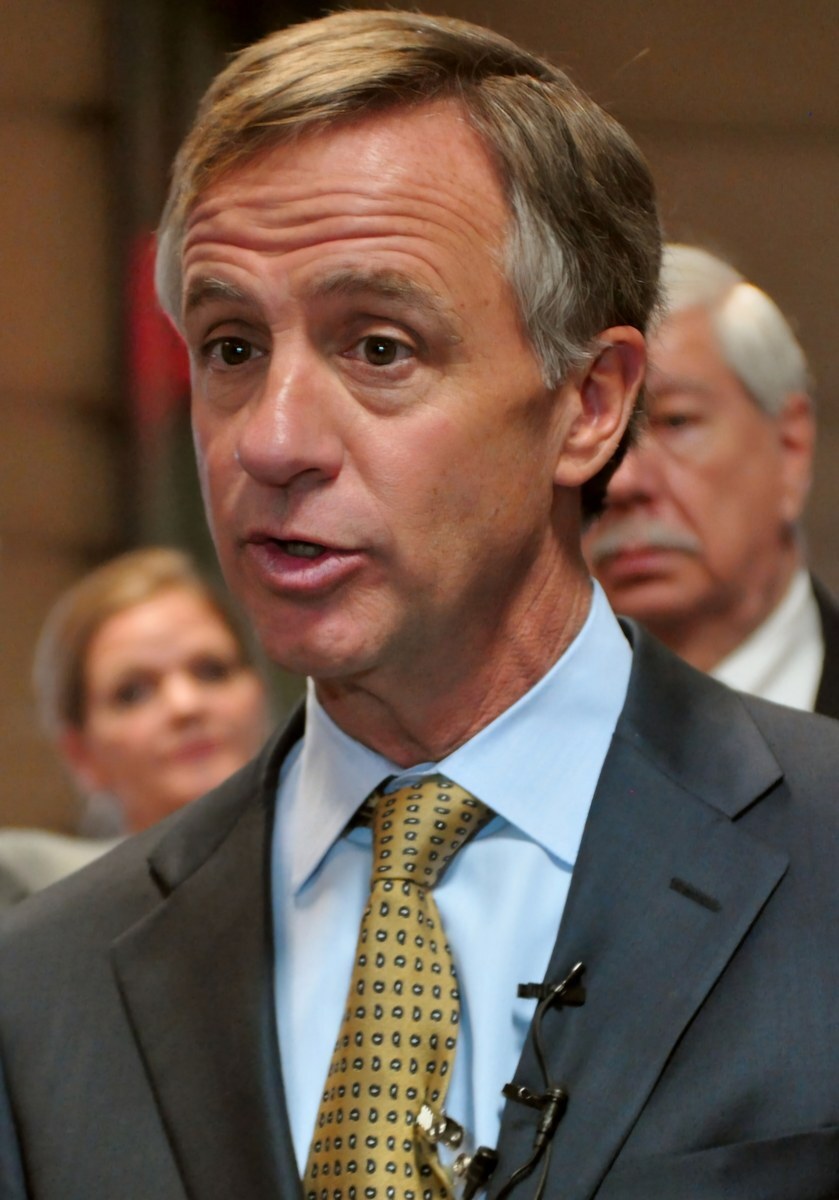
Bill Haslam, a Republican, served as Tennessee's 49th governor from 2011 to 2019. Before that he was mayor of Knoxville from 2003 to 2011. He chaired the Republican Governors Association twice. Since 2022 he has co-hosted You Might Be Right with his Democratic predecessor, Phil Bredesen, a show about whether people who disagree can still talk to each other.
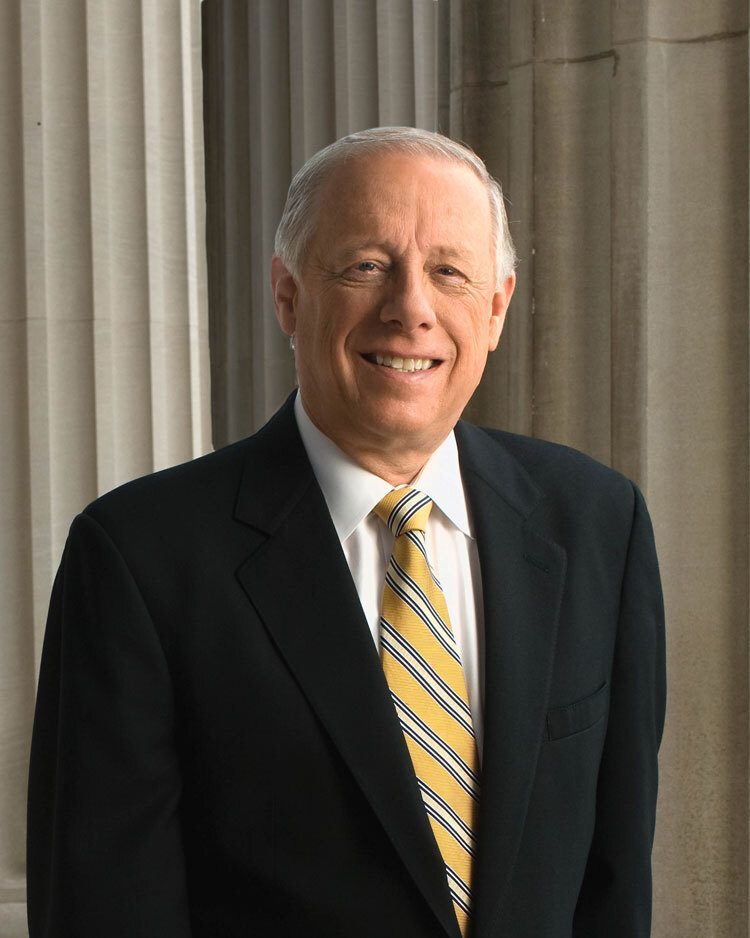
Phil Bredesen, a Democrat, served as Tennessee's 48th governor from 2003 to 2011 and as mayor of Nashville from 1991 to 1999. Before entering politics he founded the health insurer HealthAmerica. He was the Democratic nominee for the U.S. Senate in 2018, and he now co-hosts You Might Be Right with his Republican successor, Bill Haslam.
Welcome.
This is a special edition of The Oath in the Office. Look, there's a lot of talk about the need for bipartisanship and also concerns about overly partisan politics. And I'll tell you, at this moment in time, when we're facing a threat to democracy, I tend to think that's not really the issue. The issue isn't bipartisanship or too much partisanship. It is a president that is intent on destroying democracy. But yet the I don't want to hide from the fact that at pivotal moments in our history, after Watergate, for instance, we have had bipartisan concerns to reinforce, to protect, and build our democracy. And I don't want to take away from the fact that often at the local level, from mayors and in governor's offices, that we've seen a bipartisanship that has really made a difference in the lives of people in areas like education and health care. So what I wanted to do was to have a serious conversation about the limits of partisanship, given the travesty of January 6th, given the danger to democracy of this Trump presidency. given the threat that we talked about of Christian nationalism, to talk about how to have bipartisanship, how to reach across to those who we might not agree with on all issues, who we might not share a common perspective with on matters of religion, matters of philosophy. How can we come together despite that in this time?
And really to ask even, is it possible?
So to that end, I have two special guests that I'm about to introduce, former governors of Tennessee, one a Democrat, one a Republican, who are really serious about trying to think about bipartisanship, the problem of our overly partisan politics in a way that also takes seriously the threats of Christian nationalism, the threat to democracy that we've seen from Trumpism and from January 6th.
So I hope you'll enjoy it.
I found it an engaging conversation.
And without further ado, I bring to you two.
Governors who co-host a podcast together, despite the fact that they are members of different parties. Democrat Phil Bredesen, who served as governor from 2003 to 2011, and Republican Bill Haslam, who succeeded him and served until 2019.
Together, they're a team.
They host the podcast, You Might Be Right, a podcast from the University of Tennessee's Howard H.
Baker Jr.
's School of Public Policy and Public Affairs. And the show brings curiosity and humility to difficult questions inspired by Senator Baker's reminder that the other fellow might be right.
So, governors, welcome to The Oath in the Office.
It's good to be here.
Thanks for having us on. Look forward to talking.
My pleasure.
I'm really looking forward to it. Of course, we live in a deeply partisan time. It's a time in which we're listening to different shows, different podcasts, often different television shows.
And you've figured out a way to try to break through.
That divide with a kind of curiosity and humility.
So let's start with the title. You might be right.
Tell me, how did you come to this podcast, to this name and this idea for a show?
How do you know each other?
Well, we know each other because I took over from Phil.
And there's hardly a better way to get to know someone than to do the job after they did. But we actually became friends before that when I was the mayor of Knoxville, Tennessee, and Phil was the governor. We did several things together and invited me to go on an economic development trip to Asia. So we got to know each other. And then after I was in office, we obviously continued conversations. There are certain issues that come up that aren't about party as much as experience and how'd you think about this particular situation?
Yeah, I mean, that's one thing that strikes me as we begin the conversation that the more we're talking about the pragmatic questions of governance and the nitty-gritty of being mayor, and I imagine many issues being governor. Pragmatism and compromise and bipartisanship seems a natural way to think about things, but I'm going to dive in to a central question of this show, which is really about the American presidency and about some of the issues that arise at this moment, and in particular, a president's oath to preserve, protect, and defend the Constitution, and also what happens when presidents don't do that.
So my big.
Question is, you know, I did an event recently with Dick Ephart, and he talked about bipartisanship in the sort of spirit that we started off, but I couldn't help but thinking, and he couldn't help remarking the discussion turned to this, about how difficult things are in terms of bipartisanship now, given this president and the, well, the lack, let's say, we'll put it lightly, of a desire for reasonable disagreement, for compromise, for all the things that your show is talking about.
So on the one hand, I see the need.
For the hope of your show, but I also have to ask you just off the get-go, I mean, is bipartisanship possible, at least in national politics with this president?
I think it's difficult. I mean, one of the things that I think it's fair, I can speak for both of us, that both of us felt that once you're elected to an office, there's that oath of office, but also you become the governor of all the people of the state of Tennessee, and whether they voted for you or not, or they like you or not, and so on, that just respect for the American political process requires you to do that. That's kind of what seems to have escaped us at this point. And You know, certainly the president is responsible for a lot of it, but it goes on in a lot of other places, you know, as well. People are just seeing this as two incompatible worldviews, and one of them has to win over the other, as opposed to we have to figure out how to make them work together.
I think, unfortunately, today's politics has become not just about winning. The right answer should be always, I want to get to the best answer, okay? That should be where you start.
But then.
kind of the next is, well, I want my side to win. But the worst is where we are a lot of times now, which is I want you to beat the other side because they're bad people who are trying to ruin our country.
And I'll give you a counterexample.
Now, since you're talking about the presidency and the oath of office, Howard Baker, who, like I said, has kind of inspired our show, but I was working for him back in 1978 when the whole issue of President Carter proposed giving up the Panama Canal. And Nobody remembers that today was major controversy. And our mail that back back in the days when you got mail and that was my job. But I was you know, I was 21 was to open mail. OK, but it was it was a thousand to one against doing it. But Baker kind of from listening to it and spending time, Panama became convinced this is the right thing to do. And he really became the deciding vote for what gave Jimmy Carter.
One of his biggest victories.
It also ended up probably costing, Reagan might have beat him anywhere, but anyway, but Baker was running in the 80 Republican primary, probably cost him either a chance to win or a chance to at least be competitive to do it. But he kind of did start with like, let's begin with what's the right thing to do and work backwards from that. So we do have examples in our history of people doing that.
Yeah.
I mean, well, Bill, what do you think about, and I think Phil sort of started off by conceding, look, it's very hard to do it in this moment, but I wonder- what you.
Think about that. I mean, on the one hand, I admire the model.
I certainly admire looking to history and to moments in which bipartisanship did govern. I mean, it's not that we didn't have parties or didn't have partisanship, but we broke through it. And I guess I'm wondering if, you know, if we're being, if you're optimistic or hopeful about that happening, at least in national politics, of course it could happen in cities and local government. given a president who really just seems opposed to bipartisan compromise in any sense?
I mean, what do you think?
No, no, listen, I'm definitely concerned. I mean, that's part of the reason we're doing this is this.
Whole idea of like, you know, the polarization and the hate your enemy and wish them death is not good.
But I also see, and listen, you look for glimmers of hope, right? But I see that in places.
When I go speak places, I ask him, you know, how many people are tired and frustrated about the way politics works?
Every hand goes up.
I think people really are wanting somebody who can call out our better angels. Now we just need somebody with the the the communication gifts and the the right kind of views who can do that, who can call out those better angels. Because, you know, eventually, like what did Churchill say about America, you know, they eventually get to the right answer after they've tried everything else.
I sense that's kind of where we're getting to.
People are like, I'm not exactly sure who or what, but this is no way to run an airline right now.
I'm going to ask you about an issue that I take it that you agree about, although my guess is that there might be some disagreement too. Bill, when you were governor, of course, you vetoed a bill that would have made The Bible and correct me if I'm mischaracterizing it, the.
Tennessee's official book.
A lot of the show we're talking about the First Amendment, the ban on official religions, the establishment of religion.
And this strikes me as. as, you know, an.
Important way, I guess, to get at the version of bipartisanship that you're talking about. So I want to ask Phil, too, about the controversy. But tell us, you know, why did you go it and how I'm especially interested in how you handled what I know was the pushback from at least some in your own party.
And my understanding, by the way, and.
Again, correct me if I'm wrong, but is that this bill now has been signed by a different governor with different ideas.
A little bit different version of it. So it's not quite an apples versus apples comparison. But, and I'll add to the context, I'm actually somebody who believes the Bible is the inspired word of God.
Okay. So it made it particularly difficult.
But I also think this, I think our founders were brilliant in a lot of things, but one of those is they basically said, religion's too important to be under the control of government. And that's why the whole establishment clause that Congress shall make no law establishing a religion or prohibiting the free exercise of.
Those are both really important.
And this is one of those where I thought, people try to say, well, we're doing this because we're having the Bible... be the official book because of its historical nature. I'm like, well, I don't think that's why you're doing it. So the Bible's either the inspired word of God or it's not. And don't say we're just putting it in there as a history book, okay?
It was one of those things.
I had a couple, three really, you know, decisions that got a whole lot of kind of national attention because of the nature of this one did.
And to this day, I have people walk up to me in the grocery store and say, hey, aren't you the guy that vetoed the Bible? Which is a little hard to explain when you have your grandchildren.
People who are not happy.
Right, exactly. But, you know, I think the principle holds.
And, you know, one of the things Phil will tell you that's not totally unique, but sort of different about being the governor of Tennessee, it just takes a simple majority to override a veto.
And so I think I only vetoed.
Like five or six things while I was in office. And this one and another one actually related to two religious issues were two of the ones I vetoed that people that kind of from my worldview were.
Thinking, what are you doing?
But I think you either believe in what the Constitution says and that you swore to uphold or you don't.
I think also that, you know, I think you've got to recognize that people have, I mean, religion is for a great many Americans, you know, kind of a fundamental part of the way they see the world, its moral terms and their obligations and so on. And I think throughout our history, people have pushed a particular set of religious views, their own religious views as, you know, as forward. I mean, I'm old enough to remember probably the first presidential election I remember really clearly was Kennedy versus Nixon. And I lived in a part of the rural upstate New York where everyone was just totally upset at the notion of a Catholic ever becoming president and so on. So I don't think this push up, I think of this sort of Christian nationalism stuff that's going on now. I don't think it's really new in this country. I do think there's more tolerance for it with this president and this Congress, for that matter, than there has been in the past. And, you know, I see some of the frustration right now, in my mind, just is the Congress, you know, one person, a president can always get off the ranch on that stuff, but the Congress is supposed to be an antidote to that, and they're not doing it.
Another discussion for another day, but I don't think the Christian nationalism view is even biblical.
So, but a longer conversation for another day.
Right, right.
Yeah, we've had a number of conversations.
My co-host, who's not with us today, John Fuglesang, has a book called Separation of Church and Hate. And it's all about that idea that believing in Christianity certainly doesn't require believing in Christian nationalism.
To the contrary, they're really at odds. I want to ask you about the follow-up.
About that exchange that you just had, because I think it does start to get to the details of what it might mean, not just to compromise, but to do what you're both doing on the podcast, which is reason together. And that's the question of whether or not you really have to bracket, at least, not to say that one set of beliefs is true or false, but just to say what politics is about is not answering the question of theology, not answering the questions of God's existence or the truth or lack thereof of religion, but to try to find a common vocabulary. And at least, you know, I invite you to push back if this overstates it. But what I'm hearing and what both of you say is that, you know, you each have your own philosophical and religious beliefs, but that what politics is about, especially a politics that's going to involve dialogue across parties, is finding a kind of common vocabulary. Does that go too far? I mean, is that the mistake of Christian nationalism, that it tries to overtly insert a particular version of Christianity into politics? And is that a prerequisite? I don't want to overstate it. Martin Luther King Jr., of course, is citing the Bible often, but he's always careful to give a common vocabulary to appeal, for instance, to the United States Constitution as a supplement and to say, you know, this is how I see it, but it's not how we all see it.
Yeah, so my answer to that would be, listen, it's naive to think that we don't all bring our worldviews to whatever we do, to our political positions, to business, to raising children, whatever we all do. And if you're a person of religious faith, that's part of your worldview, and you bring that to the public square. And I think that's what we're supposed to do. But we're all supposed to recognize this is a pluralistic society that we're not a Christian nation, okay? We're a nation that I hope is, you know, people that truly are seeking God's truth.
But that's not who we are.
You don't have to pledge an oath to to Jesus or to Muhammad or to anyone else to be a Christian citizen. And to try to say that that's that's the the. the uniform we're going to make everyone wear. By the way, that didn't work out well for the church in Europe. If you look at where the church worldwide is the most dead, if you will, it's in Europe because they made the church part of the state church.
Absolutely.
I mean, to me, one of the real geniuses of the founding fathers was recognizing that there are always going to be these, these quite different worldviews. People have different, different experiences. They've got different parents or they got different genes, um, and so on. And what they designed was a system which can accept that as a reality that one side is never going to win over the other. Um, but find ways to move forward to do things that, you know, that are for the common good that you have to do. And, um, That's the piece which now, and there have been other times in our history, I think that we're losing a little bit. We're turning this into every political issue is a fundamental moral decision about the future of the country, as opposed to saying, look, there's always going to be people with different views of these issues. How do we figure a way to, in some way, move forward and do things we need to do together?
Yeah.
And of course, the framers, in addition to their brilliance in the First Amendment of saying that we wouldn't have the establishment of religion or laws that relate or respect to an establishment also ban religious tests for office. And that, I think, coincides well with the points that both of you are making. And they were quite conscious, too, of wars of religion and not wanting to have an internal civil war of religion. This has been a great discussion so far with Phil Bredesen and Bill Haslam. We're going to take a quick break and we'll be right back.
Have you ever read The Handmaid's Tale before? We haven't. Haven't even watched the TV show.
Bandcamp, our top-ranked comedy podcast, is back for Season 11, and we're reading The Handmaid's Tale out loud, cover to cover.
Now, if you've never read it before, you're going to discover it with us. And if you have read it before, well, you already know what's coming, and this is going to be your chance to laugh at us as we get horrified over and over and over.
And because we haven't read it before, you're going to hear us bumbling through it while we're trying to figure out why it was banned in the first place. New episodes every Tuesday and Thursday.
Assuming that we actually make it through the reading. You can find us at bandcamppodcast.com. And that's banned like books they don't want you to read.
Welcome back to The Oath in the Office.
I'm speaking with Phil Bredesen and Bill Haslam, both former governors of Tennessee.
And let's continue the conversation.
I did want to pivot a little bit to think with you both about the limits of compromise in our own moment. We had Congressman Jared Huffman for an amazing conversation on the show about really the untold story of, and he has a book called No Prophets about this, which I recommend to our listeners and to both of you about the kind of untold story of the role of Christian nationalists in particular in January 6th, and alongside the Oath Keepers and other groups that were covered more fundamentally. And part of his point is, you know, this is an uncomfortable fact that this happened, but we have to talk about it. And so I wanted to ask about the question that we started.
With about the possible limits of compromise. I mean, what do we do with the fact that you know, there was an.
Attempt to undo the election in January 6th. Is this something that we can bracket as we seek compromise, even on the local level, I guess?
I'm interested in your thoughts about that.
Or is it just always front and center that there really is a threat to democracy that this president encouraged and that groups, including with violence, tried to really undo our democracy? So this January 6th, you know, I know it presents a challenge to compromise, but.
How would you characterize it?
I mean, I sort of divide these things right now into two camps. I mean, there are there are differences on issues which are I think which are fundamentally, you know, what what politics is about. And and, you know, the issues of should you have tariffs and if so, how and what do you think about, you know, abortion and what do you think about abortion? you know, immigration and how it would affect. Those to me are political questions that you answer. And whatever your view of it is, it deserves respect of the other side's view of it and listening to it. There are things, though, that are going on now, which are much more fundamental to challenging, I think, some of the basic assumptions of of what America is about and what the framers, you know, originally intended. And, you know, obviously marching on and invading the Capitol is in a different category, in my mind, than your view about immigration or something. So my tolerance sort of, there's a place in which I stop and say, look, there's a place which you're just going over the line. You're challenging things that are very fundamental about our um, the nature of the government that was created and has been, has been so successful here. And, you know, those, um, you know, those are not about just different views of issues. Those are about someone who rejects, totally rejects the social contract that made the country possible.
There's a lot of beautiful things about this country, but one of those is this, we're not a nation of a certain race or a certain ethnicity. We're a nation that's built on this idea that, uh, you know, conceived in liberty and dedicated the principle that all men are created equal and free to pursue happiness in the way that they desire. One of the hallmarks of this country of ours is the free and peaceful transfer of power. Now, if somebody could come and say, right here, we know that there was some illegality or some corruption in the voting process, but Nobody ever was able to do that despite a lot of money and time spent. OK, so if you look at it, if you look at the you for earlier, the 1960 election of Kennedy Nixon, that was actually a really, really close election. There there might have been some improper doings in the Illinois vote total, you know, and that could have been, you know, that you can go back then to 2000 and Gore and Bush and obviously the contest there. But what has stood forever in our country is this idea of free and peaceful transfer of power, where one party or not hands over the keys to the next. And for people to, particularly younger people, to have trust in the institution of our country and what makes us special is really important. And every time we try to tear down one of those foundations of the country, we come out worse.
You know, one of the things when I watched you, you mentioned, Bill, the Gore versus Bush back in 2000. One of the things that really struck me about that and I learned is that I'd always thought about elections in terms of it's really important about who gets elected, you know, policies and capabilities and stuff. And after that, I said, you know, maybe the most important part of elections is just bestowing absolute legitimacy on whoever is elected, you know, to avoid the kind of stuff that you're talking about. And it's that tackling of the legitimacy that I think becomes the real danger that's inherent in what went on with January 6th and what's going on with some of the stuff now with with the federal government basically poking their fingers into the electoral process at the state level.
Right.
And of course, we did see people cross over from partisan allegiances to defend democracy. We saw Mike Pence refusing to back down to the threats that he was facing, including the threats to his life, to heroically say, no, I don't have the authority as vice president to deny the certification of these votes.
It's a formality.
And of course, we had the January 6th committee and some bipartisanship, including the leadership of Liz Cheney. So, you know, I'm hearing this sort of theme in both the last couple of sets of.
Answers that.
You know, it's not just about compromise or bipartisanship. There has to be. I mean, I take it that both of you really have an underlying agreement, despite what are your disagreements as policymakers and were as governors of belief and that, you know, we don't impose our religion on others that we bracket in the name of.
Reasoning together, our.
Personal religious beliefs, and certainly a belief in democracy that you're both have stood for. And, you know, these should be things, I think, that in a different time, they would be completely uncontroversial and like, of course, but in our own time, it is, well, heroic for people to step forward, frankly, especially Republicans, and to say these things. I do want to, you know, pivot a little bit towards a question of how Hope on this podcast, we're trying to be honest about what's happening, but also talk about hope. And so can we talk in a kind of concrete terms about issues where, even if it's not in this Congress and future Congresses, that we might see potential for compromise across the aisle?
Immigration, of course, has.
Been one issue that in the past was such an issue. We're thinking about AI in the current moment and the revelation from both former employees and current CEOs that, yes, it might kill us all and that we are facing a potentially existential threat. I mean, are these issues, they're so dire, are they issues where you both are hopeful? And if you want to bring up other potentials for bipartisan compromise, I know our listeners love when we are both honest, but also talk about hope for the future. Yeah.
And listen, fundamentally, we are both hopeful, optimistic people and both, uh, Again, I keep quoting Howard Baker since he's kind of the inspiration here. He had, even after Watergate, where he was a key player, his quote was, the republic will survive. And I think we're both people who believe in the republic here, okay? But I think there's two different ways that the parties can come together.
One good, one, in my opinion, maybe not so good.
One way you're seeing it to come together is the example of AI you gave, where now we have Bernie Sanders and Steve Bannon. coming from two traditionally very different places where the horseshoe is.
Meeting on the AI issue.
Now, maybe that will end up being good, but I think it's driven in both cases by maybe a populism at the root of it that may or may not end up with better answers. The other example I'll give that maybe I am hopeful, I actually think there's an answer on immigration. And as the country has kind of gone from guardrail to guardrail, where People felt like Biden was not protecting the border, and I don't think he was. And we had massive illegal immigration to where now people are going, ah, you know, the crackdown here doesn't actually, not just, we love that you secure the border, but the way that you're addressing some of the other issues doesn't feel like us. I think there actually is the opportunity for an agreement, because to be honest with you, I think this is one of those, if you could push the.
Politics aside, you could come to an agreement.
You could put the right people in the room and in a 24-hour period come to an agreement.
I think one of the things that, just to add a sidebar on that, I think one of the things that we've learned in the podcast that we do together, that you might be right, is that when you have people on with different views of it, it matters a lot about how you ask the question and whether you do something in the way that causes them to sort of raise the flag for a point of view early on. An example would be we did a podcast about gun control, okay, and had someone on each side of that particular issue. And it turned out to be a very interesting and informative podcast because we didn't start out with, well, what do you think about the Second Amendment, which would have forced everybody to immediately raise raise the flag in some some way or the other about it. But I think it was Bill asked the question, look, there were whatever the number was, 40,000, 60,000 people who were killed by gunfire in the United States last year. we can all agree that's not very good. What thoughts do you have about maybe how that might be managed or if it should be managed further and so on? And actually got into a pretty interesting and fruitful, I thought, conversation as a result of that. But this issue of just not forcing people to sort of display their flag about their views in a way that just makes it impossible for them to discuss alternatives, I think is an important piece of it. And something– I just say that all because I think that's part of the solution at the national level, which is maybe to have a president who presents these views in a way that both sides can have an opportunity to make a point about it.
I'm not seriously proposing this, but wouldn't it be great if you couldn't serve in Congress unless you had been a mayor or a governor?
I bet it has this– That's your punishment for being a mayor.
I was going to say, well said by a former mayor and governor.
I'm obviously joking.
But being a mayor, you take the most liberal person you know and make him a mayor, I guarantee you they'll become a little bit more practical. And the same thing of the most conservative because, you know, Mayor LaGuardia in New York famously said there are no Republican or Democrat potholes.
But it makes the issue bigger, okay? And it's still the same.
I do think Phil said something and kind of reminded me of a point I make. We need to elect people who are there to make a difference, not make a point. And if you're just there to make a point, that's easy. I can go throw red meat at my side and, you know, you can throw, I guess they call it blue meat on the Democrat side.
I'm not sure what they call it.
But I can go do that and get 10,000 likes on my social media post.
But I haven't solved a problem.
Yeah.
Yeah. I mean, we're unfortunately out of time. We could keep going, I think, and we'll have to have you back on the show. But I did want to just point to something that's in both of what you said.
I mean, thinking about the next president and the hope.
That might come from possibly a president who encourages bipartisanship rather than rejects it.
But I'll say something else, too.
Which is that, you know, Senator Baker, who you both admire and your podcast comes from, Bill, you mentioned his role after Watergate, and that was one of the most important bipartisan moments in the country. It came after a disastrous presidency, but yet there was a desire to think about how to fix the structure of government.
Now they didn't do a perfect job. We're seeing that at this moment.
But that's some of the hope, I think, in what both of you are saying, that even if we're not talking about this moment, we certainly could be talking about a real possibility when it comes to the next president. So I really want to thank you both for joining The Oath in the Office. It's really been a pleasure. It's been both honest, but also hopeful. And I hope you'll join us again.
Thanks for having us.
We enjoyed being here. Thank you.
Thanks so much for listening to this special edition of The Oath in the Office, a bonus edition. I hope you enjoyed that conversation as much as I did. I think it was honest about the fact that, yes, we can come together, but that's not just a matter of, you know, hugging your local Trumper. It's a matter of really having a common commitment to democracy, to religious freedom, and at the same time, seeing that there are policy differences.
That we can work through.
This has been the Oath in the Office podcast. If you haven't subscribed, I hope you do subscribe. You can listen to us on Spotify, on Apple, wherever you get your podcasts. You can also watch us on YouTube, tell a friend. And thanks for joining us. We'll be back as we usually are on Thursday with my co-host, John Fuglesein.
Is bipartisanship still possible even as Trump, the head of the Republican party, threatens democracy itself?
Follow the show
A new episode every week with Corey Brettschneider and John Fugelsang, free in your podcast app.
Now playing
Episode