The Government Can Search Americans’ Messages Without a Warrant. Ron Wyden Wants That to End.
The Foreign Intelligence Surveillance Act has raised Fourth Amendment questions since its enactment.
Episode 75 · July 16, 2026
Welcome to another episode of The Oath and the Office. I am John Fiebel, saying it is a pleasure to be with you, and it's my pleasure to welcome the star of this show, the man behind it all. They call him the Mac Professor Corey Bretschneider, author of The Oath and the Office. Hello, Corey, how's it going.
It's going great.
John, A really pleasure, of course to do this show with you. And today is a special show. You know, so often on The Oath in the Office, we're talking not just about the destruction of our democracy by Donald Trump, but how to fight back and how to pass laws that ensure that not only does it stop happening now, but that it doesn't happen in the future. And I can't really think of anybody more than Senator Ron Wyden who's led the fight on Pfizer reform, the fight to protect our First Amendment, to protect First Amendment rights to free speech, to protect our four Amendment rights to not be searched by unreasonable search and seizure. And so it's, you know, a really special episode. We'll talk in depth about what's happening about the assault on democracy, and we'll have this amazing interview with him about the hope for the future.
What a great guest. Thank you so much, Professor. I got to say, there's a lot to cover right now, and it's been a bit crazy over here. But before we even dive into what's going on with the malfeasans in our government, you know, we hear this expression constitutional crisis all the time, and you have cautioned against using that phrase too loosely. How should conscientious, well intentioned, nerdy citizens distinguish between politics they dislike and actions that might be legally dodgy and then actions that genuinely threaten constitutional democracy. Where is the line where a constitutional challenge becomes a constitutional crisis?
You know, in normal politics, laws are proposed or actions are proposed that we argue, is this constitutional? Is that not constitutional? Is abortion constitutional or not? Is it constitutionally protected by the right to privacy? These are sort of classic debates. But what we're facing in our democracy now goes so far beyond that. It really is Donald Trump shutting down the opposition. If you think about what free speech is, the right to say what you think without being charged with a crime, without being put in prison. That's you know, more fundamental in some ways even than the right to vote. Without it, we wouldn't have a democracy. So when you have a president really attacking the fundamental rights of democracy, that's not politics as normal, that's not a debate about constitutional law. That is at minimum of constitutional crisis.
I think that's an.
Optimistic way to put it, because constitutional crisis suggests that, you know, there's some back and forth. I think, as I've said often on this show, that we're in the middle of an attempted self coup, and part of it is the assault on free speech.
But it also is the use of so.
Many of the powers that have been handed over to the executive branch in the hands of a want to be dictator.
It's so dangerous. So in the War on Terror, for instance.
And before that, we've handed over enormous power to the executive branch, to the president to fight the so called war on terror. Yeah, what happens when the war on terror when those powers, including the power of surveillance, which includes, unfortunately, and people will be shocked to hear this, the power to really read the emails without a warrant of domestic citizens if they're in conversation with those abroad if they've been caught up in the dragnet that wasn't aimed at getting them. There are all these situations in which the president has this power of surveillance, including over his enemies. That's what really makes this so scary that an attack on free speech, the use of these supposedly powers to provide for security in order to shut down our democracy. So we're way beyond politics as normal. I think we're beyond constitutional crisis. We're fighting against an attempted coup by a president.
Yeah, and we have to remember we get to thank both parties for that, right, Corey, when it comes to these visive uses. I mean, let me ask you about the president subpoening New York Times reporters, because this story has the founders screaming from their crypts. It involves federal prosecutors subpoenaing reporters from the New York Times over a national security story, rather than prosecuting an actual leak. Right, these government officials are treating anonymous sources like they're the biggest threat to national security, not corruption the people talking about corruption. But they're going after the journalists, not the leakers. This is another example of stochastic self censorship is a dot of just trying to intimidate the president of silence.
You know, are they going to be able to get a conviction on these journalists.
Are they even going to bring an indictment. It's unclear.
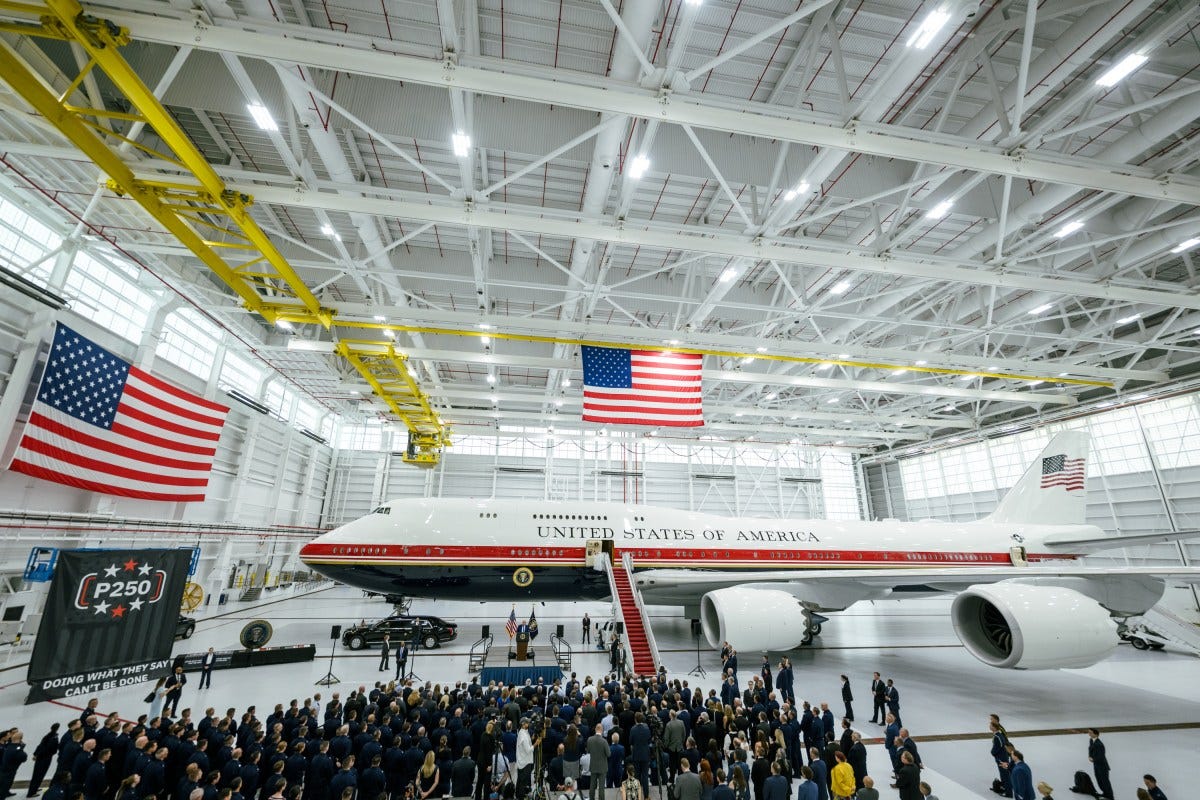
But what they're doing, and we've talked about this often, is they're trying to induce they meaning the administration. And I'll call out in particular Jay Clayton, the US Attorney for the Southern District of New York. So we're getting we're getting about him, We're going to talk about him as as the nominee actually to be the Director of National Intelligence. Totally frightening stuff. But what he's done is he's taken this fundamental right in democracy, the right of the press to tell us what's going on with this corrupt regime. The receipt of this bribe plane and their story in particular about how it doesn't have any of the needed security that you did have on Air Force one and that you would need in order to protect the president. That's just a normal story in democracy that we need to have access to. That's being This isn't a national security concern. The national security concern is the President, and yet who's being attacked by the Southern District of New York. They're not investigating the president, They're investigating the reporters.
Yeah, so that really is an example.
Reporting a threat to this president's safety and this president is sticking as dogs on them.
Right.
That's where it gets really weird, right, I mean, one of the positive side effects of all this awfulness is that Donald Trump is forcing us all to have a lot of civics lessons and remind ourselves why norms got to be norms in the first place. Story, why have administrations of both parties generally been hesitant to compel reporters to reveal sources. We have to explain again why this is messed up.
You know, it goes back to the First Amendment, and the First Amendment is in trouble, and it guarantees two specific rights that are both at issue here.
One is the right to free speech. And I'll say something about that.
A lot of times we think about free speech is just the right to say what I feel or what I think. But the right is the right of democracy. It's the right to hear arguments, to see information, because without access to that information, how are we supposed to decide as democratic citizens what to do. We won't even know what our government is doing. That kind of transparency is so important. And the related First Amendment right that is specifically in there of the right to the freedom of the press, that also is so necessary to democracy.
Yeah, I mean, nothing says I support the First Amendment like subpeeding the people who are using it. Right, Like David mccrob the New York Times said that federal agents showing up at reporters' homes should shock the conscience. Is that flowery rhetoric or is this professor seriously an extraordinary constitutional moment?
Well, I don't think it goes I mean I like that phrase, but it doesn't even go far enough. Shocks the conscience is something unusual. This is really a threat to the entire system. And let's of course remember and listeners to this show no because we're covering it so closely.
This isn't a one off.
It is part of an overall assault on democracy in which Donald Trump has his minions the Department of Justice go after those he.
Considers political opponents.
And so the attack on Letitia James, even if it doesn't go anywhere, it makes people think, wow, you know, maybe they won't get a conviction out of me. I won't go to prison. But if you accuse me of you know, mortgage fraud, you know, I'm gonna think twice if you're.
Willing to do that.
Or how about James Comy eighty six forty seven, a pure example of let's get rid of the president we don't like. Now the guy is facing potentially criminal charges, you know, that insistence on shutting down the opposition, you know. And then if we go back to the historical and allegory, the analogy of John Adams who did shut down the opposition party, how do you do it? He went after what he considered the press that was revealing things that he was doing, like trying to his party, trying to steal the election of eighteen hundred. Now we're seeing that again, the bride plane, the reporting on this plane, which I know we'll talk about more.
What is it?
It's just revealing the corruption that's part of this administration.
And what do you get for that? You get a criminal subpoena. Now I should say, we don't know what these are for.
It's just potentially some sort of criminal action, you know. The vagueness of it is part of what's so scary. So we don't know what the charges are. It's the ging really trying to shut up his critics.
Yeah, and by the way, I don't know if you knew this scory, but this is the anniversary this week. It was on the fourteenth of July seventeen ninety eight that President John Adams signed this Edition Act targeting false, scandalous or malicious writing against the US Government. America tried to do away with the First Amendment and pretended it was about keeping people safe. So happy anniversary to while out there who celebrate. But I mean, let me ask you about the founders. Because the Constitution never explicitly, you know, creates the press as an institution. But the First Amendment places freedom of the press alongside freedom of religion, alongside freedom of speech. Why was that so important to the founders?
Well, you know, there really were two views at the Founding and often we hide from the fact. You brought up John Adams. I'm going to say something about him before giving you a full answer. There were founders, and John Adams was chief among them. Also the Supreme Court of the Founding period, including in seventeen ninety eight justices like Samuel Chase. What they believed was that we had a kind of constant titutional monarchy in this society in which the president couldn't be subject to criticism. That seems outrageous now, but they read the First Amendment, including the right of free speech and the right to the freedom of press is really not that different than the rules and protections, which were some that we had in England, but they didn't include the right to criticize the king. But what that Sedition Act crisis did that you're talking about. The Sedition Act made it a crime to criticize the president of the United States.
By the way, it wasn't.
A crime to criticize the vice president, who was Thomas Jefferson of the opposition Party.
So what happened how that worked out?
Huh?
What happened in seventeen ninety eight was a battle over the meaning of free speech. And thankfully the Jeffersonians and Madison and the editors who were prosecuted use their.
Own trials to put John Adams on trial.
And the result really was this legacy that we're talking about now, that we have a right to dissent a right to criticize this president. But what Donald Trump and Jay Clayton would do is bring back before seventeen ninety eight to this authoritarian idea of the Constitution as some sort of system of monarchy. And wow, that couldn't be more dangerous for the very idea of democracy. By the way, the first three words of the Constitution, I'll just remind everyone, are we the people?
That's what it's supposed to be about.
And absolutely and you know the founders wrote freedom of the press. They didn't add unless the president gets embarrassed. Let's talk about Can we talk about the actual plane? They call it air Force one, We call it Bribeforce one, but the maintenance crew called it maybe let's not This story is again so strange. Reports indicate the Secret Service advised Trump not to fly on the newer aircraft because their defensive systems were incomplete. And you know, when it's the people whose job it is to take bullets for you say hard pass listen, I guess. But imagine getting a free luxury jet and finding out it's still somehow the cheap option. Corey, doesn't this illustrate why independent professional agency have to exist to tell presidents know, when safety requires it. Right, we're talking about Trump at the Supreme Court letting him do away with independent agencies. One of those just saved us life.
We need civil servants, you know, in independent agencies also within the executive branch itself, to tell the truth. And that's why they traditionally have all sorts of protections to allow for that. And yes, this president has done away with so many of those protections. They've weakened the civil service protection. We've essentially, through the recent case that we talked about, overturning Humphrey's executive done away with independent agencies.
The degree to which they exist anymore is really almost nothing.
And you know, let's also just talk about the other you know, dynamic in all of this, which is that the Jay Clayton's of the world, the Donald Trump's, are saying that this is a national security issue and the freedom of the press, you know, is limited when it comes to national security. No, it's an issue about a bribe that was paid by a foreign government of violation of the Luman's clause, and also a national security threat that this bribe of you know, it turns out doesn't turns out to be the best way to, you know, create the plane that carries the president of the United States. Those are essential stories for the press to be reporting on. But what you always hear those who want to shut down civil liberties say is the phrase national security.
National security.
We'll talk about that with Ron Wyden, the fives of the law, the use of fear of security in order to shut down our civil liberties.
That's what's going on here. But let's not lose sight of it.
It's people of integrity who are reporting on the truth, and the New York Times journalists who are facing, you know, possible criminal charges for doing it. They're the ones defending our democracy right now.
Well, let me ask you about Jay Clayton, because he is heading into the Senate confirmation hearing after authorizing subpoenas for the New York Times reporters over there reporting on Air Force one security. I guess it's kind of awkward right to explain your respect for press freedom while reporters are also their inboxes for subpoenas from you. Should senators view those subpoenas as a legitimate league investigation or is this a First Amendment issue that goes directly to this man's fitness for higher office.
Well, you know, I cannot wait to get into this, Senator Widen. Yeah, and he's going to be the person that is interrogating Jake Clayton about all of this.
And one thing I'll push him on.
Listeners can look for this is the question of whether or not the fact that this person who is supposed to, by the way, be the alternative to Bill Polti's clearly not qualified to be the permanent director of National Intelligence. This is supposed to be somebody who is confirmable. This is the former head of the SEC, for instance. So you know that was the assumption before. But you know, one thing I guess he's trying to do this is now just my surmise is kiss up to Donald Trump. Well, how do you do? You attack his opponents? You attack the journalists who are doing their job. And to my mind, I mean, I'll just say it in a blunt way. You know, I don't think this is a hard case if you're subpoenating journalists, unless we're missing something in this story and he has some knowledge that we don't know about that's going to come out in the confirmation. If you're helping Trump shut down free speed, shut down democracy domestically as the US Attorney for the Southern District of New York, an incredibly important part of our system, our Department of Justice. This is the position that pre Berarra, former guests on our show held, how can we trust you to get the reins of power that come with the Director of National Intelligence, including again the power to engage in surveillance that might wind up looking into even domestic US citizens.
Phone calls and emails. If we can't.
Trust you to protect our civil liberties as US attorney, I don't see how we can expect you to do that as the Director of National Intelligence. And so when he comes before this confirmation, and assuming that it is scheduled, assuming that Trump doesn't withdraw it, I expect very tough questions not just about what he would do as the Director of National Intelligence, but about this specific case.
Well, yeah, because I mean, I don't know, there's no federal shield law protecting reporters sources, right.
You know, there's supposed to be a First Amendment, And this is another thing we'll talk that I'm going to definitely talk to Center Widen about. But so often you know that First Amendment has been weakened by this Supreme Court. And you know, there are really important precedents actually involving the New York Times, for instance, as listeners know, in my book The Presidents and the People, I have one of the last at length interviews.
With Daniel Elsberg.
Well, he is the source of one of the most important precedents about national security, upholding the right of the New York Times to even publish a secret history of the Vietnam War. This wasn't supposed to be released, and yet the First Amendment right was upheld here when it comes to this bride plane or bribe force one, of course there's a right in order to publish this. So you know, one of the things I think you're pointing to, though, John, is that we need legislation to build this up. And so it's one of the things that I'm going to talk about in this interview et cent Widen. What kind of laws do we need to pass in order to reinforce the First Amendment right of free speech, the right of the press, the things that the Court you know, should be doing, but I don't know that we can trust it to do so anymore.
Should a nominee be asked whether he believes that Justice Department has an obligation to protect press independence, even if reporting is embarrassing or politically damaging to the administration. I'd love to hear that question asked.
This is a nominee to be the Director of National Intelligence. One of the most important things that this person's tasked with doing is balancing civil liberties and security. And too much actually power has been given to this apparatus, including the Director of National Intelligence, and trying to show ethics in that balance. But if you can't even protect the First Amendment as a prosecutor as the US attorney, how are we possibly trust you to do that in this enormous role. And so, you know, the Constitution Thankfully we're not powerless.
You know. We talk about hope, how to fight back.
Confirmation hearings the requirement of them are the place for that.
So yeah, that's what we need to you know, i'd make the whole hearing about that. Frankly, I don't want to hear his views about abstract subjects.
I want to know how you get past the threshold question that you seem to be involved in the shutdown of free speech. How do you expect to be Director of National Intelligence?
I'd make the whole thing about convincing democrats. The harsher your questions are, the better your fundraising will be this quarter. That's how I would do it personally, Corey, we are back to this administration murdering innocent, unarmed men in the streets. Of course, Ice has now ended two lives that we know of in the last week, one in Houston and one in Maine. In both cases, no body cameras. Again. We shovel billions and billions and billions into this organization, and wow, they can afford every kind of tactical gear, every kind of tank, every kind of electronics, but oh, they can't afford a go pro No body cameras again. The one profession Corey that insists everyone must be documented somehow keeps forgetting to document itself. It's really funny how the cameras always disappear faster than male dignity at a Trump cabinet meeting. But this is despicable. Ice has already been caught in lies, demonstrably saying that, as with Renee Good, that both of these men weaponize their vehicles. Of course, there is in the case of mister Arajo, there are three witnesses who say none of that's true, and they're trying to get them to sign deportation papers so they can never be interviewed in any investigation. According to their lawyer. I mean, what safeguards exist when federal agents use lethal force. There's never going to be any accountability for these men.
You know, we haven't seen a lot of accountability.
And in the same way that the Constitution gives enormous power, and I should say, legislation has hand over even more power to the National Intelligence Apparatus, to the Director of National Intelligence, to those who are you know, supposedly going after foreign terrorists but wind up sometimes violating the civil liberties of Americans. The other place that our legal system really has major holes in it is when it comes to immigration, and at least as I seize itself and the Homeland Security that when you're engaged in immigration enforcement, you know, they think there's no talk about the First Amendment. They think there's no right to free speech, so they can deport people for what they say.
When it comes to.
Those who are members of supposedly enemy nations, they go back to John Adams Law from seventeen ninety eight, the Enemy Aliens Act, and try to deprive them of habeas corpus. And now what we're seeing is domestically, you know, the impunity when it comes to assault and murder, including with vehicles, and the claim of impunity. Now we've got to just stop this. And the way to do it, I think there is a way to do it. It's for local officials, local prosecutors, and the absence of you know, the Jay Clayton's of the world of US attorneys. The federal system has its own system of prosecutors, and then there are prosecutors at the state and local level. But if you murder somebody, it doesn't matter if you're in Houston or in Minneapolis, you should be prosecuted full stop. There is no despite what the Vice President said, absolute immunity. Thank you for ICE officers, and I want to start seeing some of these prosecutions happening. My understanding is there is at least one investigation in Minnesota that's happening. We should see it as well in Texas and Houston. And you know, the pressure has that's going to happen on their own, but local people have to put pressure on their local officials to do these criminal investigations.
Should all federal officers who exercise deadly forest be required to wear body gamras.
I think absolutely.
You know how in a democracy, the most dangerous moment in our democracy, the thing that really you know, where reason gets replaced by forrest, is arrest and policing and including, unfortunately, these ice lawless roundups. How are we supposed to know what goes on while so many local officers are required to record all their interactions. Yeah, and so if they kill somebody, or they assault somebody, if they violate the law, we see it. And that is how countless officers who have broken the law.
Held to account.
So if these prosecutions are to happen, a minimum thing that I'd like to see, and this could be done either through an administrative action that's not going to be done, but certainly through legislation, is to require body cams on all ICE officers.
Absolutely.
Yep, that's it. One last question on this, Corey. They're going to deport these three men who were in mister Araju's car. Obviously, the available surveillance footage shows he never weaponized his car and never tried to ram the agents. So we've already been lied to about this by the same government that lied to us about Renee Good being a terrorist. They're trying to deport these three men, according to their lawyer, before they can tell their side of the story. Doesn't basic justice require preserving witness testimony regardless of their immigration status, because this man's three children are all American citizens, And if my government was doing this, I'm just thinking about the lawsuit i'd have.
You know, it's one of the horrible things about this moment that ICE has really been engaged in an attempt to strip all civil liberties.
From non citizens.
They've done it with the right to free speech, They've done it in the case of Venezuelan migrants, and when it comes even to the right to trial, and they're trying to do it here, to deny even court hearings.
And you know, it's a good point.
Sometimes one way to make the argument for non citizens' rights there should be in these cases, I think a matter of human rights. But another way to do it is to talk about those even if they're deported, the interests of the family in knowing what happened, and so that might be one way to go at this, to have the family sue for information as to what's happening, and you know, you have rights, you have civil liberties. They've been eroded. But there are ways to fight back. So yes, these are all ways to push forward. I don't want to miss what said two about Renee Good that we were told, you know, that this was some sort of.
Terrorists the mast We know now that you.
Know that couldn't be furthest from the truth, and even the Trump administration, of course, I had to back down.
Stephen Miller literally said that Alex Freddy attacked officers and he's still allowed to be employed. Like there's no accountability in our government for lying about the murder of citizens.
Yeah, and you know, we're talking so often about the law, and that is important because it's the way we get accountability. We also have to talk about morality. Human beings are entitled to basic dignity, and that's what Ice.
Is denying here in murdering people.
This is supposed to be a country that holds up human rights as a beacon to the world, and what the world is seeing is anything but.
And that's one of the great tragedies of the moment.
We have to take a quick break. We'll be right back. This is the oath of the Office.
Hey, al clan Kershner here, so friends, I hope you'll join me on my audio podcast, Justice Matters. You care about ethics and government, criminal justice, reform, a conflict free federal judiciary. I thought so. On Justice Matters, we take on issues involving the need to reform our government and its institutions, and we talk about real, achievable reform. I hope you'll join us. Look for Justice Matters wherever you usually get your podcasts.
Welcome back to the Oath in the Office. Hey, Professor Pretschneider, I want to ask you about what's going on with the Smithsonian right now. You know, it's funny this administration is criticizing them for studying history at the Smithsonian right because the Trump administration is here to edit history. They don't like that the Smithsonian is here to study and exhibit history that covers slavery, systemic racism, women's rights, LGBTQ, his immigration, and other subjects. They don't like museums covering subjects that might make the children of bigots ask uncomfortable questions. I think to me, this is the most noble thing a nation with a checkered past can do. Have its official museums tell the truth and give the correct record. But I mean, get a president constitutionally pressure federally supported museums to reinterpret history. I mean, this is Soviet level crap here, am I right?
You know, one puzzle that we've had for a long time is why is Donald Trump so interested in history?
This is not a why you know why.
Part of it is the racism, of course, but the specific.
Racists being the bad guys all the time. That's why they're going after the Southern Poverty Law Center. If you can convince people that the anti racist are the real bad guys, well, that all those white supremacists and Charlott'sville were probably wronged, right, I.
Mean, that's their whole scheme, and you are seeing it all over as I think you know, and I've mentioned before, but I'll say it again. I'm working on a documentary series version of my book, The Presidents and the People, and one of the first places that we filmed was in Philadelphia at the President's house of George Washington and John Adams. And there there was an amazing exhibit that told the truth about the fact that enslaved people lived in that house all of a sudden that exhibit was removed. Well, why would you do that, because you're trying to erase the truth of slavery. And now there's even more frankly detailed reporting, even shocking reporting. Trump was given a tour of the Smithsonian by a high level official and showed no interest, of course, in the history of slavery, and he was called out for that. They didn't keep quiet that the Smithsonian official told the truth. He wanted to, evidently on the tour, of course, just talk about places in the world in which he was very popular. Wanted to talk about himself rather than one of the times.
You know who doesn't like exhibits about slavery and segregation. Corey White people who his parents didn't raise them to identify with abolitionists. You know what I'm saying.
Yes, he was not raised right, and narcissism comes through, and you know that's part of what's going on here. It's partly, you know, as we saw in Philadelphia at the President's House and take down of that exhibit, pure attempt to erase the facts of history, the horrible crime against humanity that was American slavery to you know, because it makes people feel bad but it also is retaliation here. I mean, that's what's amazing about all these stories as you get into them. Of course, they have the white supremacy, but they also often have another element. And this is also a story about shutting down critics. So wow, Donald Trump, you know, knows how to basically hit easily a trifecta of constitutional violations, the white supremacy, the shutdown of free speech. And I'd add to that, the Smithsonian is not an executive agency. It's supposed to be independent. So what he's really doing is taking an independent agency again and trying to you know, his affect his will on it. And we've seen that so often with his attempts to what influence private companies.
Yeah, he's trying to make history take a loyalty oath. Now, really, what you think about it? I mean, you know you're losing the argument when your big next move is rewriting the timeline, you know. I mean, but let's give their argument that the Smithsonian is publicly funded by taxpayer dollars. Does that mean elected officials should get to dictate historical interpretation or should there be an expectation of some kind of scholarly independence.
Yeah, I think.
Actually it is a harder case. For instance, in the CBS case. The CBS case and what we'll get into this, I know a little more before the interview and certainly in the interview with Senator Widen. When government is trying to commandeer and control a private company and tell it what to do or what to think, and when it's trying to really use, you know, often in secret force in order to do so, that's a violation of the First Amendment. But what you're bringing out, John, is that this is a more common, implicated issue because when government speaks, when it sends its own messages. Donald Trump, for instance, can get up and you know, say all sorts of racist things that the podium when he speaks before the American people, even though that podium is publicly funded, and even though the White House is publicly funded, he has a right as an attempt to speak on behalf of the government to say all sorts of things. So his argument, a constitutional argument, would be, well, the Smithsonian is an expression of my will, my idea is. But there are two problems with that. One is this really isn't the equivalent of his press office or even an executive agency. It's set up to be an independent, publicly funded but still independent entity. In fact, it's chair, it's Justice Roberts, and part of the reporting is about Justice Roberts's role in trying to mediate all of this. But the other thing that is, you know, sometimes even when there's not a free speech issue, there's an issue of the.
Truth and not lying. And that's what with the Smithsonian.
As much as there are issues about free speech, I think the real issue is.
That government shouldn't lie to you.
And when Donald Trump tries to erase the crime of slavery, that is a lie. And that's we've got to talk about that too, not just issues of free speech. But yeah, the problem with government not saying what it should say, not telling the truth.
That's another hallmark of authoritarian regimes. It's like the Soviets airbrushing cosmonauts they don't like anymore out of old photos. But it's also another example of job owning, isn't it. I mean, this is him using whatever leverage he has, you know, is like with the FCC, I mean against these agencies, and government officials say no, well, we're not forcing private companies to comply, you know, we're not forcing independent agencies to bend to our will. We're just making refusal professionally inconvenient, right. I mean, that's what we're witnessing here.
And you know, I think it's a great transition. The Job Owning Act is nan.
I was proud of that. I was proud of that myself.
Going is trying to stop exactly what you're talking about.
We'll talk about that with Senator Wyden.
Let me say what job owning is, and then I'll answer your question about the Smithsonian and definitely talk about the case of CBS and also talk about some complications with it that we'll get into. So job owning is the idea and First Amendment law. For instance, there's a case about booksellers in Rhode Island that were intimidated by the police and by government into banning certain books. Now, the First Amendment protects us against government censorship.
Well, this is a private.
Company that decided a bookstore to censor. Is that a violation of our First Amendment? If it was just a choice by the bookstore, it wouldn't be. But if it's a result of government threats, absolutely it is. And so job owning is the idea that sometimes secretly or through other means government puts pressure or even coercion on private companies in order to do the will of government in censoring.
So what about the Smithsonian. It's complicated.
I think you know, it's not obviously a private entity. It's not a purely executive agency, so there would be one to talk about. But here's what's not complicated. When the head of the FCC is exerting pressure on CBS to fire Stephen Colbert because he makes the president feel bad, that.
Is really the kind of thing that should be stopped.
It's not protected speech because the pressure from the FCC that part of it, and the more we find out about it, the more pressure we'll.
See that crosses the line. But yet courts have not been great about this.
Again, so that's why this legislation that's been proposed by Senator Widen is so important because in the same way that we need reforms to other laws to protect our rights, to protect rights of search and seizure, we need to re up the protection of the First Amendment free speech rights to press.
And that's part of what it's going to do. John. I'm going to throw in just a complication.
Because I don't want people to miss this one weird thing about this law. And the ACLU or a sponsor. I'm so happy to have their sponsorship. Yes, they are supporting this laws under Widen, but so is Ted Cruz. Uh oh, why is Ted Cruz supporting this law? That makes me instantly suspicious. And it's because he thinks there was job boning that went on in the Biden administration, pushing Facebook for instance.
So now he's running for president, that's all. It means he needs something to brag about.
Well, I think yeah, it's partly that I think that there are on the right is a sort of you know, myth that Biden was Well. I guess one thing that we'll find out is how much was this job boning and how much was it demanding, you know, not the spread of misinformation. So that's one of the complicated issues here. That we do need a law, no question, to protect against job boning, But where the where the line is between coercion and simply sending out important information, that's a hard question.
This legislation. I've looked at it pretty closely.
It's written in a way that's very careful, But that is something that's going to be interesting because different politicians are going to sign on to it, are going to support it for very different reasons, with very different cases in mind. One last thing about this, I think that's okay. You know, people have all sorts of re reasons why they might come to good legislation, and in the end, it's going to be up to well to the interpreters of those laws in order to enforce them, and I hope they do a good job of it.
Oh wait, well, then let me ask you about FISA, because I need a little catch up on them. Well, Congress is again wrestling with one of the most controversial surveillance authorities in our law, and that is Section seven oh two right of the Foreign Intelligence Surveillance Act seven oh two, which we're told by its supporters is indispensable for stopping terrorism and foreign espionage. But as we know, it has repeatedly swept up Americans communications. It's been misused in many ways that threaten civil liberties. And we're told we're just using against the Muslims, We're just using against the illegals. But it turns out, no, we don't know who you're using this against. And the debate is getting even fiercer now, you know, Corey I think every surveillance program, you know, it always begins with trust us and then it always ends with a congressional hearing somewhere. So for those who who've heard the term FAISA and who we're going to hear you and Ron White and talk about this, what exactly is seven Z two and why is this so controversial?
Now?
Well, what the PHISO law does as it recognizes that, you know, we need to look into terrorism abroad and we've had different iterations of it over time, and that when it comes to terrorism, there is some secrecy that's required. So it creates a system of pies of courts that review various actions. But it also you know, this is the question now, has resulted we know, has resulted in abuse? Yeah, because you don't need a warrant to look into, say, suspected terrorists abroad.
And you know, at first.
Glance you think, oh, what does this even have to do with American citizens? But now ask this question, what if a suspected terrorists or somebody who's under suspicion abroad and there's a warrant. Without a warrant, we're reading the intelligence services, the CIA for instance, and are reading their emails and listening to their phone calls, but they call or email a domestic citizen.
What about that?
And as things stand now, even though normally the Fourth Amendment of the Constitution protects us against unreasonable searches and seizure, you have to show that there's suspicion in seizing my emails, for instance, in a normal courts.
This is a potential.
Exception while it's in the service of investigating foreign affairs, of investigating terrorism. And you know, here's where it gets scary. It assigns a lot of power to those in the FBI and in the intelligence services to making calls about where it trusts us between including and here's what we'll get into with Senator Widen, including giving power to the deputy director of the FBI, who was just to remind folks the podcast Damn Bongina a conspiracy theorist. So not only trust, you know, it was one thing in the past when we said trust me, Can we trust the government?
What if there's a dictator? No, it's not hypothetical. We have people in these positions, including person that we know who well.
Dan Bongino, a total out there conspiracy theorist, making these decisions.
And so that's why there's.
A need pushed out of the emment so far. That's the first one, first one pushed out of the administration to Christina Marlin too yes.
Being too whacking.
You know, the situation is bad, and that's why we need reform. And so that's part of what Center Widen is working on. And I'm going to talk to him about the ways that we might protect ourselves against this abuse. One is to really through a law reinforce the idea that yeah, if it's a.
Domestic citizen, you need a warrant.
Another thing is to stop these fives of courts from being so secretive.
Yeah, And it's also calling out the language, you know when they say things like how our data is incidentally collected. You know, like, oh, it was incidentally collected, but usually we're the incident, you know, and like you're right. The Fourth Amendment is supposed to protect us against unreasonable searches and seizures. The founders could not have imagined in this capacity. But it's strange, Corey, how the Fourth Amendment keeps being asked to make a few more exceptions all the time, right, I mean, we've seen administrations of both parties defend the surveillance that I gotta be fair about that. So doesn't that suggest that we've seen both parties defend this one in power, that it's less about partisan politics and it's just about the tendency of executive power to get bigger and bigger over time.
I can't agree more, but I think, you know, there's a wake up call. And his name is Donald Trump, and and you know how when you're in the hotel, there's a wake up call, and then there's a second one.
That second one is Dan Bongino.
These are the people who are now in charge of, you know, deciding whether or not you need a warrant or not to search American citizens' emails and phone calls and phone records. And I think you know, yes, it's been bipartisan, this trust me theory, hand it all over, hand over the power. You know, isn't it time to rethink that? I think it certainly is that this wake up call is a time for both parties to stop pushing back against the tendency to get rid of our rights like the Fourth Amendment right against search and seizure in this trust me system that hands over so much power, not just to the federal government.
But to the President and his cronies.
I know you're right about everything. The problem is, we got a several million people in this country who would willingly buy fentanyl from RFK Junior like they don't care. They don't care that their data is being scraped as long as the scraper has an R after their name. We got to take a quick break. When we return, the professor sits down with the Senator on the oath in the office. Hey, I'm John Fugel sang. Do you ever watch these Christian nationalists and right wing fundamentalists on TV and think Jesus Christ. These people are the opposite of Jesus Christ. You know, Christianity was supposed to be about love and service, but millions of Americans have grown up to find their nice religions been hijacked by this mean, authoritarian, tax free clique. I wrote a book about how these right wingers aren't actually on the side of Jesus and historically they never have been. Separation of Church and hate A sane person's guide to taking back the Bible from fundamentalist fascists and flock fleecing frauds. It's a very irreverent and biblically correct book for believers, atheist, agnostics, and anybody who's ever going to have to deal with a Christian extremist in your family, workplace, or government on all the issues that divide us, using actual verses from that book they claim to follow. They've got a First Amendment right to twist the Bibles to their liking. You've got a first Amendment right to call them out for it, and you'll be surprised at how good it feels.
Welcome back to the Oath in the Office. It is a real pleasure to welcome to the podcast. Senator Ron Wyden, who has represented Oregon in Congress for more than four decades. He's been a leading voice on questions of constitutional law, how to restore the Fourth Amendment, the First Amendment, topics like privacy, surveillance, press freedom, and executive power. So, Senator I'll say, just very directly, you're the ideal guest for this podcast, which is all about restoring our democracy, protecting our constitution.
So welcome to the Oath in the Office. Corey.
What an inflationary introduction. Let's have some fun and talk about what you're interested in.
Absolutely, let's begin with the question of government surveillance and FIZA, and of course you serve on the Senate Intelligence Committee. I want to talk in particular about what's wrong with FIZA and how it might jeopardize, as it stands now, our constitutional rights.
So as I.
Understand it, as it stands now, the government is entitled without a warrant to collect the communication of foreign targets. But when it comes to domestic citizens, to citizens of the United States, although the Fourth Amendment protects the right against unreasonable search and seizure, there's a way around it. So can you talk to us just in the beginning about what the problems with VIIZA as it stands now might be.
So in English, Corey, because a lot of the doubledegook is hard to follow. The Foreign Intelligence Surveillance Act was passed to deal with foreign threats, and there was bipartisan support for it. I was all in for you know, the concept. What's happening now though is untold numbers of Americans, but we know it's huge or getting swept up in these searches. You know, it used to be that people had a measure of privacy just because there were things that the technology couldn't do. Now the technology can go almost anywhere, and so you've got a lot of law abiding Americans getting swept up. I think the bottom line here is, and it's what I've been working on with my colleagues, Democrats and Republicans, is to have a warrant before you go search in all those Americans you know, records. It's getting particularly important because right now the government is using data brokers. It's another loophole to go out and buy people's records. And that's over the line as well, and I'm trying to curtail purchasing people's personal data.
Great so important for the moment, and I did want to say something about the moment because I saw in your Dear colleague letter that you called out some of the obvious abuses that are happening. Can you talk to me about the role that Dan Bongino had in all this. One thing that scares me, I take it it scares you too, is that you know, conspiracy theorists, people who are really tending towards the worst impulses in American politics right now, are in this administration, or at least were and had a role.
So specifically my.
Understanding, and it would be great if you could explain this to us, is that Bongino had some role in deciding whether or not some of the Americans who were caught up and these warrantless searches had a role in deciding who was caught up and who might be subject to these searches. So that concerns me, of course, and just interested in his role and breaking it down why there's a threat right now, especially that might not have been obvious before I take it in past discussions of five. So there are a lot of abstract discussions about what if a dictator came to power, what if a bad actor came to power. But we're in a world now where that's not so abstract.
Well, a couple of things. I mean, we've long been concerned about some of the FBI issues, and you're really talking about that. We're been concerned about some of the ICE, you know issues there are in terms of my being able because I'm on the intelligence committee, my older child off and calls up and says, hey, Dad, what's going on on? You're so called intelligence.
Heller.
But the point is, in a lot of these you know areas, you see these agencies don't really get what Ben Franklin was talking about Ben Franklin said that you could have a balance between liberty and security, and if you weren't interested in both, you didn't deserve either. And that's what I've tried to make my focus. And whether it's ICE, or whether it's the FBI or a variety of these agencies under the Trump administration, my own personal judgment is you've got a lot of these government agencies simply out of control, and they're targeting reporters and attacking elections, and you know, making limits on what people can talk about on TV. And that's what I'm trying to do, is get our liberties back.
Yeah, I want to ask you some more about that. I mean, so part of the problem, as I understand, and tell me if I've got any of this wrong, is the Congress has handed over a great deal of discretion to the executive branch. Now, the hope had always been that they would respect that balance between liberty and privacy. But we have an administration now which, well, i'll put it lightly, that I don't completely trust when it comes to striking that balance.
So part of what you're trying to.
Do now is to pass legislation, to pass laws that reign in that power.
So can you talk to me some about what we might do.
I mean, we're, of course worried about so much of what's happening at this moment, but part of why I wanted to talk to you is that you really are one of the people out there looking for solutions crafting legislation.
So what is it that we should do.
Is should we just simply say that if you're going to search an American's phone, call or email, that you need to have a warrant full stop.
But that's what my bipartisan bill talks about. So I think you got to start with that, and you've got to start with them not buying up people's you know, personal data. Now, they're different areas of policy. You know, the question of targeting reporters. This is horrifying what we do about Jay Clayton, yes, being considered for the top job and intelligence and the like. I mean, you can't have the head of intelligence, you know, basically have being up to their eyeballs in terms of getting subpoenas out and then sending people to people's houses. I mean it's almost like thugs showing up at the house. So you have that and then of course, I'm working to prevent the government from trying to attack people's personal information in terms of censorship, and that's what job owning is all about. Job owned would provide Americans with the ability to sue in the government illegally coerce the censorship, and creates transparency around government's requests to censor speech. The bottom line is here. The founding fathers thought that the First Amendment, many of them like Jefferson, was probably even more important than government. I mean, they thought the government was useful and would collect records and things like that, but the First Amendment was really sacred. And now we've got and you mentioned the probability that both challenges are faced with the question of people in the executive branch invading their privacy. This has gone on with Democrats and Republicans, and so my bill, for example, on job owning would limit the executive branch of any administration.
Yeah.
I mean, I think that, as you said, we want to stay away from the goblgook and get into the concrete and when we talk about people like Dan Bongino and Jake Clayton, we start to see what we're talking about.
I did want to ask you about.
Jake Clayton, because in the way he pulls together both the bills that we're talking about today want to restore our First Amendment right to free speech, which as you say, is absolutely necessary to our sovereignty. Is a democracy, how can we be a democracy without information and then also curtailing the ability of the government to search without warrants. So I take it that Jay Clayton was meant to be the more acceptable nominee for Director of National Intelligence. But I mean, how are you starting to have questions about him given that his role in serving subpoenas to the New York Times. We've been talking about that, of course on this episode, And I mean, how does he in particular relate to this story and what he's done in the Southern District of New York with these subpoenas on New York Times journalists for doing nothing else than as I understand that just looking into this plane, this gift, this emolument's violation that the president has received.
Well, the first thing it really does, Corey, it tells everybody that this should be a wake up call about the importance of asking really tough questions. That it's come from me here as people said, well, this isn't the predecessor.
Who was even worse.
I mean, we need real questions since Jay Clayton, according to the reporting on this whole news story about Donald Trump's plane issue, to subpoena and to forced reporters to testify before a grand jury, Now that's not anything that you feel very good about if your dan with work on a pop job in terms of intelligence. And yes, there are things you can do. I wrote the Press Act to stop the executive branch from secretly scooping up on reporters mails, So there is things you can do.
I guess I'm going to ask you a direct question. I mean, to me, you know, what Jay Clayton is asking for is to be the person making that decision between the balance between our liberties and security. And yet here he is basically engaging and regardless of whether or not there's a conviction or even an indictment, engaging in a limit on press freedom by pulling reporters before a grand jury. So I don't know, is that go too far to say that he's disqualifying or do we have to balance out the evils here? And you know, he's not as bad as the acting Director of National Intelligence.
How do you think about that compromation.
First, you have to assess what you think he did. And based on what I read all through the weekend as Jay Clayton was up to his eyeballs in sending intimidation subpoenas to reporters and sending people to folks houses. And I think that the members of the Intelligence Committee and the hearing is coming up, we ought to ask some tough questions. And this is not somebody who maybe people thought previously, oh, this is a decent client. Now tough questions are in order, and that's what I'll be dealing with.
Great and I want to I mean, of course, you know, as was true when we were talking about FISA and the need for actual warrants and the way the executive branch has escaped that.
There also is an issue that you raised.
About the First Amendment, which is of course, guarantees the right to free speech in addition to the freedom of the press. And you have legislation this Job Owning Act, also bipartisan co authored. I take it with Senator Cruz to try to reinforce our First Amendment in issues in which private companies are forced by the government often in secret to violate our First Amendment, right, So I mean, talk to me maybe first about some of the concrete things that we're seeing, and then how this would solve it.
So Brandon Carr, we've.
Talked a lot about, of course of the FCC and his pressure on CBS is kind of call for sanctioning. Stephen Colbert, I mean, is that the kind of thing that you're worried about, and how would this act resolve?
Well, you're describing for your people following the program an example that's concrete. I mean, Trump has been threatening TV companies because he doesn't like the late night shows, and Kim All has been getting at the view. Brendan Carr and the FCC have threatened broadcasters' licenses. And here's what we do in the jaw Boning Act, because people have been trying to follow it. The text of it says, we're making sure that if the government is illegally censoring information and limiting transparency with respect to speech, that those people would have a legal remedy. They would be in a position to speak up for themselves in terms of illegal proceeding, in the ability to sue in the government illegally. Course, the censorship. I think it's about time. And by the way, again, lots of people and lots of administrations have engaged in this, and that's why people are kind of surprised when I'm coming in with Conservative Republican ACLU, if you can believe it supporting our bill.
So that's absolutely and I should say it's CLU a sponsor of this podcast and proud to have them as a sponsor. I want to ask a follow up question, just to get into it a little bit, So what the job Boning Act, as you explain extremely well, does is it you know, allows for the fact that sometimes private companies are pressured by the government to limit our rights. And that's not the same as when Jay Clayton says, subpoena's reporter before the grand jury. But it's obviously a problem and we're seeing that. I think, as you agree that Brandon Carr example with pressure media companies seems to be the prime example. But what do we do I mean, in the kind of examples that I love bipartisan consensus, but I want to ask you about the way that Senator Cruz might seeing this, because sometimes it looks to me a little bit like the Duck rabbit.
I mean he's worried.
I think about the Biden administration pressuring Facebook and other social media companies during COVID, But isn't there I mean, I take it in the First Amendment that there's a line between coercing somebody and simply saying your opinions. So what do you think about that? Did the Biden administration go too far? Or is that you know the kind of thing we just argue out in court. And you know, you both have different examples in mind. I did look at the legislation and it says very clearly this is about the protection of the First Amendment.
So you know that a lot of it will come down to that.
But what do you think about the Biden example speaking of bipartisan consensus.
Well, what's important is a bill like this is not threatening legitimate government engage. Right In other words, Senator Cruise, iile certainly disagree. Right, Well, a lot of matters. I mean, it doesn't stop the government from warning social media companies about Russian influence campaigns enforcing the law. But if the government targets a company Corey specifically to try to censor First Amendment protected the speech, then the bill creates a remedy for individuals. So there's a lot here to kind of think through. And that's the point trying to demonstrate that what you're doing is really and that's why we got the ACLU support.
Yeah, to the.
Heart of the matter, that censorship is out of control, and we can say that both administrations may be dealing with it, and we're talking about abuse of government power. And this is a way for Congress and the country to fight back. And the way you get a remedy here is black live law.
Yeah.
I love that idea and I completely agree with you. Look, the fact that you and Senator Cruz might have different examples in mind or disagree about some particular case doesn't stop you from collaborating and protecting the First Amendment.
And that's what this legislation does.
And particularly on that point, for people who are just starting to hear about this discussion, i'd say, take a look at what the acl you's had to say about it. Yeah, they're really talking about what I really saw is central here, and that's things like Jefferson in the First Amendment being probably in many respects more important than government.
Yeah, and when we see the FCC case, we know that we need legislation. I think too, you know, if people on the other side of the aisle are misrepresenting the fact that Russia did try to interfere with the election and that there were warnings about that with the violation of the First Amendment, well that's on them. The legislation protects us. I'll say one other thing too that maybe you have thoughts on. I think one common element in the Faiza discussion and in this one is the issue of transparency. That this by giving individuals the right to sue, it allows us to see what's actually happening and whether job owning is happening or not.
You're being logical, Corey, in this that's a push out as much transparency, accountability, and opportunity to get out abuses of government in the speech area.
I want to pull back and ask you some big picture question, which is you know, in doing this podcast, we're trying to do two things. One is to talk about the details of the abuses of power and also to do what we've been doing in this discussion to talk about how to resolve them. And of course, after I've spent a lot of time in the Nixon archives and writing about Nixon, but also about the aftermath in the nineteen seventies when we did have legislation to rein in executive power and abuses.
I mean, how hopeful are you?
That's really part of what we're trying to do is to talk about the kind of legislation that we've talked about and you know, in pretty good detail. Do you see it as a kind of a hopeful moment in which despite the frightening things that we're seeing, that the Congress is starting to push back or should we be more leery about the threat to our democracy?
How are you feeling? Big picture?
Well, certainly because of the technology. It is a challenge of dealing with new threats. As I told you at the beginning, there was just because technology couldn't go everywhere. But I had six town hall meetings at home in Oregon. I've now had over eleven hundred of them because I think that too, it's part of speech and ability. I think people are concerned about it. Back when I started, I blew the whistle on John Poindexter's Total Information Awareness program, you know, years ago when he wanted to pay money for going out and assassinating you know, bets on assassinating leaders. We've come a long way, but there's a lot more to do.
One kind of follow up to that, and this just relates to everything really that you've been saying. I mean, is there a sense in which given the abuses that you're seeing now, and then given your point that you just made about technology and the vastness of it, I mean, there was no AI when the Pizer Court was created.
For instance.
You know, have you gotten more oriented towards civil liberties? Do we have to be more distrust full of grants of power to the executive branch? I know, part of what your legislation does is create more transparency and more pushback frankly on the Pies accord.
But I'm interested too more generally.
I mean, are you seeing just a kind of mistake basically and handing too much power to the executive branch at this moment?
Well, the way I summed it up on the floor of the Senate, and I've thought about it, is that new tools require new rules. And now we've got this big debate about AI and there hasn't been a lot of thought given to it, and AI data brokers and the like. That's a prescription for trouble and why I'm trying to direct as much attention to it as I can.
Great, and one last question before we say goodbye to you and hopefully we'll have you back. This has been exactly the kind of conversation that we love to have on this show. Is there anything we've talked about job owning about pis of reform? I mean, coming back to Jake Clayton and coming back to these really direct threats to democracy that we're seeing from the depart Mean of Justice and the US Attorneys eighty six forty seven as a way of going after the former FBI director James Comy, I mean, what can we do not in these job owning examples, but where the government is really just directly trying to shut down speech And do you have any thoughts about that?
Well, that's why the Clayton hearing is so important. I mean was kind of stunned at how a couple of days before his hearing he was out, you know, basically intimidating you know, reporters and doing something that I thought was way beyond what was responsible activity for somebody who wants to be on DNI heads. So I think before we saw all that over the weekend, a lot of people said, well, sounds better than the other guy who has just gone. But now it's time to ask some tough questions about what people heard about, and that I see is my job. You know, my dad was a journalist. I think I meant one of the things I'm very proud of. So he wrote The Bay of Pigs and there's a picture of him and Castro on the back of the book, and Castro, says Peter Widen knows more about this than we do. I do myself. As I was thinking about public service, I want to ask some tough questions like my dad didn't. He sort of showed me how to do it.
Terrific.
What a great discussion, Senator Widen, thank you for your work. Thank you for your work on these two issues, piser reform and also the Job Owning Act. And absolutely we're looking forward to you holding Jay Clayton and any other administrative officials that come before your committee Transparency Congress asserting its authority. These are the things that really matter at this dangerous moment, So thank you for joining us on the oath in the office.
Let's also thank Wendy from Grant's Pass who helped us put together the show.
Absolutely. Thank you so much, Senator.
Thank you well.
I want to give Ron Widen points for giving points to Wendy, so right on, classy guy and great conversation, professor.
Thanks so much, John.
I mean, you know, this is complicated stuff, and this interview and our discussion earlier went deep into the weeds.
And that's what we've got to do.
We have to understand what our government is doing when it violates our civil liberties. And you know, the most important thing though I think about this episode, about the conversation with the Senator, about our conversation, is we talked about some pretty frightening stuff, the shutdown of free speech, the shutdown of democracy, the elimination of our rights to the Fourth Amendment guarantee against unreasonable search and seizure. And yet there are ways to push back. Legislation can do that. Laws can do that, and that's what we're going to continue.
Showing up to vote can do that too, Professor. What's the best way for our listeners to follow you and keep up with your brilliance the other six days of a week.
You can find me on Blue Sky as Democracy Profit. You can find us wherever you get your podcasts. I should have said at the beginning of the podcast, but I'll say it now twice. Subscribe, Subscribe, tell your friends, send it out, and leave us a review.
These reviews keep.
Coming in, and wow, John, you know we're consistently hitting that number one spot on Apple Trending Podcasts after our episodes come out. It means that we've just got intense interest in what we're doing and nothing could be more encouraging. What a pleasure to do this with you every week. And yes, Wendy's so glad that you got a shout out, Wendy from Oregon, And what a.
Pleasure to do this show with you every week. John.
I also want to announce to our audience that you can now hear Corey and Me on Sirius XM at a different time. My show on Sirius XM Progress has moved. We are no longer the late night primetime broadcast. We are now going to be twelve noon to three pm on the East Coast, nine am to twelve noon on the Pacific Coast, and our first week's guests include Martin Sheen and Joey Reed and Congressman Glenn Ivy and Congressman Bonnie Watson Coleman, and Professor Corey Bretschneier will be joining me live taking your calls every Monday in the two to three pm hour on the East Coast. So Corey, thank you for making the transition you began with me in the daytime. We've been doing late nights for several years now on Sirius D and it's nice to finally see you in the daylight again.
I love doing it.
Congrats on the new Times thought, John, and I loved talking to you, of course and taking calls beginning your new show with the former President of the United States Martin Sheen.
Yeah, but he was your warm up. Aacked by the way you had Martin Sheen A you're opening Yeah.
And I've got to say one last thing, John, which is congratulations. Woopy Goldberg named your book Separation of Church and Hate as one of the best summer reads.
Is it?
Yesix is that on the View, which is not a small show, And of course that's well deserved and so glad to see you get that recognition.
Listen, I was just glad that the View wasn't afraid to mention my book on the air At this point because a year ago it was pretty scary time for ABC. So it means, I guess if they can mention my show on the air, Kimmel's job is safe for now. That's that's how I'm measuring it. But thank you, Corey, and thank you Whoopy Goldberg as well, and thank you to Wendy and Beowulf and everyone who puts this magnificent monster together every week. Oh and one more thing before we go, last, but not least, let me talk on your code about something, Corey. Isn't today a special date?
It is an unbelievably special date. We're recording this on Tuesday, July fourteenth, with a Bastille Day, And it also is my twenty fifth anniversary. I married my wife Ali on the Princeton campus twenty five years ago and the love of my life, and so I'm so glad to say happy anniversary to Ali, who listens to the show, talks to me about it, and has been such a great support in all walks of life and an amazing mom person in education and curriculum design and really in everything.
So happy anniversary, Alley.
Okay, that was totally not the date I was talking about. I met the early inns Edition Act of seventeen ninety eight. Well, you know what your anniversary is nice too, Corey. That's very sweet. We'll see you next time on the oath in the office
The Foreign Intelligence Surveillance Act has raised Fourth Amendment questions since its enactment.
The First Amendment protects Americans against government action “abridging the freedom of speech, or of the press.” The Trump administration is testing those protections.
Follow the show
A new episode every week with Corey Brettschneider and John Fugelsang, free in your podcast app.
Now playing
Episode