Episode 39 · November 6, 2025
The Case That Could Finally Stop Trump (with Dahlia Lithwick)
Show notes
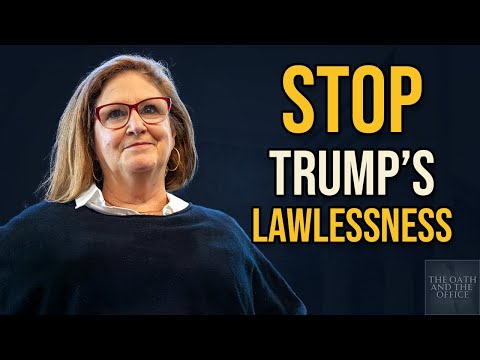
Then Corey sits down with Slate’s Dahlia Lithwick for a wide-ranging conversation about the Supreme Court tariffs case — and what it could mean for the limits of presidential power. Together they explore three central issues: Trump’s abuse of emergency powers, the DOJ’s misleading statements in court, and what Corey and Dahlia agree amounts to a DOJ shakedown.
It’s a conversation about how far Trump’s lawlessness has gone — and whether this case might finally be where the courts push back.
Transcript
Automatic transcript
any little kid can tell you uh that the president doesn't set tariffs um that is you know exclusively reserved to the congress. But the other thing he said and it was really I thought moving and distressing is that this falls heaviest on small businesses right that if you are a huge uh company you can absorb the tariffs and eventually pass on the cost to consumers. You can't do that. you can't plan uh if you don't know what you're going to be paying next year. And and it was interesting to hear him, he's also a lawyer. Um interesting to hear him say that which is should be obvious to anybody who wants stability in the economy. Uh uh which is uh you know, you you can't muddy the waters and have everybody just hope that because you're the president and you say you're getting good deals someday that we all just live with it.
>> [music] >> Welcome once again to the Oath and the Office podcast. I am John Fugal Sang. So humbled and honored to be here uh joined by one of my favorite people, the uh Ivy League professor, the author of the Oath in the Office, the great Professor Corey Brett Schneider. Corey, I I I got to be honest. I wasn't really ready when we started doing this for how colossally popular this podcast would become. I feel like we need to like I I don't know, have like a stretch limo and some coke and escorts every time we meet up because I just like it's you're the Mac, sir. The the the response has been so great. Congratulations.
>> Thanks. And thanks to you, John. I think frankly it's the dynamic that um people want these in-depth discussions. We had this amazing discussion with Congressman Ted Louu uh last week, of course, and and that was amazing. We're hearing from listeners about that. Uh what I will say about it is it's not the normal thing that you would get on, you know, what's your response to the shutdown? What's your response to that? The the normal kind of interview. We're talking about the structure of our democracy, the threat to it, the ongoing self coup. And so what was so important about that is you heard Congressman Lou talk about reclaiming our Constitution that we've done it before in the period after Nixon and that he wants to take the lead in doing it again and he already is crafting legislation to reign in presidential power. And it also, you know, I think this podcast, although of course we're critical of Trump, uh it isn't just the normal uh politics as usual, it isn't just partisan uh bickering. we're talking about how to preserve our democracy in the face of a
threat to it. And so the fact that he talked about the need to do that in a democratic presidency, I thought that was insightful because that is often how we've done it. The Ethics and Government Act, which created a real check on all presidents, Democratic and Republican, was signed during the Carter presidency. and when he wased to investigation uh for his chief of staff, Hamilton Jordan was involved uh with drug use, I think accused of drug use at Studio 54 of all places. Um in that moment, uh you know, you didn't hear him say, "No, you know, Studio 54 has no drugs." He said, "Yeah, investigate it. Uh I don't care if it's somebody close to me. That's how the law works. Nobody is above it." And this was an inspirational interview. I I urge people to go back and listen to it because it helps us not just to the past but looking to the future think about how we recover our democracy. And as much as the theme of this podcast is about the destruction of our democracy right now, it is also about how uh we
can have hope that we'll recover it in the future. Well, let let me ask you about that because uh Axios is reporting that this administration has been scouring social media for posts that are critical of the government which we've known they're thin skinned, they're uh vicious, they're deeply insecure, but now unions are suing, saying that this going through social media to find, you know, free speech critiques is a direct attack on the First Amendment. Corey, how does this fit into your understanding that free speech is not about citizenship but about personhood?
>> Well, I just think one of the most tragic moments that we're facing right now is the ability to say that. So, I'll just say that this again. I think one of the most tragic and dangerous things that we're facing right now is this administration's contention, not just in the media, not just for political gain, but in court, that the United States Constitution in its protection of free speech is only a right of citizens, and that when it comes to non-citizens, they have the right to just expel or keep out critics. And that's what they're saying again and again. And uh in court, we've seen um in uh the case of uh a student at Columbia University, an activist, some pushing back and a victory actually in a district court in Louisiana. Um and now we're seeing also um the case of uh this union fighting back and saying when the administration scour social media looking for critics of non non-citizen critics of our administration, we're going to kick them out. No, I don't think so. And let me just say what the
Constitution says. It says Congress shall make no law um abridging the freedom of speech. It it talks and what that means is the government the federal government including the president um Congress is a standin for the federal government there and it doesn't talk about the rights of citizens. So this is really a battle. I mean, more more desperately, you know, they they're talking about um the future mayor of New the likely future mayor of New York stripping his citizenship because of his disloy >> and this division between citizens and and not recognizing that our constitution protects people persons.
>> Correct. Correct. Human beings. >> The Constitution is a limitation on government power, not a limitation on human rights. But but what does it mean when the government is using surveillance to chill dissent, including against organized labor? I mean, my god, this is the kind of authoritarian power the First Amendment was written to prevent. These people are so stupid, Cory. >> I mean, this case comes out of NASA and you know, they they're going to make all sorts of claims in court. National security is different. Well, that's not really uh the the workers that are at issue in this case are not involved in national security and they're calling this out for what it is a attack in all sorts of ways uh on the first amendment.
What's interesting about this lawsuit too is it talks about a basic fact which is how are you able to organize to to use your rights to unionization to collective bargaining to fight back if you're frightened of being deported? And the thing about the first amendment that this brings out is that the first amendment isn't just some discrete small right of you know I want to say what I think. No, it is the fundamental right in democracy. It makes voting possible. It makes proposing deciding about public policy possible. It makes organizing possible. And so this isn't just a a one-off, you know, discreet right that we could say, oh, you know, that one's not a big deal. It is our democracy. And when we talk about threats to democracy, it's why we're focused so much on the first amendment right of free speech.
And absolutely, I will say one other thing too, John, is that there's a lot of discussion now. Um, Ezra Klein had a very interesting empirical analysis of the Democratic party, uh, which is showing that increasingly workingclass people are are gravitating towards Republicans despite the long history of working-class people and unions being associated with the Democratic party. But this union saying, "Hey, we are sticking up for the first amendment shows it's just a lie to think that there's a difference between pocketbook issues and civil liberties." We talked last week with uh Congressman Louu, for instance, about tariffs. And I was trying to make the point that look, you know, inflation is a result of the tariffs, which is a result of the destruction of Congress's rightful power. And I'll say that here too, that if you care about organizing, you better care about the First Amendment. you better care about free speech. And the Democratic Party, I think, should start tying these things together. Unionizing um uh collective bargaining, economic pocketbook issues are constitutional
issues. Uh we saw that uh so brilliantly, uh from um the attorney general, Ral Torres of New Mexico. Uh that was one of our older discussions. It really sticks with me because he's one of the people trying to pioneer how you think about these issues together. I I mean I also want to remind everyone that, you know, as Heather McGee documented so beautifully in her book, The Some of Us, racism is how they broke up the unions, >> right? >> We know the divide and conquer mechanism. When I hear workingclass people drifting to the party of billionaires, we know how they've always done it. They've always done it by demonizing brown people who are coming here to take something away from you.
That's how they broke up organized labor. You want that guy on the line, that black guy to be paid the same thing as you. I mean, Heather McGee did it much better than me, but this is this is traditionally part of the divide and conquer mechanism. But one more question on this and then I want to move on to I want to move on to guns guns and weed. But okay, go ahead. I I just think it's such an important point because what we're what we're talking about right now is how you craft a strategy that combines the constitutional issues that we're talking about with the pocketbook issues. And the idea that you could simultaneously allow for the erosion of civil rights um which this administration is trying to do not just to destroy civil liberties but basic rights uh to not be discriminated against and also be for the power of citizens to organize workers to organize and to collective bargaining uh those it's not possible. Civil rights and workers rights go hand in hand and civil liberties I'll add especially the right to free speech is part of that.
Absolutely. Although I wouldn't say they're letting civil rights die by erosion. It's more like garing and then bury them in a lead box. All >> assault. Let's talk about guns and weed. Corey, I've been waiting all day. Um [laughter] the Supreme Court just heard arguments on whether people who use legal cannabis can be barred from owning guns. Not people who use prescription meds, not people on Oxy, not alcoholics, people who use legal cannabis, maybe the one demographic we most want to have guns, the stoned people who are not the ones causing fights at the discoex and the sporting events. Um, this case is going to pit Second Amendment fervor against the federal government's own very contradictory drug laws. Uh, there's so much to unpack here. I know the NRA is going to have a lot of feelings about this, but once again, we we find occasionally, yeah, they're they're all for uh limiting the rights of citizens to to arm themselves. I
mean, we we've seen it happen with stop and frisk. If they find the right person they want to pick on, they don't care about the Second Amendment so much anymore. So, what constitutional tensions does this expose? And does this have any chance of ever passing? It seems really stupid. Well, look, you know, I'll I'll say what the issue is. The question is whether or not the Second Amendment um which although it is really about militias, a sort of ancient and no longer relevant idea, the Second Amendment should be a dead letter and it was for a long time. But in the Heler case, Justice Scalia succeeded in reviving it as an individual right now.
Over time, the court has moved from the way Scalia thought about it, which was in terms of the text of the First Amendment. That's how he made his argument to a different kind of originalism that says look if there's a limit on the first amendment that's constitutional you've got to show that there was an equivalent kind of limit anyway in the 18th century uh when the country when the second amendment was ratified as part of the bill of rights. So now you know our to my mind it's just obvious that some restrictions on the second amendment after all the second amendment talks about regulation well- reggulated militia is how it starts right >> regulation is part of it so on the one hand I want to say like of course they could have limits it's not a violation of the second amendment to bar uh convicted uh felons for instance and yes I think that uh it's sensible too to have limitations um uh in all sorts of ways. But the problem is the selectivity of going at why are they going after medical marijuana users? And I think
here you can't >> or recreational legal legal recreational. >> Yeah. It's not this isn't a constitutional principle. I think you know we have to think of it in terms of the nonprincipled coup that Trump wants to go after his opponents. And I think you know this administration views people who use medical or recreational marijuana as hippies as as their opponents. It's that it's that simple. So, constitutionally, I think the best thing to do is to say yes, there really, you know, I'm for anything that erodess the absolutism of the Second Amendment.
But at the same time, I want to recognize the weirdness of this case, which is that it is just part of the attempt to attack opponents. And the reason why the administration is taking a stand against the Second Amendment expansion against the NRA is because they want to attack opponents. It's a weird case that can only be understood in this unprincipled way with this administration. Now, what should the court say? It should limit the the the Second Amendment. It shouldn't have any protection for it. But let's also call out what's going on here, which is an attack on opponents. And you know, if we could use this, this is a moment where the court does limit the first the second amendment. Um, you know, Justice Thomas had an opinion in Rah Rahheem, the Raheem case in which it just looked like there was going to be no limits.
Like even keeping a nuclear weapon in your backyard would have been protected under the Second Amendment. They're finally pushing back against this. This might be part of that trend. But at the same time, I'm trying to be careful and say, you know, there's nothing in the Trump administration that's principled here. >> No. Why now? Yeah. Yeah. Yeah. But I mean, [laughter] >> but I mean I mean but like All right. So, so the DOJ is defending the restrictions and which feels odd to me again because we know how deeply right-wing politics fetishize the Second Amendment. So, like is this it this seems like it's just another example of the the movement using constitutional freedom quite selectively to serve an ideology but not to serve a principle. I mean, is this case a larger pattern where >> rights are interpreted hierarchically, gun rights first, civil rights last? I think that's giving them even too much credit. I mean, the ideology I'd say that it that it serves I and that might be the first time you've given them too much credit. Usually I'm giving >> I was going to say, yeah, [laughter] >> I think the ideology that it's serving
to go to your main point is Trumpism and Trumpism is about us versus them and the marijuana users are them and us is not them. Let's not forget either that this is the law that was used um to uh convict Hunter Biden and to the extent that you know Hunter Biden's been pardoned. So not a lot for him hinges on this. But if it turns out that you know this law is is unconstitutional that was used to convict Hunter Biden that might revive the idea that somehow he did nothing wrong and they don't want that.
So maybe they're still litigating in a weird way this Hunter Biden criminal conviction. That could be part of the psychology. But I do think the simplest explanation is they don't like drugs and they don't like people who use drugs because they think that they're they're opponents. Now when you know there's a difference of course between hard drugs and medical marijuana, but I think they they think these are hippies and we don't like the hippies. So there is no principle here. It's that you know a friend enemy. That's really >> So it's anti it's not just anti-Ivil liberties. It's not just anti-freedom, >> right?
>> It's anti- capitalist as well. I mean, this is legal cannabis. This is a business now. You've got all kinds of right-wing douchebags getting all into the cannabis game now that they can make a profit off of it. So, I think we need to mention this is anti-f freedom. It's anti- liberty. It's anti It's anti- business. >> Yeah. >> I think when we talk about politics, you know, I I'm all for the podcast has this ideal, the oath in the office. It's about principle. We often are breaking down the principles and trying to understand conservative ideas. I mean, maybe we could do a better job of trying to build them up, but when we're trying to understand Trumpism, there are no ideas. It's just, you know, what I want, what what my people want, and the enemies have to be silenced. And I think that's how you understand this, that that it's a way of restricting the rights of his enemies. And it has nothing to do with the Second Amendment or the Constitution because he doesn't think that way. He thinks about people I like and people I hate. As he said, I hate my enemies. I don't understand how how others uh uh don't hate their enemies. I I hate my enemies. He was
talking about Charlie Kirk does didn't hate his >> Yeah. Well, well, we got to take a quick break, but when we come back, it's Handmaid's Tale time. Uh America's favorite sister wife Amy Con Barrett has been doing the interview circuit. We'll be back in just a moment with The Oath and the Office. Welcome back to The Oath in the Office. I'm John Fugles joined by Professor Corey Brett Schneider. Cory, it's time to talk about something that should scare the hell out of anyone who still believes in democracy. Uh, Supreme Court Justice Amy Coney Barrett just told the New York Times that if Donald Trump defies the court, there's basically nothing they can do about it.
The w woman who sits on the highest court in the land just admitted the court is powerless. If the president decides to ignore it and blow them off, no purse, no sword, no spine. But but Corey, Justice Amy Cody Barrett said that she's unsure whether the court has an obligation to protect the judicial branch from attacks by a president. Shouldn't the Supreme Court see itself as the guardian of judicial independence? I mean, what does it mean if these justices start try treating presidential intimidation as acceptable or inevitable or meh? I mean, it's terrifying how she's playing dumb and rolling over for this guy.
>> Well, I think that what you're bringing up was one of the most concerning parts of the CBS interview, and I'll just lay it out a little bit what she said. But to remind listeners, we talked about this in the CASA case about birthright citizenship, the court for the first time took away the power of uh the district courts to impose uh universal injunctions. And what this was was a tool that to my mind goes back to the founding. And it simply says, look, if something's unconstitutional in my little part of the country, it's unconstitutional, period. And we better stop it. And the Supreme Court in the birthright citizenship case, which really is really illustrates the point because if it's not just one person's birthright citizenship entitlement that's being threatened by Trump's executive order revoking it, it's the entire country's. So there had been a district court national injunction, multiple actually, uh, stopping this executive order. And for the first time in American history, the Supreme Court of the United States came along and said, "We don't think this longstanding procedure is appropriate. We're going to
get rid of these universal injunctions that allowed birthright citizenship to be revoked through executive order throughout the country as this case works its way through the courts and they still haven't taken it." Now, she defended that by saying, "Look, you know, there's a law that limits the judiciary act, um, an 18th century judiciary act limits these universal injunctions." And what she was failing to see as she tried to give answers, and I couldn't, it was a word salad. I couldn't really get what the answer was, >> but that the real threat to democracy, I think, when it comes down to she thinks, is courts and judicial imperialism, not the president, the most powerful branch.
And here she really got into it uh and she was asked with Justice Jackson who said, you know, the threat here isn't from the courts. They're enforcing the law. It's from a president that wants to be a dictator. Again and again in the interview, she refused to acknowledge that this is anything unique that we're facing. She said, "Look, I'm concerned about the next president or the president after that or Pat. I don't think about this president. What if this president is the president forever? What if he destroys democracy?" no understanding of any of this and this idea really and this is what was sad at the same time she says we're not a political branch she's paring the talking points of the idea of a judicial coup and uh you know I I found that really worrying look if I had Kavanaaugh and Clarence Thomas and Alo around to make me look more likable I you know I take advantage of it as well but I I'm really I'm hung up on this one professor I mean she suggested the court's job is to interpret the constitution and make the most with the tools we have, which
sounds to me like she is very publicly lowering expectations for what the court should do in checking authoritarian behavior. If the court admits it won't enforce its own rulings and Congress is either gridlocked or complicit, are we not witnessing a collapse of the constitutional checks and balances the founders designed? Where does that leave the the American people? >> Yeah, the interview um and her statements generally left me with a combination of of feelings. One is there's an element of condescension when you say repeatedly these cliches of I'm just enforcing the law. There's a disagreement about what the law is. So, you have to defend it and claiming that it's somehow not political or there are no value judgments while at the same time you're flirting with this idea of common law constitutionalism. I found all of that really uh both condescending and yet at the same time deeply worrying because the job of the court is very clear. It's to enforce the law
especially against a president who would threaten to destroy it. And when she was asked for instance by CBS about Trump's uh statements about um whether or not he could have a third term uh you know she in her book my understanding is very clear no you can have two terms and that's what the interviewer brought out but then when she was asked about it even there she backed out and she just referred to the amendment in the abstract that limits a president to two terms but she left open the possibility that she wasn't going to say the obvious thing which is no he can't do that and she also missed the obvious obvious fact that when you have a president threatening to stay in power, especially January 6th, the attempt to stay in power illegally, uh that this isn't a normal situation. So, it's somebody who frankly struck me as having her head uh in the sand. Now, you know, I have an amicus brief. I think actually when listeners are listening to this, the tariffs case is going to be argued and I I try to be, you know, critical of the justice's opinions and not them personally. But uh it was very hard for me to watch this interview and and and
um to not come to the conclusion that this isn't somebody who really is understanding what needs to be done to uphold the rule of law. >> I mean, yeah, I don't think they care. I think they have careers and they're doing just fine and they're well compensated. And if you're Clarence Thomas, remember when we were all shocked at how much he was taking bribes a year ago and it's just forgotten now. I mean the bribes, the bribes are legal. The bribes are public. There's no accountability. And I hear Amy Coney Barrett and this combination of originalism and the unitary executive theory and the common good constitutionalism and the president can't be held accountable for crimes he commits. And I'm seeing a constitutional theocracy, a system where presidential power and right-wing narrow religious ideology are inherently going to override any kind of democratic checks. That's where we're at. when you look at the intellectual roots of common law
constitutionalism something we could continue to discuss uh but I have mentioned the theorist that in many ways is the origin story for this idea and that's the Nazi theorist Carl Schmidt who really did believe in a kind of theocracy a kind of dictatorship in which the leader had access I suppose to the common good but what in reality it meant is that the constraints of democracy were no longer there now um the the Adrien Vermule I've mentioned uh does have a book called the dem um um um called the constitution unbound. And in that book he talks about Carl Schmidt as his intellectual hero. And and that that worries me. I mean to have uh think about the danger that that this idea of dictatorship poses to the democracy that we're in. The way that VHimar Germany, a parliamentary democracy that Schmidt had criticized, collapsed into something quite different. Uh, you know, I'm not going to hide from it. That's what I'm worried about at this moment.
>> All right, we got to take a quick break. Uh, we'll be right back with more. This is The Oath and The Office. >> Actually, one of two returning guests uh listeners uh loved our discussion with her so much they've asked that we bring her back and I loved it as well. And uh it's of course Dalia Lithwick. Dalia is one of the country's leading legal journalists. She's the longtime host of um the the wonderful podcast that I've been honored to be on Amicus. Um and um she's senior editor uh at Slate. Uh and I'll also mention her great book and you can listen to our past episode where we talked about it in depth. Uh Lady uh Justice, Women, the Law, and the Battle to Save America. Dalia Lithwick. Uh welcome back to the Oath in the Office.
It's really a pleasure to have you here. >> It's always a treat to talk with you, Corey. Thank you for having me back. >> So great. Uh um uh it is great to have you back. Uh unfortunately the topics of course that we're going to talk about are are worrying rather than great. And I just wanted to jump right in. The last time we spoke to uh our listeners about what's happening in Portland and the deployment of the military. Um uh a three judge panel had stopped uh the deployment. Sorry, I'm going to say that again. The last time we spoke to listeners, a three judge panel from the Ninth Circuit had green lit the deployment of the military to Portland.
But there's an update in that case. So, I'll just begin by asking you uh what happened. And of course, it had to do possibly or what was involved with some u misleading information uh from the Trump lawyers. So, so give us an update. Yeah, I mean the update is essentially the the thing that almost never happens, Corey, which is uh that the Justice Department says, "Holy cow, we misled the court. Uh we fudged the numbers." And it was a non-incquential fudge. Uh where they represented that far more uh employees were being surged into Portland. uh so much so that you know they couldn't they couldn't uh uh do their jobs and the numbers were just way off and and part of the reason it's interesting is because the dissenting judge on the three judge panel of the Ninth Circuit that heard this case uh at the time when uh she was kind of on the
losing end of it was like these numbers feel really hanky to me. I don't know that they're representing this correctly. And she got spanked for it, by the way, um by the other two uh uh uh uh in the majority. And it turned out that uh the DOJ had to come back and say, "Yeah, no, that we were wrong. We [laughter] the math didn't math." Um and it's appalling. And it's part of, you know, we're in this crazy I mean, as you and I are taping, there's literally a hearing going on in DC for sandwich guy, right? the guy who threw a sandwich um at an officer and and it's it's cartoonish because literally the testimony which everybody in law is gobsmacked. I know it's trivial next to the real existential legal problems, but it's literally like he's being the the the the guard is being cross-examined on like oh he could feel the sandwich hit him through his bulletproof vest and it
exploded. the sandwich detonated and then they show like footage of the steel wrapped sandwich on the ground and the guy's like, "Oh, well, you know, some of the stuff is oozing out." Like, it's crazy. And the only reason it's sort of important is that this lying, this sort of perpetual lying that we're seeing [clears throat] >> almost never gets caught. And when it gets caught and you have, you know, a a a court that has to be like, "Yeah, no, they lied to us." The aggregate harm to the justice department cannot be overstated. It is so bad for the justice department.
>> And I want to ask you more about the what what this says about the general disregard of the truth by this justice department, disregard of the law. But I guess I I wanted to just dive in a little bit deeper here. I mean, one of the dynamics that we talked about on the podcast last time, and that's certainly relevant to to what we're talking about now, is the argument of the um Department of Justice and and as I understand it, the the two judges who uh gave the green light and the three judge panel to uh to the to the deployment is that really we're not supposed to second guess the president. So the president of course in this case is saying that the reason for the deployment is the protection of federal the federal building here. Um and don't don't second guess me. Now you know I guess I wanted to ask you how this fact of of the blatant lying you know what it says about that idea of deference to the president >> right I mean there's there's sort of two layers to it. one is and it goes to this structural argument about how the
justice department has to operate and there is this thing called the presumption of regularity um and it's just a longstanding presumption that courts give DOJ lawyers why because they come in hundreds of times on hundreds of cases and if every single time we start from the presumption that the justice department is lying then they don't get anything done right every single case is appealed and So right or wrong like stipulated the justice department doesn't always get it right but there are efficiencies in presuming that when the government represents something to you particularly when they are repeat players right the same folks who are getting up and saying the government represents courts tend to treat that as though it's essentially truthful and by the way the sort of sidebar there is that it is one of the reasons when the justice department screws up they're so quick to correct things right because you don't want to mess with that presumption. It does massive violence to
the Justice Department's ability to function. And uh Ryan Goodman at NYU just came out with this staggering report of how many dozen uh judges have now said to justice department lawyers, I think you're lying. I think you're not telling the truth. You've squandered in 10 months years and years of capital built up. So that's a piece of it, right? How does the Justice Department operate when judges are starting to say uh you're lying and also you didn't correct the record. The larger thing and I think it's the thing you're flicking at and it's so important is that there has been particularly when the president says this is an emergency a presumption that judges are not experts right on national policy on military law right so there is a strong presumption and Brett Kavanagh likes to say this uh in opinions that when there is some exigent particularly foreign policy I know we're going to talk about that in the tariffs
context but that we don't secondguess um and it's part of this larger sort of unary executive theory right the president is the head of all things but with it there is this corresponding sense that we are not going to uh uh raise questions and so what you're saying and I think it's the thing that has shifted >> is that the the majority judges in that Portland case but we're seeing it around the country um are grappling with this almost existential question of I'm sorry, you're telling us that we're not allowed to scrutinize anything. Not the record, not the facts, you know, not testimony, not affidavit, everything is off the table. When Donald Trump says the sky is orange, we have to defer to that. And there are reasons that in many serious exigent national crises, you want judges to defer. And as I say, that's a longstanding assumption, but holy hell, when you have just shot a
cannon through that presumption and essentially told judges that when Donald Trump says the sky is orange, and when the Justice Department comes to you, as they did in the Portland case, and says, "Yeah, no, right. We totally lied and said the sky was orange." And there's no roles for judges in questioning that, now you're really really like in Orwell territory. >> Yeah. And that that was such a great breakdown that there is a a a presumption that the Department of Justice is telling the truth partly for pragmatic reasons. And when they lie blatantly, not just here, but as you've said in these many other cases, we start to question whether that's right or not and whether or not there should be a presumption. But the more troubling maybe worry here, and that is an a straightforward argument that says, well, maybe we shouldn't trust the Department of Justice if they're lying.
But where it gets complicated and you brought this out so well is when uh and I think this is exactly related to the unitary executive theory. There is an idea of trusting the president more generally and deferring to his or her power. So in the travel ban case for instance we saw that that was part of the argument. Uh we'll assume it's not animous in in the final analysis because well trust the president says there's security ration and here maybe we should trust the president who thinks that these buildings are under uh fire. I mean, the reality really strikes at the heart of that presumption. I I'll shift a little bit on that second point and just say, you know, one possibility here is that Trump won't continue to lie and say this is about protecting these buildings, but instead we'll shift or or or federal workers instead will shift to the insurrection act and to say, "Well, I've got this more powerful tool." And he certainly knows about it. He's been saying that in interviews. So, what do you think happens in that that moment? I mean, once you invoke the insurrection act, are they more likely to just defer
to the president's sense that there really is a sort of lawlessness and to not engage in that second guessing? Is that is that the endgame when it comes to deployment and we might just see the the courts back off? I [clears throat] mean, in so many of these cases, I think of it as this galactic game of chicken, right, between the courts and and probably more essentially the US Supreme Court because that's where the rubber hit meets the road and the president, right? And so what you are seeing is this kind of weird little I'm now going to confuse my metaphors for which I apologize, but it's kind of a a game of chicken and it's also Zeno's paradox, right? where they keep getting closer and closer and closer to this thing that is the nightmare scenario for the Supreme Court which is what the so-called constitutional crisis right where the Supreme Court issues an order and the president doesn't back down and that is what I think at at many level especially when you've got Congress who's like you know like pinned under
something heavy and not going to move at any time soon that's it that's that's the crisis is that the court is trying I think I if I'm imputing the best possible motives to the center of the court you know that doesn't want you know the the flaming dumpster of American democracy to happen on their watch then I think we have to really ask like what is the endgame here for John Roberts and Brett Kavanaaugh and Amy Coney Barrett who I don't think are complete nihilists and I think a lot of what we are seeing is this inching inching inching toward how do we sort of save enough whatever you know social political legitimacy capital we have at the court and not turn every single issue with Donald Trump into a constitutional crisis right saving our powder for when it really matters and I think you're exactly right there is a strange way in which we've seen the administration in multiple cases not necessarily do the
big swing thing you know test the water let me see if I can you know put people on planes to seek prison and you know lie to the courts and say that uh they're all you know convicted uh uh uh uh drug dealers and gang members and see if the court calls me on it. Right. And time and again the court hasn't really actually that's the one exception where the court does slightly call them on it. But for the most part part we've seen this kind of you know think of a toddler testing the waters. Right now I've like eaten all the Snickers and all the Mars bars. Now I'm going to see if I can eat, you know, all of the all of the Tootsie Rolls. And I think there is a way in which the court thinks that it is saving its capital for the big thing, whatever the big thing is, and it may be tariffs by the way.
>> And in the meantime, what is the pattern that we are seeing is on crazy issues, right? Impoundment. We know that the president can't, you know, impound funds that have been appropriated by Congress and designated, right? We know that you can't fire heads of of agencies, but he does it, right? And and the courts largely on the shadow docket, right, in late at night with unsigned orders has blessed it. And so it's a form of appeasement. And I think the question you're asking, I don't want to be too meta about it, is what wins, right? the appeasement or the president just pulling the nuclear option. And of course, the insurrection act is the nuclear option when it comes to right.
How do we get around posi commitatus? How do we get around you know all the the the sand and the gears that comes up uh in these lower court cases when you are short of the insurrection act. But I think that what we are seeing in case after case after case, including these extrajudicial assassinations, you know, in in the waters in the Pacific, and the Caribbean, I think what you're seeing is the president inching, inching, inching, inching toward the sort of mega intervention, the the the sort of thermonuclear thing, and the court appeasing and appeasing and appeasing and appeasing, waiting for some thing that is so profound that they have to act and I guess if I were to bet which is I think your question about the insurrection act I think the president wins. I [laughter] think the person who is willing to be absolutely bonkers and has no regard for law or you know the institutions >> yes that's exactly my worry that you
know I think the way they see it or is exactly h how you put it that they think okay we've got to balance this out this is a president we've always deferred to the president Barrett for instance says we you know in the past have deferred for instance to Biden we can't just think about it being this president I don't yeah I think that that's certainly less true than she claimed in that interview, but at least the way they see it. And then the question is, well, on one of the huge issues, namely the insurrection act, the use of the military after all, to shut down our civil liberties, are they going to push back? They might see that as part of the bargain that has to be made. Are they ever going to push back? We'll come to the terrorist case soon uh and talk about that perhaps. I hope that is the place that they will start to push back and it's not an insignificant place to push back. Um but first I did want to ask you about a place where I don't know how where the checks are in this dynamic but um not a conflict between branches or or oversight but one within the executive branch itself which is after all so powerful more than 2 million
people in the executive branch and of course the department of justice is within the executive branch. So tell us about this shakedown, I think you've called it, of the Department of Justice where the president wants restitution for the as he falsely claims, the the the um harassment and and false accusations about um about uh in regard to the investigations of his criminal activity. So why what how much money is he seeking? Is he likely to get it? What's going on here? And it seems just perfect to call it a shakeddown. So So maybe say something about that, too. No, I mean I think I I almost want to put it in the bucket with the sandwich guy, right, Corey? Like at one level, this is cartoonish that the amount is $230 million [laughter] >> from the Justice Department um based on things he's already filed in the past, right? He's not actually filing something. He's just got like a running tally of all of the federal enga uh investigations while he was in, you know, office and then I'm sorry, after
he was in office. So whether it's the Russia investigation or the search of Mara Lago, like he's just been like had the meter running like a taxi and he's really mad and he thinks that uh the Justice Department owes him $230 million. And of course, the reason this is a cartoon is a I mean, it's it's laughable on its own terms, but it so goes to this issue of the corruption at DOJ because the very people who would be determining, oh, we're the arbiters of whether the Justice Department owes President Trump $230 million, which almost covers the ballroom, by the way, although I'm I gather now that's been covered, right, by by [laughter] captains of industry. So, he says he's giving the money to charity. It's okay.
Um, but I think that the folks who are going to be determining whether the Justice Department harassed the president to the tune of $230 million are the people who were his private lawyers right when he was out of office and now are all lackeyis at DOJ. So I I'm not laughing out of joy. I'm laughing out of how absurd this is. And it feels a little bit like I mean I think that he sort of walked it back. There was this deeply strange comment he gave where he was like, "This would be so weird. It would be me deciding to pay myself." Um, exactly.
>> So, even he understands that it's ludicrous, which is where we got >> the charity uh uh line from. But I think that the two things that are important are >> everything is a grift, everything is a shakeddown. This is, you know, I've been calling this administration, you know, the the MO is protection racket and every step of the way it's just how do we squeeze money? In this case, I should have been clear, taxpayer money, right? This is this is you and me paying for this. Um, how do we squeeze money out and then like bestow our large S on charities and make it seem as though this is justice? And I think that's part of it that's really frightening, but it really I think is a story that is emblematic of who is not in the room in this 2.0 administration, right? Because he had lots of people around him in the first term to say that is unutterably insane. Please don't even
float this idea. And there's no one there now to say bad idea. They're all like excellent idea, sir. >> Yeah. And I think it fits with our other theme that there was an assumption that we would that judges would trust for instance the department of justice to not lie because there are lawyers who are concerned about their own integrity and would not do so and would not put the department's reputation at risk. And in the same way in Trump 1.0 there might have been civil servants and members of the department of justice around who would say even if I'm a political appointee I don't just serve you the department of justice is independent.
But what I hear you saying now is in both cases as he replaces people who are concerned to well take their oath seriously and the law seriously and the truth seriously with loyalists that the checks are largely gone. I mean in this one you know we'll talk about the terrorist case. We talked already about the question of deployment of the military. There's at least some back and forth and question about whether there's going to be a check. Is there any check here on this deal? any hope that we could keep him from essentially stealing out of the uh public treasury more than $200 million?
>> I I mean, I think that this is a bunch of kind of nuisance suits that are filed in in weird places under, you know, administrative um structures. And so, I think the argument is this is never going to amount to anything. That's probably the check. Um, but I don't think there is a sort of structural check to say, um, this is a horrifically bad idea. Please don't shake down the American public while you're cutting SNAP benefits and while, uh, healthc care is skyrocketing. And there there's one other piece I'd be curious um, if you agree with me, but there is a piece of this that is just vintage Steve Bannon flood the zone with right?
Am I allowed to swear on your >> Yeah. Yeah. >> Okay. cuz I think that this I also group this with, you know, the whole conversation last week about is he running for a third term, right? Where like you and I are lawyerly enough to be like, oh, [laughter] you know, is this a sound legal proposition, right? Like I think both you and I think that the outer bounds of the law is where the conversation stops. And I do, you know, I always think of this particularly after uh the immunity decision, right?
Where the lawyerly answer to that case was, okay, well, we'll figure out what are the, you know, the outer perimeters, right? And what is what is a uh, you know, uh, in and outside of the bounds of the Supreme Court opinion. And I think that that's at at one level, look, that's what we do. I mean, that's how the law works. But I think that there is this um you know, weird like maelstrom of lawlessness that we then chase around to be like, well, that can't be legal, right? We we have constitutional amendments that say you can't run for a third office. And I think I want to just pause it, tell me if I'm wrong, but I think that so much of this stuff gets chummed up a as a distraction from SNAP and from, you know, trashing the East Wing, but also I think it's a kind of performative the law doesn't matter.
>> And people like you and I who think words matter, language matters, truth matters, right? This is like the grainmen of this conversation. get crazy when they say stuff like, "Yeah, we're just going to like sue the American people for $230 million." >> I think the question isn't always, "Is it lawful?" I think the question is, "What are they trying to signal to us about the rule of law?" And that I I worry about. >> It's a great question, and it's one that we're grappling with on our podcast really every week, and I know you are too on um on yours. I mean, one thought I have is it might start off often that he says, "Okay, how can I distract from say the Epstein files or from the shutdown and okay, I'll ask for this money, but it's so outrageous what he asks for." And the unfortunate truth is the checks are so few, which is part of what we're talking about that he might get away with it. So then the distraction becomes the thing. It becomes so much worse. And then what are we to do there? that if we just look away and say it's just a distraction, well, we miss the new the new thing that
is the threat to democracy. So, I think that yes, they are flooding the zone, but all the things they're flooding it with are real threats. And that also as we start to think about the question we're grappling with like how can we fight back and yes, courts should do, you know, should stop this and then we've talked about in the last discussion that they really might not that there are all sorts of ways in which he might get around it or their own balance. Even Barrett in the interview said um you know she had said very clearly it sounds like at one point um uh that no he can't run for a third term because there's an amendment prohibiting it. And then when she was really pressed, she was like, "Well, you should read the amendment." [laughter] And what does that leave open that I don't know what it is, but as they did in birthright citizenship, which is clear in his day, that they'll come up with some magic words or some magic theory uh that says, you know, some equivalent of subject to the jurisdiction, you know, that allows a you know, non-consecutive terms. So, so that's my worry that really all these things start as distraction and then they become part of the real threat to democracy. I mean, I'll I'll throw that
back to you. No, I think you're saying two really vitally important things. One is we make this category error again in in this business of thinking that the law is what the Supreme Court says it is, right? And so if there are five justices who are willing to say and they may say uh birthright citizenship although it is clear as day um and has been understood to be clear as day for since uh the amendment was passed um doesn't mean what it says it means that doesn't mean the law changed that means that this entity that we call the US Supreme Court uh who uh you know for all the reasons we don't need to get into does not necessarily uh represent uh nine people who were duly, you know, appropriately vetted and seated on that court. Uh uh that that's what they decide. And I think it's really useful for listeners uh to just keep remembering that just because the US Supreme Court determined that uh you know uh uh you can ferment an
insurrection and not get tossed off the Colorado ballot doesn't mean that that clause of the Constitution doesn't say exactly what it says it it means. And by the same token, just because the majority of the Supreme Court plucked out of thin air this notion of maximalist near boundless immunity for presidents, >> uh, including, by the way, you know, it conferring and working with their attorneys general, which sews the seeds for all the mayhem at DOJ we see now, doesn't mean that's the law. And I think we have to be really cleareyed about that. But I think that the second sort of part of it and it's also really really important is that we now know the tells, right? We know when the Supreme Court is going to do something that is just objectively indefensibly lawless.
>> As you just said, we know the tells, right? You pull out some like half-cooked originalism in order to end Roie Wade, right? you pull out some completely batch unprecedented theory about, you know, the major questions doctrine, which is not a thing, right? And you use it [laughter] to uh get rid of Biden initiatives, but not, we'll find out in the tariffs case, uh, Trump initiatives. So, I just think like I'm trying to train my mind, and it's hard because I went to law school. This is not how I was raised.
>> Not to watch what the law is, but watch what the Supreme Court's tell is. >> And once they start doing one of their little [laughter] tricks, uh, you can sort of say, "Oh, they're doing that at, you know, 11:00 at night on the shadow docket with three sentences." Okay, that's a town. >> Yeah. Yeah. Well, we're looking at these things uh in very similar ways every week. And I should remind listeners I did last time too that you were a few uh years ahead of me at Stanford Law School. So we had a similar kind of introduction to all this and look at things in a similar way. I don't think any of our professors could have imagined uh it would have seemed too wild a hypo uh any of these cases. Uh I do want to ask you before we say goodbye and this has been a great topic and we're going to continue on the theme but about the tariffs case. Of course you uh interviewed uh one of the litigants.
you've been following it closely and it is a moment uh I've been saying as listeners know and and you know I have an amicus brief uh saying uh if you look at IPA the statute at issue it's not only not granting power to the presidents is retracting it and if you want to ask the question of whether or not this newly created idea that comes from this court of major question this is pretty major question no taxation without representation tariffs are a kind of tax so all the law points points in the direction I would think of saying no way is this emergency use of tariff power constitutional but coming threading the conversation back to what we've been talking about I mean what do you think how do you see them handling it is this the moment to go back to your your point from our our first part of the discussion where they've got to just say this is too embarrassing we can't hand over power here we've got to push back uh you are seeing in the litigation team a combination of uh more progressives um uh like Neil Katiel and
and then Judge McConnell for instance. Um so it's not ideologically obvious you know what what the answer to this is. It seems to me to be obvious in terms of the law. You had a great headline from one of your discussions about I don't remember what the age was but it was something to the degree of even a child could understand why this case has to be decided against Trump. So what do you think about the case? Are you you know and and what do you think's going to happen? >> Yeah. I mean, well, listen, by the time this conversation drops, we'll know a lot more, right? It's going to be heard uh Wednesday. Was heard Wednesday and um I think what you're surfacing are, you know, the tensions that make this harder in some ways than birthright citizenship, than uh uh immigration, even than I would say uh you know, militarized police on city streets. Like I think those all kind of I I could see the court putting that in the box of, you know, capacious executive power. End
of story. Uh this one's going to be hard both because as you say, everybody hates the tariffs, including the, you know, big business world, the folks who really require and I would say demand of the courts that we have an economy that is predictable, right? that is that you can make plans. And you're exactly right. The the conversation with uh Rick Waldenberg that I had um on Amicus last week, he's the CEO of Learning Resources, which is this family-owned business, one of the small businesses that um are suing and and winning. Uh we'll see how they do at the court. You know, one of the things he said in addition to his sort of uh schoolhouse rock construction of like any little kid can tell you uh that the president doesn't set tariffs um that is you know exclusively reserved to the congress.
But the other thing he said and it was really I thought moving and distressing is that this falls heaviest on small businesses right that if you are a huge uh company you can absorb the tariffs and eventually pass on the cost to consumers. You can't do that. You can't plan uh if you don't know what you're going to be paying next year. And and it was interesting to hear him. He's also a lawyer. Um interesting to hear him say that which is should be obvious to anybody who wants stability in the economy. Uh uh which is uh you know you you can't muddy the waters and have everybody just hope that because you're the president and you say you're getting good deals someday that we all just live with it. The other thing that you're asking and I think it's really important is that you know the president presumably has these powers under AIPA if there's an emergency but there's no declared emergency. There's like a a
madeup fentinel crisis with Canada at the border. Um there is you know if there's an emergency there are emergency powers. Um, so this is another one, right? To loop back to where we started where there's kind of an emergency, but it's a fake emergency. >> And, um, how much is the court going to just credulously say, okay, if he says that, you know, everybody's screwing us on tariffs, then that must be an emergency. And the final thing we flicked it, but let's like land the plane is this question of the major questions doctrine, right? Which was used to styy President Biden's initiatives, right? Uh notably on loan forgiveness. But you know, every time the court was like, "Oh, you can't do that without express congressional permission." That was a Biden thing. And so the court's now going to have to sit with the fact that >> did that only was that only an operative principle?
>> Yeah. [snorts] >> Um when Biden was the president. So I don't know how it's going to go. I know it's pinchy. >> Um Linda Greenhouse has a a great sort of shroy [clears throat] piece about how much >> we're going to watch them sweat. But I do think um you know in some sense if the sort of defining question of this conversation Cy has been like what is going to be the big thing that the court says no on. >> Um I I think there are reasons that this could be the big thing that the court says no on.
>> Yeah. At some point it just becomes embarrassing for them when you have a statute that tries to re in power and you're saying no it expands it. when you have a doctrine that you've announced not a very long time ago. This isn't Row versus Wade. [laughter] This is the previous administration, the major questions doctrine that says if we're not explicitly and clear, if Congress is not explicit and clear in its delegation, then there isn't one. All of these things from their own juror's prudence. And then, you know, the way of textualism, the statute has restraints in it. Um it talks about um uh unusual and extraordinary emergencies that are you know proceed from outside. None of those seem to hold here. So now the question is are they are they so willing to disregard the law and their supposed own theories um for pragmatism or or for whatever their rationale is to defer to the president and to not second guess him. Uh I certainly hope not and and and I think on this one we'll see. It's
going to it's a close question. The betting markets, I'm told, are split, but uh you know that the law might actually prevail here, in which case we can feel good about our legal education, although it might be getting in the way of [laughter] some of the other analysis. Uh I don't I know that you you uh you have to go and so I really want to thank you, Dalia Lithwick, and to ask, do you have anything that you want to promote or or say as a final goodbye to our listeners? It's really been a pleasure to have you on the oath in the office. >> No, I think I I have nothing that I want to promote. I want to um remind people to donate to food banks. Um and I want to remind people to be kind um because there [laughter] is a a a der of grace in the world. But more than anything, Corey, I I am saying over and over to my listeners and I really um want to make a pitch for the notion of um the constitution means what we think it means. We get to have opinions and I always cite u my friend Jay Willis at Bulls and Strikes who says you know
don't don't wait for the oracles uh on high to tell you what you know to be true which is just basic precepts of equality and dignity and yes birthright citizenship and uh AIPA and uh that that the law is the law and and I think we we seed a lot of ground when we think like pop popcorn and hope for the best. the courts will tell us. I think it's it's we have to be a part of and this includes bolstering district court judges who are not only being unbelievably brave in the face of you know threats from Trump but you know threats of impeachment and doxings and threats to their families. And I think we have to really figure out how to stand up for um you know principles we know to be true, legal principles and constitutional principles and to not think that this is something that is like out there in the sky. It's really really like in our pockets and uh we we have to we have to not seed that ground.
So that's the only thing I want to say. Oh, I I love it and it really shows how much uh your journalism for Slate and for Amicus uh how much we're kindred spirits because I think what we're both trying to do is to say just because a president is trampling on the oath and the obligation to preserve, protect, and defend the Constitution and the law and just because the court is enabling it and just because the Congress is going along with it, it doesn't mean that there aren't laws and that there isn't a constitution and it's up to all of us to reclaim it. Uh so thanks so much Dalia Lithwick uh one of my favorite uh legal journalists and uh I'm so proud to have gone to the same law school and uh to to get the chance to talk to you again and I know the listeners feel the same.
Thank you Dalia Lithwick for joining us on the Oath in the Office. >> Thank you for all the work that you guys do on this show. I'm I'm I'm grateful for it and it was a treat to be with you. >> This has been the Oath in the Office podcast. Thank you to our guest Dalia Lithwick. Thanks to John who had to jump off. Uh, and I just want to remind you to subscribe on Apple or Spotify or wherever you get your podcasts. You can also watch us on our new YouTube channel. And finally, we have a weekly newsletter on Substack. So, check us out there. What an honor to do this every week to be in conversation with John and all our wonderful guests. And thank you also for these continued five-star reviews. Uh, uh, it's really been a pleasure and an honor to do this show.
and we'll see you next week.
More episodes
Follow the show
Get every episode.
A new episode every week with Corey Brettschneider and John Fugelsang, free in your podcast app.